


Updated 5 months ago
How to use a Micro Blood Collection Tube for capillary blood collection?

Admin
How to use a Micro Blood Collection Tube for capillary blood collection?
Capillary blood collection is a common method of clinical diagnostics, particularly when the small amount of blood is needed. The micro blood collection tube is one of the most vital apparatus in this process. As a healthcare practitioner, lab technician or as a student studying phlebotomy, it is essential to know how to use a micro blood collection tube properly to get accurate results and the safety of the patient.
This guide will take you through all you need to know about using micro blood collection tubes to collect capillary blood such as preparing, performing the procedure, best practices, and pitfalls to avoid.
What Do You Mean by a Micro Blood Collection Tube?
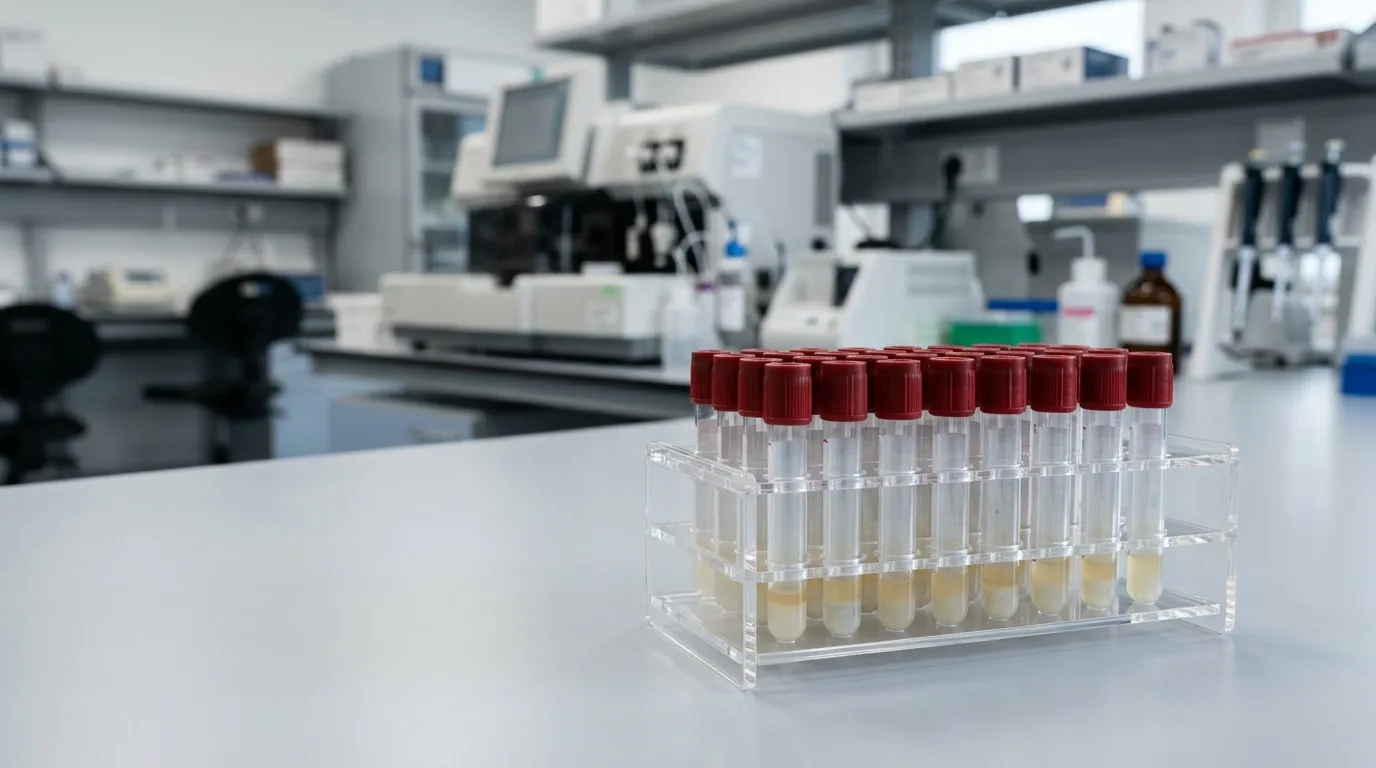
A micro blood collection tube (also known as a microtube or capillary tube) is a small vessel that is used to gather, transport and store small amounts of blood collected by puncturing capillaries. The uses of these tubes are usually:
· Pediatric testing
· Geriatric patients
· Point-of-care testing
· Emergencies where small amounts of blood are needed.
They are usually provided with color-coded tops denoting additives like anticoagulants or clot activators, just like regular venous blood collection tubes.
When is Capillary Blood Collection Readmission?
The capillary blood collection is favored in cases where it is challenging or unnecessary to perform venipuncture. Common scenarios include:
· Newborn screening
· Glucose monitoring
· Hemoglobin testing
· Rapid diagnostic tests
The procedure is less obtrusive and more comfortable, particularly in the patients who have weak veins.
Equipment Needed
To undertake the procedure, make sure that you have the following materials before stepping into the procedure:
· Micro blood collection tubes (type suitable to test)
· Sterile lancet
· Alcohol swabs
· Gauze pads
· Gloves
· Adhesive bandage
· Capillary collection device (when necessary)
It is beneficial to have everything ready in order to make the process efficient.
Step-by-Step Procedure
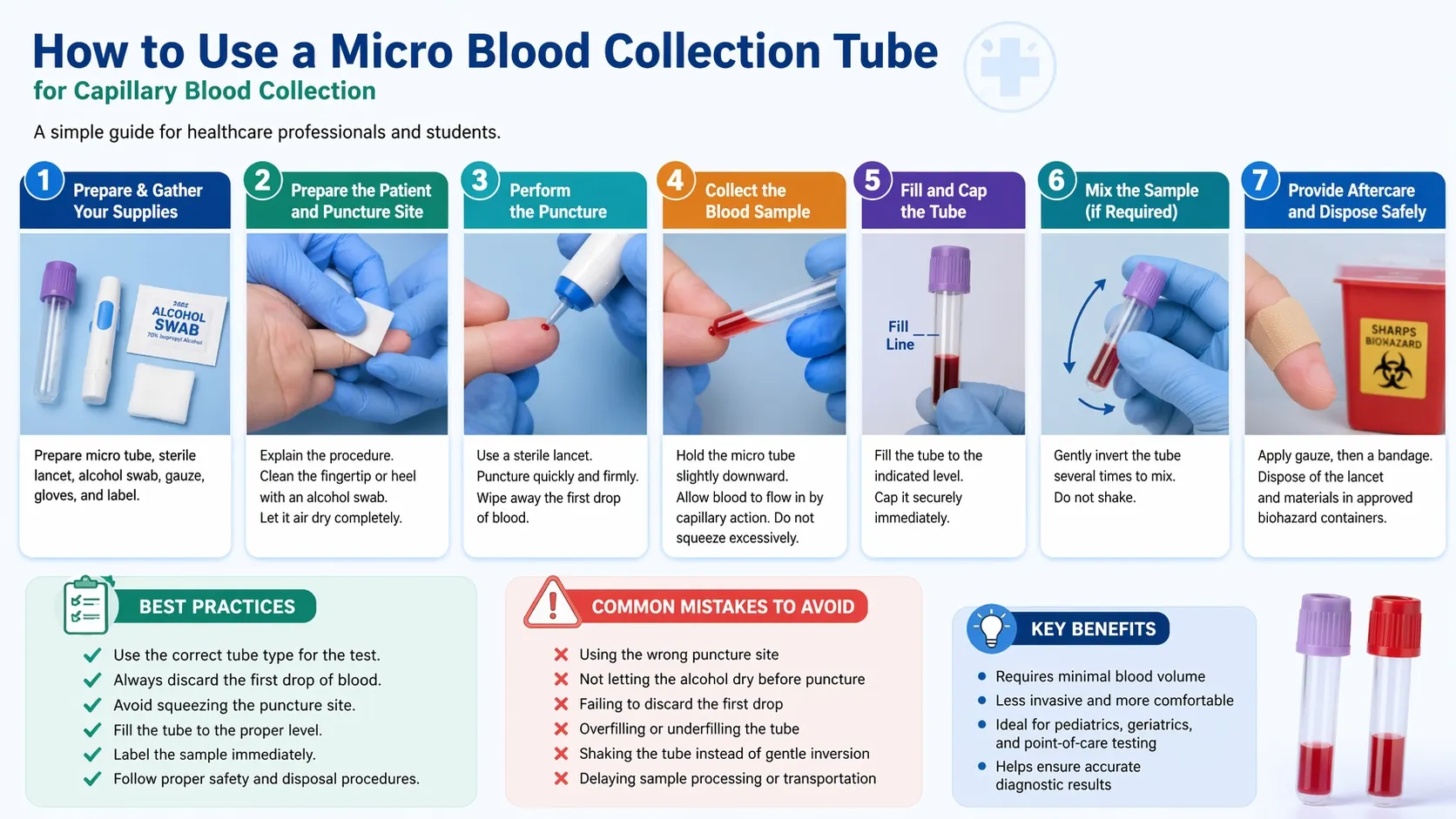
1. Prepare the Patient
Begin by discussing the process with the patient to help alleviate anxiety. Wash, wash hands, put on gloves. Choose the puncture site:
· Fingertip (usually middle or ring finger) in adults.
· Infants Heel (lateral or medial plantar surface)
Wipe with alcohol swab and leave to dry thoroughly.
2. Perform the Puncture
Puncture the skin with a sterile lancet in a quick and firm manner. Avoid excessive pressure. Take the blood off with gauze wiping the initial drop of blood because it might have tissue fluid, which can give a different result.
3. Take the Blood.
Grasp the micro blood collection tube with a slight downward movement to enable the blood to flow in the tube naturally. Depending on type of tube:
· The blood can be automatically drawn by capillary action.
· Light tapping can be used to aid blood in settling on the bottom.
Do not squeeze the puncture point too hard, this may dilute the sample with interstitial fluid.
4. Fill Tube Properly.
Make sure that the tube is filled up to the required level. The ratio of blood and additives can be either underfilled or overfilled, thus inaccurate results can be obtained.
Close the tube immediately with a cap.
5. Mix the Sample (If Required)
In the event that the tube may have some additives like anticoagulants, it is advised to invert the tube few times to mix the blood. Shake not violently, this might result in hemolysis.
6. Post-Collection Care
Keep a compress on the puncture point until the bleeding ceases. Apply adhesive bandage, where needed.
Sharps (lancet) should be disposed of in biohazard containers.
Best Practices to get your Results Accurate.
In order to get high quality samples and the best test outcomes, I would practice the following best practices:
· The right tube type to use in the test should be used at all times.
· Have good hygiene and aseptic practice.
· Avoid prolonged squeezing of the puncture site
· Label a sample upon collection.
· Move the sample as per the requirements of the lab.
Consistency in technique plays a significant role in minimizing errors.
Mistakes to avoid.
All professionals are subject to making errors when collecting capillary blood, even the experienced professionals. The following are some of the pitfalls:
· Application of incorrect puncture point: It may cause inadequate blood circulation or patient discomfort.
· Failure to drop the first drop: Could lead to polluted samples.
· Mixed improperly: May result in clotting or false readings.
· Improperly filled tubes: Affects the accuracy of the test.
· Delayed processing: Can degrade sample integrity.
Knowing about these mistakes can enhance efficiency and patient outcomes.
The benefits of Micro Blood Collection Tubes.
Micro blood collection tubes have a number of advantages:
· Needs very little blood.
· Less invasive than venipuncture.
· Best suited to vulnerable groups.
· More convenient and quicker.
· Less possibility of complications.
These benefits render them a powerful instrument in contemporary healthcare facilities.
Safety Considerations
During blood collection procedures, safety must be always considered:
· Take single-use, sterile lancets.
· Never reuse collection devices
· Adhere to disposal guidelines.
· Wear personal protective equipment (PPE)
· Take precautions against sharps injuries.
Safety practices help to safeguard both the patient and the health care provider.
Conclusion
Micro blood collection tube is a relatively simple but accurate process which demands attention to details and correct technique when collecting capillary blood. Through proper procedures, such as patient preparation, handling of the sample, and timely reporting of diagnostic results, you are guaranteed of accurate diagnostic results and a positive patient experience.
In clinical laboratory, hospital, or a point-of-care environment, it is a required skill to master any person who is engaged in diagnostic testing. Capillary blood collection is safe, efficient and effective with the right approach and with practice.