


Updated 1 month ago
Blood Collection Equipment: A Complete Guide to Types, Uses, and Selection
Arafatshuvo
Blood Collection Equipment
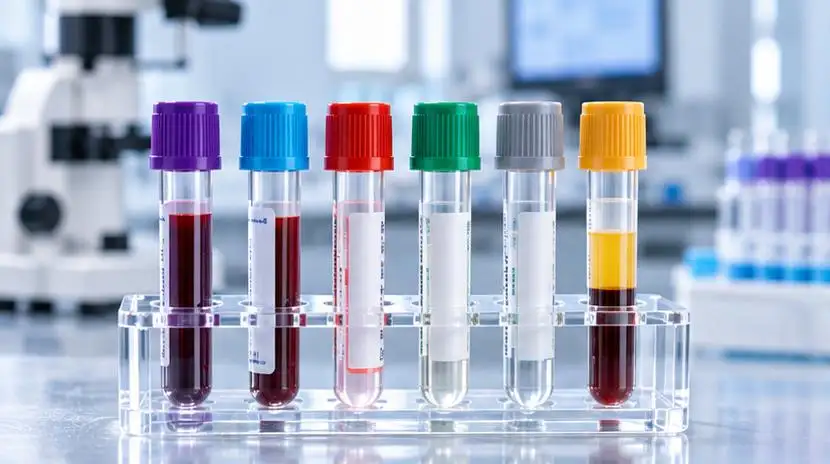
Reliable laboratory results begin before a sample reaches the analyzer. For this reason, Blood Collection Equipment should be selected as a complete pre-analytical system—not as separate tubes, needles, and accessories.
At Trustlab, we approach Blood Collection Equipment selection from the test backward:
Test requirement → Specimen type → Additive → Draw volume → Tube → Needle → Processing → Analyzer compatibility.
This method helps laboratories and distributors identify specifications that actually affect sample quality, workflow, and purchasing decisions.
When Blood Collection Problems Point Back to the Equipment
Common pre-analytical problems often provide the first indication that a Blood Collection Equipment configuration needs review.
Typical examples include:
•Underfilled tubes: May alter the intended blood-to-additive relationship.
•Clotted EDTA samples: Can result from insufficient mixing or incorrect filling.
•Hemolysis: May be associated with collection technique, needle selection, transfer, or difficult venous access.
•Repeated collection failure: May indicate that the needle or tube format is unsuitable for the patient population.
•Automation problems: Can arise when tube diameter, length, closure, or label position does not fit existing equipment.
The correct response is therefore not simply to change brands. The technical cause should be identified first.
The Parameters That Define Blood Collection Equipment Performance
Vacuum and Draw Volume Are Functional Specifications
In evacuated Blood Collection Equipment, the tube is designed to draw a defined amount of blood. This creates a direct relationship:
Vacuum performance → Fill volume → Blood/additive ratio → Specimen condition.
For anticoagulant tubes, fill volume is especially important. A sodium citrate tube, for example, should be evaluated by its citrate formulation and intended draw volume rather than by cap color alone.
Trustlab GT210-1005 sodium citrate tubes use 3.2% sodium citrate. Published configurations include 13 × 75 mm tubes for 1–4 mL draws and 13 × 100 mm tubes for 5–7 mL draws, in PET or glass.
Additive Selection Must Follow the Test
Different Blood Collection Equipment configurations produce different specimen types:
| Collection tube | Trustlab specification | Typical laboratory purpose |
| EDTA GT210-1007 | K2EDTA/K3EDTA; PET or glass; 13×75 mm, 1–4 mL; 13×100 mm, 5–7 mL | Whole-blood hematology |
| Sodium Citrate GT210-1005 | 3.2% citrate; PET or glass | Coagulation testing |
| Heparin GT210-1006 | Lithium or sodium heparin; 1–7 mL in listed 13 mm formats | Plasma-based testing |
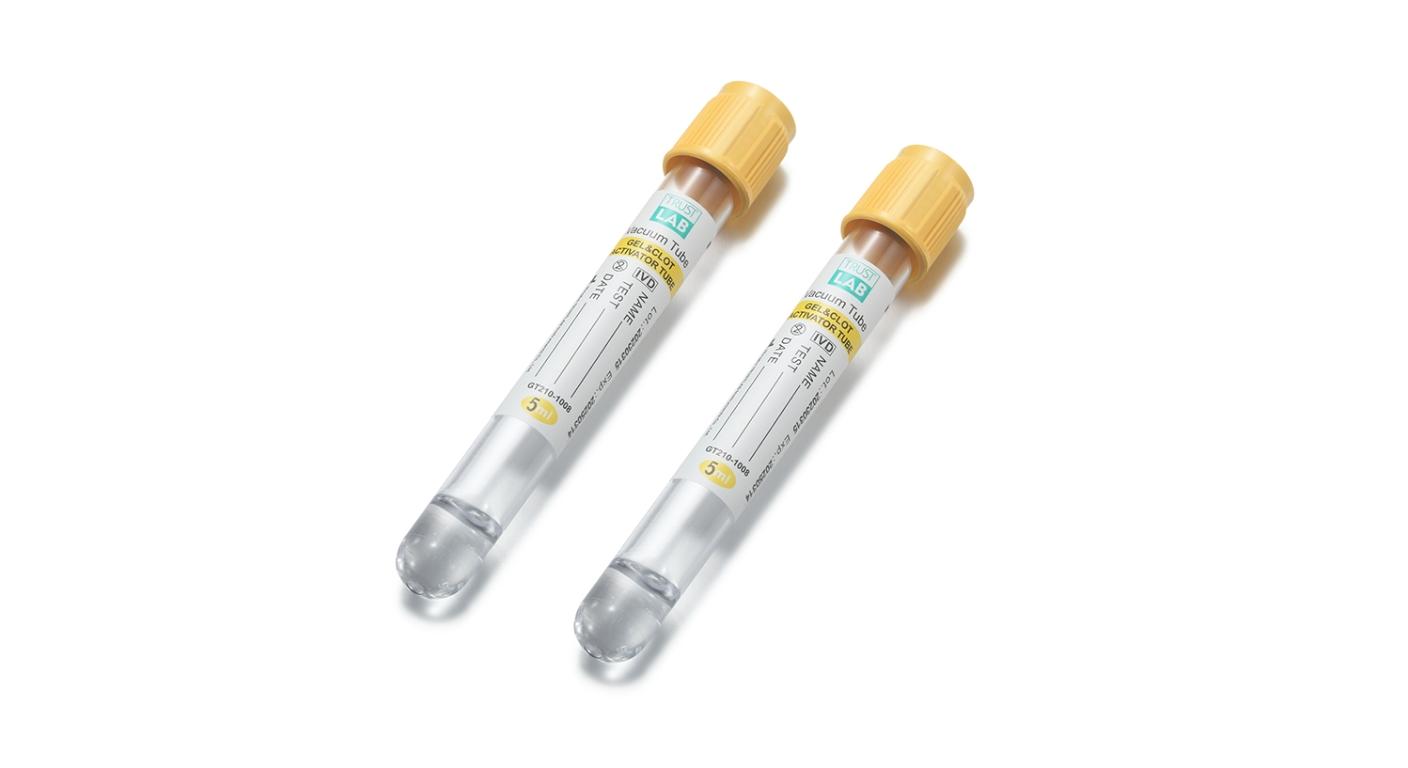
| Gel + Clot Activator GT210-1008 | PET/glass; 13×75, 13×100 or 16×100 mm; up to 10 mL | Serum separation |
These are current published Trustlab product configurations.
Cap color is useful for identification, but procurement specifications should always define the additive, concentration where applicable, draw volume, material, and intended use.
Selecting the Right Collection Method
Vacuum vs. Non-Vacuum Blood Collection Equipment
Vacuum systems support standardized filling and efficient multi-tube workflows. Non-vacuum systems provide manual filling control and may be selected for particular collection environments.
Neither should be chosen solely on cost. Buyers should compare:
•Required specimen volume;
•Patient population;
•Additive-to-blood control;
•Exposure and transfer steps;
•Collection throughput;
•Laboratory SOPs.
Standard Tubes vs. Microcollection
For low-volume applications, standard venous tubes may collect more blood than necessary.
Trustlab's GT210-0003 micro collection tube is 15 × 45 mm, made from PP, and has a 0.5 mL capacity.
Micro Blood Collection Equipment can therefore support workflows where available specimen volume is limited, although the laboratory must still verify test-volume requirements and equipment compatibility.
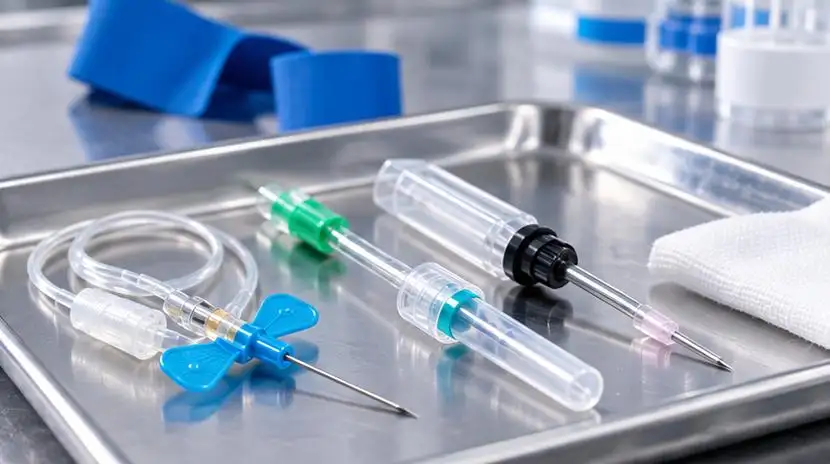
Needle Selection Is Part of the System
Needle gauge should not be evaluated in isolation. Vein condition, collection speed, required blood volume, tubing dead space, and patient characteristics all matter.
Trustlab's GT210-1009 multi-sample needle is available in 19G, 20G, 21G, 22G, 23G, 24G, 25G and 27G configurations and is listed as EO sterile.
For difficult venous access, a winged collection set may improve positioning and control, while routine multi-tube collections may favor a straight multi-sample needle.
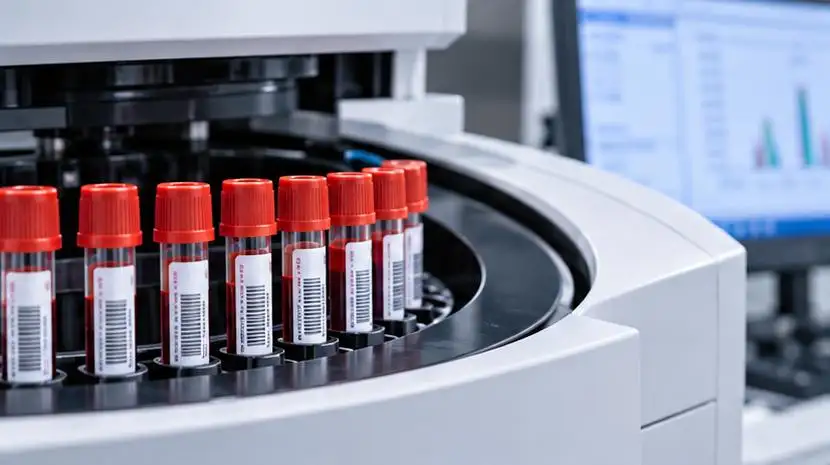
Blood Collection Equipment Must Fit the Entire Laboratory Workflow
A technically correct tube can still be wrong for a laboratory.
Before approving new Blood Collection Equipment, verify:
•Tube diameter and length against racks and centrifuge adapters;
•Closure geometry against decapping or automation systems;
•Label area and position against barcode workflows;
•Tube material against handling and transport requirements;
•Needle-holder interface across the proposed collection system;
•Centrifugation requirements for serum or plasma preparation;
•Actual production samples on the intended analyzer workflow.
This is particularly important when replacing an established supplier.
Deployment, Storage, and Routine Control
Disposable Blood Collection Equipment does not require traditional machine maintenance, but it still requires process control.
A laboratory SOP should define:
•Filling and tube mixing;
•Specimen identification;
•Centrifugation and processing;
•Storage and transportation;
•Lot rotation and expiry control;
•Packaging inspection;
•Sharps disposal and staff training.
Trustlab currently lists 4–25°C storage for several vacuum tube categories, including its EDTA, sodium citrate, and heparin tubes.
Which Standards Should Buyers Check?
Compliance claims should be matched to the exact product.
As of now, ISO 6710:2017 is the only standard available that addresses single-use venous blood specimen containers, whether evacuated or non-evacuated. It does not address blood collection needles or needle holders.
For venous blood collections, CLSI's PRE02-8, released in February 2025, replaced GP41-Ed7.
Other considerations for devices used for blood collections, specifically for needles and safety engineered systems, is covered in ISO 23908:2024.
A Better RFQ for Blood Collection Equipment
Before comparing quotations, specify:
•Product model and intended use;
•Tube material and dimensions;
•Additive and concentration;
•Nominal draw volume;
•Needle gauge and configuration;
•Sterilization requirement;
•Storage conditions and shelf life;
•Packaging and labeling;
•Applicable regulatory documents;
•Required analyzer and workflow compatibility.
Unit price should be compared only after these variables are aligned.
Trustlab offers a broader Blood Collection Equipment portfolio covering vacuum and non-vacuum tubes, microcollection products, blood collection needles, safety collection sets, and ESR solutions. For laboratories, distributors, and OEM buyers evaluating a complete system, the next practical step is to review the current Trustlab Blood Collection System range and confirm the latest technical datasheets, product-specific documentation, packaging, and samples against your actual workflow before approval.
FAQs
Q1. What types of Blood Collection Equipment does Trustlab supply?
Trustlab's Blood Collection Equipment portfolio includes vacuum blood collection tubes, non-vacuum tubes, micro blood collection tubes, blood collection needles, safety blood collection sets, and ESR tubes and racks.
Q2. What sizes are available for Trustlab blood collection tubes?
Trustlab's tube formats include 13 × 75 mm, 13 × 100 mm, and 16 × 100 mm, with draw volumes varying by tube type and reaching approximately 1–10 mL across selected configurations.
Q3. What additives are available in Trustlab Blood Collection Equipment?
Trustlab offers blood collection tubes using additives such as K2EDTA, K3EDTA, sodium citrate, lithium heparin, sodium heparin, clot activator, separator gel, and glucose-related additives, depending on the application.
Q4. What is the specification of Trustlab's EDTA blood collection tube?
The Trustlab GT210-1007 EDTA tube is available with K2EDTA or K3EDTA, in PET or glass. Published configurations include 13 × 75 mm for 1–4 mL and 13 × 100 mm for 5–7 mL draws.
Q5. Does Trustlab offer micro Blood Collection Equipment?Yes. Trustlab offers the GT210-0003 micro collection tube with a 0.5 mL capacity, 15 × 45 mm dimensions, and PP construction, intended for small-volume sample handling.