


Updated 2 months ago
Centrifuge for Blood Sample: How High-Speed Rotation Supports Capillary Blood Separation

Admin

Centrifuge for Blood Sample
Capillary blood collection is the preferred method for hematocrit measurement as well as the collection of small-volume blood samples for clinical laboratory testing and routine research. Capillary tubes require only a small volume of blood; however, for separation to be fully achieved, centrifugal force must be constant, the speed must be controlled, the time must be precise, and the tubes must be positioned correctly.

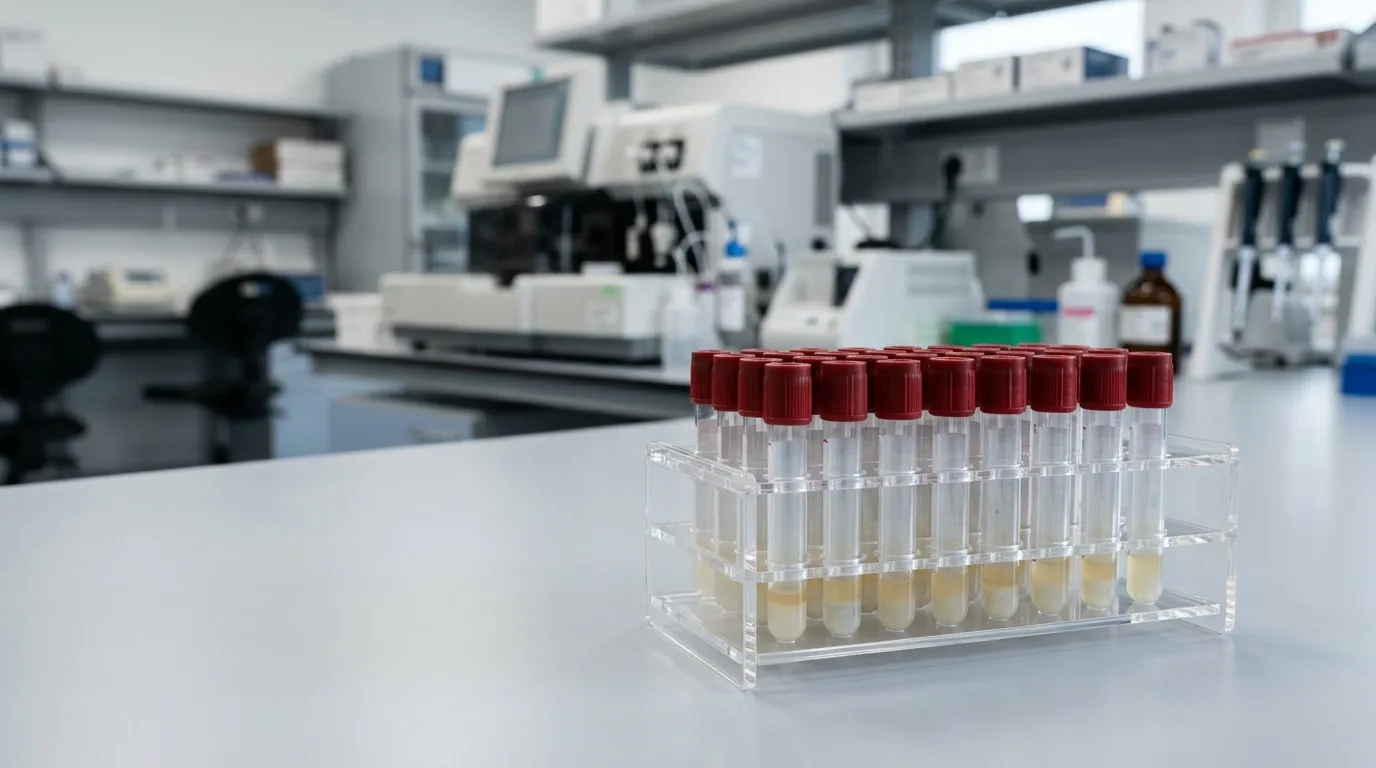
A Centrifuge for Blood Sample uses centrifugal force to separate blood components, which is based on the principle of density. In the process, red blood cells are forced to the closed end of the capillary tube, with plasma, the liquid component of blood, remaining on top of the red blood cells.
Trustlab specializes in the development of Centrifuge for Blood Sample solutions with a focus on the safety of the operator, compact design, and the ability to process samples efficiently and with high precision.
How a Centrifuge for Blood Sample Works
The major components of whole blood are plasma, red blood cells, white blood cells and platelets. These components will invariably settle due to the force of gravity. A Centrifuge for Blood Sample uses centrifugal force to accelerate sedimentation.
Centrifugation will separate blood components into three distinct layers.
| Blood Component | Position in Capillary Tube | Laboratory Use |
| Plasma | Upper Layer | Liquid Portion of Sample |
| Buffy Coat | Middle Layer | Layer of Platelets and White Blood Cells |
| Packed Red Blood Cells | Sealed End of Capillary Tube | Layer Used for Packed Cell Volume Determination |
Importance of High-Speed Rotation
Centrifugation of blood samples in capillary tubes is most effective with Blood Sample Centrifuges that have high-speed rotations. This is because there is less time needed to generate the forces required to move blood cell components within the narrow diameter of capillary tubes.
• An example of a high-speed capillary centrifuge is one that can attain 12,000 r/min and generate approximately 15,300 × g, based on the radius of the rotor.
• Sedimentation is rapid at this high centrifugal force because the red blood cells are moved to the end of the tube that is sealed in a very short time.
• At this speed, the separation between the plasma and the packed cells and the buffy coat is clearly visible.
• At high speed, the separation of small quantities of blood, contained in capillary tubes, is achieved.
The high speed of separation is advantageous, as it reduces the time that has to be spent waiting for the results after the blood has been collected and centrifuged.
High speed must be viewed in conjunction with the other design features and validated methods, as stable rotation and proper balancing and braking, will also contribute to effective separation of blood.
Understanding Speed, RCF, and Time
Speed and RCF define different phenomena of centrifugation. Speed refers to revolutions per minute. RCF, on the other hand, refers to the centrifugal force that is experienced by the sample as compared to the force of gravity.
| Parameter | Function | Effect on Blood Samples |
| Speed | Controls rotor revolutions per minute | Controls speed at which separation occurs |
| Rotor radius | Defines distance from rotor center | Affects separation distance at a given speed |
| RCF | Represents the effective centrifugal force | Influences concentration the extent to which components are separated |
| Run time | Defines how long force is applied | Controls extent to which separation occurs |
| Braking time | Controls rotor deceleration | Might affect the integrity of separation layers |
A Blood Sample Centrifuge with speed settings of 11,000 r/min and 12,000 r/min empowers laboratories to formulate blood separation processing parameters.
Stable Rotation and Reproducible Separation
Stable rotation and centrifugal conditions in separated samples require mechanical balance and uniform rotor speed. Trustlab considers the motor and rotor, equipment and balance, and rigidity of the housing in its engineering design of a Blood Sample Centrifuge.
• Controlled motor output: Stability of the motor's output facilitates stability of the rotational speed during the entire process of centrifugation.
• Balanced rotor design: Balanced mechanical load results in equal centrifugal forces acting on all tube pairs.
• Rigid housing structure: Stronger materials help to minimize movement during high-speed operations that are repeated.
• Vibration management: Less vibration means stability of the samples as well as an improvement in the working atmosphere of the laboratory.
• Repeatable settings: Controls for speed and time that are clearly defined help to simplify the establishment of a standard operating procedure.
Capillary tubes should always be placed symmetrically. To achieve equilibrium, tubes must be positioned symmetrically and at the same filling level.
Rapid Deceleration and Controlled Deceleration
The complete operational cycle for the centrifuge includes running the centrifuge at its maximum speed and then rapidly accelerating and decelerating the centrifuge. A Blood Sample Centrifuge designed with this operational cycle includes rapid acceleration and controlled deceleration.
| Operating Stage | Typical Design Objective | Workflow Benefit |
| Acceleration | Reach the selected speed in less than one minute | Reduces non-separation time |
| Full-speed operation | Maintain stable centrifugal force | Supports consistent cell packing |
| Braking | Stop the rotor in less than two minutes | Allows samples to be accessed sooner |
| Timing | Provide a 0–10-minute range | Supports different routine protocols |
Controlled braking is important because excessively abrupt deceleration may disturb the boundary between blood layers.
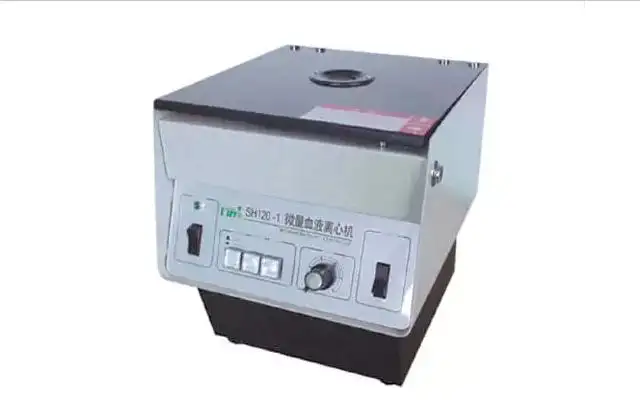
Swing-Out Rotor for Capillary Tubes
A swing-out rotor allows tube holders to move outward as speed increases. When in use, roughly horizontal capillary tubes guide the movement of blood components along the length of the tubes.
• Directional separation: Red blood cells move to the closed end of the capillary tubes.
• Distinct formation of layers: The horizontal arrangement of tubes enables separation of the packed cells from the plasma, and the results of the separation can be clearly seen.
• Controlled Batch Processing: The capacity to hold 24 capillary tubes is equivalent to the amount of work expected to be done in a pathology laboratory.
• Compatibility of Tubes: The requirements of Microhematocrit are satisfied by the rotor positions that can hold capillary tubes of about 1.5 mm.
Prior to the use of the tubes, the operator shall check that the tubes have the correct dimensions, are sealed, and are made from suitable materials.
Safety and Operator Accessibility
Trustlab's Blood Sample Centrifuge is designed with state-of-the-art technology with an emphasis on safety.
• Safety lid system: The design eliminates the possibility of opening the lid during rotor operation.
• Transparent lid: Users can easily verify correct placement of tubes and thus correct loading of the lid prior to the start of the cycle.
• Contained rotor chamber: The design helps to contain any spillage that may occur during a failure of a capillary tube.
• Eliminating excess controls: The design focuses on simplicity to help save time when the device is used for routine processing.
• Compact design: The dimensions allow placement on a stable surface in the lab.
Capillary tubes must be inspected for any failure before use, and laboratory-standard procedures must be used to decontaminate any spills.
Trustlab's Technical Approach
Trustlab's experience with the design and manufacture of laboratory equipment informs the design of the Centrifuge for Blood Samples. We aim to achieve the right balance between safety, ease of use, and high performance with our long-duration equipment.
• Stable centrifugation: Control of the rotational environment is achieved by the design of the motor and rotor subsystems.
• Innovative Design: The strategic configuration of elements in this system achieves the optimal designed speed. In addition, the braking system is designed to minimize the time taken to halt the system completely.
• Robust Construction: The components and the casing are designed to withstand high speed and a large amount of traffic.
• Compact integration: It helps to save space on the workbench in the laboratory due to its small size.
• Application-oriented design: Adjustments made to the capillary tubes and rotors are based on the requirements of the preparation of blood samples.
Closing Words
A Centrifuge for Blood Sample is designed to enable capillary blood separation. It combines the high rotational speed and the exact control of the RCF and rotation stability, together with timing and rotor design. Balance, tube design, loading, deceleration, and speed control, along with operator experience, also impact results.
With advanced construction techniques, stable motor performance, capillary tube compatibility, and safety design, Trustlab intends to provide a Centrifuge for Blood Sample for the needs of clinical, research, and teaching laboratories.
FAQs
Q1. What is a Centrifuge for Blood Sample?
This type of centrifuge is used for separating blood components with centrifugal separation. It separates plasma, buffy coat, and red blood cells.
Q2. Why is high-speed rotation necessary for separation of blood in capillary tubes?
High-speed rotation causes rapid sedimentation of blood cells in narrow capillary tubes, promoting the formation of distinct layers and shortens the time of processing.
Q3. What is the difference between RPM and RCF?
RPM, or Revolutions per Minute, indicates the speed of the rotor, whereas RCF, or Relative Centrifugal Force, indicates the centrifugal force exercised on the sample.
Q4. What samples can a Centrifuge for Blood Sample process?
This centrifuge is used for small-volume blood processing, capillary blood samples, and microhematocrit samples.
Q5. Why must capillary tubes be balanced prior to centrifuge?
An unbalanced rotor will cause uneven mechanical stress to the rotor and increasing vibration. It also causes variation between the samples.