


Updated 2 months ago
OEM Microscope Manufacturer: Integrated Digital Microscopy for Streamlined Labs

Admin
OEM Microscope Manufacturer
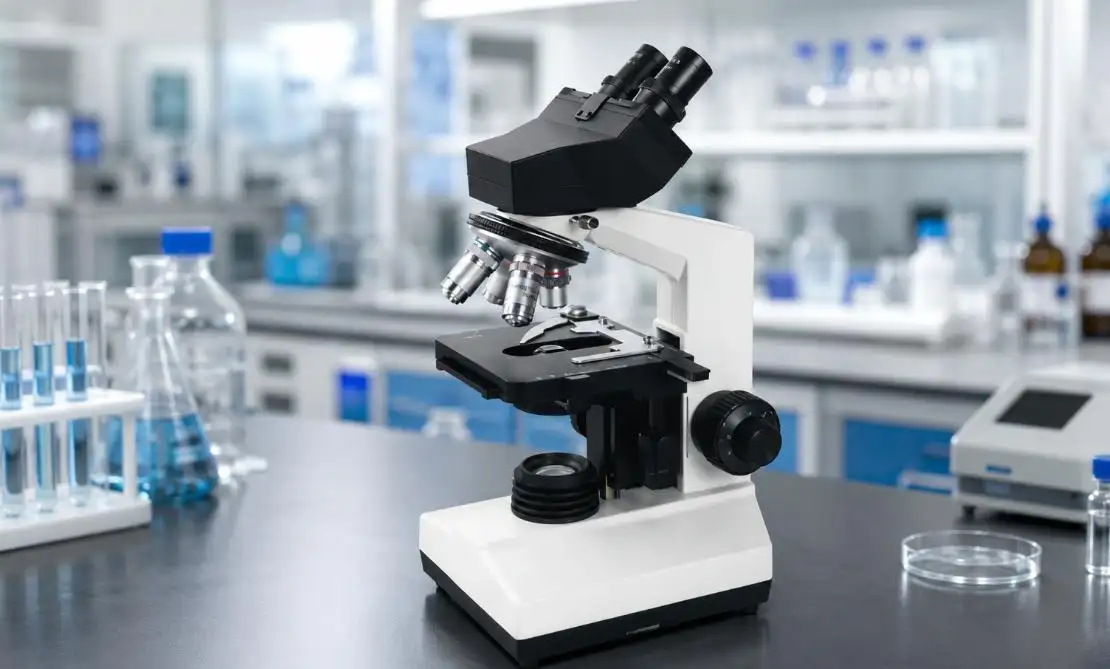
Modern laboratories and educational facilities should have compact and user-friendly systems that integrate digital microscopy. These systems should be compact and easy to operate. Systems that are not designed digitally require additional systems to work, such as a large amount of space, a camera, a computer, a monitor, and software. Even the most fundamental observations can be a challenge with this array.
Trustlab is an OEM Manufacturer with expertise in integrated digital microscopy. Our approach consists of optical display, image capture, image storage, and data transfer in a single integrated system. This all-in-one system minimizes the setup time, reduces clutter on the workbench, and encourages the habit of regular documentation.
Inefficiencies Associated with Traditional Microscopy Workflows
Though conventional microscopy systems are sufficient for routine observations, digital imaging systems are often integrated with multiple external peripherals. Additional external devices contribute to the need for additional setups, incompatibilities, and maintenance concerns.
Some of the common workflow problems are:
•External camera installations increase preparation times due to alignment and selection of camera adapters.
•Separate computers may mean the laboratory must have dedicated computers for each work station along with the necessary imaging software.
•Bench space is dominated by the presence of power, USB, video, and network cables.
•Observations through an eyepiece can make it difficult to simultaneously teach and/or hold a discussion.
•Images are stored on different devices, leading to complications in record management.
The solution for these problems is the integrated microscopy systems provided by an OEM Microscope Manufacturer, which performs most imaging functions on a single, coordinated platform.
What Is an Integrated Digital Microscope?
Digital integrated microscopy combines the traditional optical microscopy systems with an integrated display, camera systems, storage systems, and systems for connectivity. Depending on the configuration of the integrated digital microscope, users may observe specimens through the optical system of the integrated digital microscope or through a display.
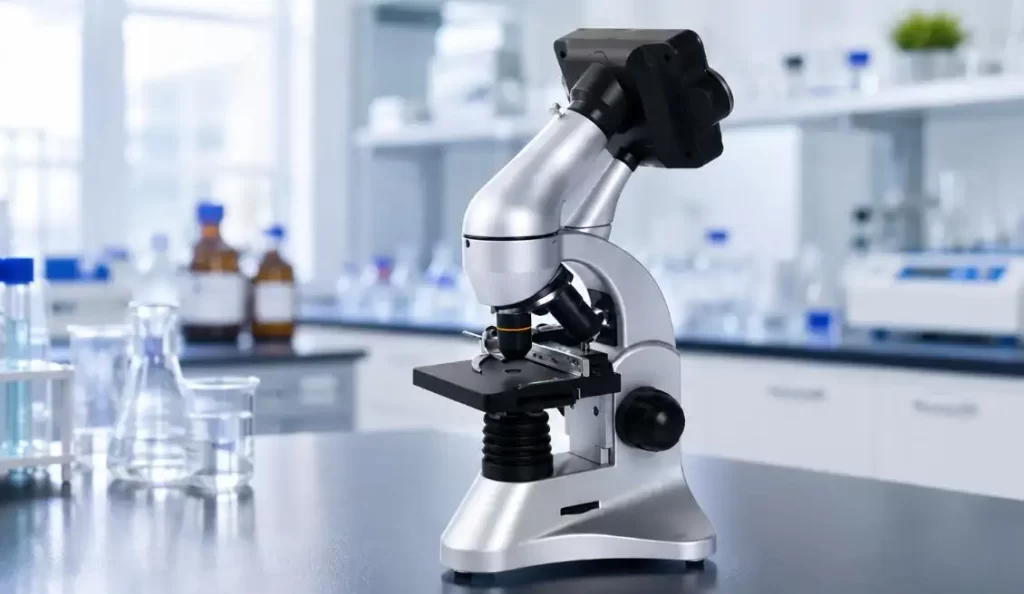
The Trustlab digital biological microscope integrates:
•A 3.6-inch TFT display
•A 2.0 MP CMOS imaging sensor
•Direct image storage through an SD card
•USB 2.0 data transfer
•Adjustable upper and lower LED illumination
•40X–400X optical magnification
•Up to 8X digital zoom
•A 45° inclined and 360° rotatable viewing head
For laboratories seeking customized configurations, an OEM Microscope Manufacturer can adapt these features to different application, branding, packaging, and regional compliance requirements.
Integrated and Conventional Digital Microscopy Compared
| Workflow Factor | Conventional Digital Setup | Integrated Digital Microscope |
| Image display | External monitor or computer | Built-in TFT screen |
| Image capture | Separate camera and adapter | Integrated CMOS camera |
| Data storage | Computer or external system | Direct SD card storage |
| Installation | Multiple components and cables | Single-instrument setup |
| Group observation | Often requires a shared monitor | Immediate on-screen viewing |
| Bench-space demand | Relatively high | More compact arrangement |
| Routine operation | Multiple startup steps | Centralized control |
The appropriate configuration depends on the laboratory's imaging, documentation, analysis, and budget requirements. Integrated systems are particularly useful where operational simplicity and space efficiency are priorities.
Utilitarian Advantages from Built-In Digital Imaging
Rather than viewing features in isolation, laboratories should analyze the potential impact of each feature on daily operations.
Observation in Real Time
Users can view specimens on the built-in LCD and are not limited to the eyepiece. This is beneficial for teaching and can be used to capture and share digital images for review and inspection as part of the workflow.
Image Capture with Internal Storage
The built-in CMOS camera automatically captures and stores images on an SD card. This aids the documentation of observations.
Modular LED Lighting
Both upper and lower LED lighting can be adjusted according to the sample type. Transmitted lighting is generally used for prepared biological slides, while upper lighting can be used for more opaque or surface-level specimens.
Optical and Digital Magnification
A range of 40X–400X optical magnification is utilized for standard biological observation, while digital zoom can be applied for further enlargement of a selected image. However, optical resolution is the most limiting factor in specimen observation.
USB Data Transfer
USB 2.0 technology allows easy transfer of captured files for reporting, archiving, presenting, or further analysis.
Ergonomic Viewing
A 45° inclined monocular head and 360° rotation can help accommodate different users and workstation arrangements. These features are relevant in teaching laboratories and shared testing facilities where several operators use the same instrument.
Applications for Integrated Digital Microscopy
Digital microscopy can support a range of routine observation and documentation tasks.
| Application Area | Typical Use | Benefit of Integrated Imaging |
| Biology education | Cell and tissue observation | Easier group demonstration |
| Basic laboratory research | Routine sample examination | Direct image documentation |
| Clinical training | Prepared slide review | Consistent visual references |
| Quality-control stations | Surface or sample inspection | Faster recording and comparison |
| Small laboratories | General microscopy work | Reduced equipment footprint |
| Remote collaboration | Sharing captured images | Simplified data transfer |
An OEM Microscope Manufacturer can also modify optical, mechanical, imaging, and packaging specifications for distributors, laboratory brands, educational suppliers, and regional equipment providers.
What to Consider When Selecting an OEM Microscope Manufacturer
Selecting an appropriate manufacturing partner involves more than comparing magnification ranges. Buyers should assess the manufacturer's ability to control both optical and electronic components.
Important assessment standards include:
•Optical consistency: Performance must be repeatable, whether using objectives, condensers, illuminators, and imaging sensors.
•Electronic integration: Displays, cameras, storage, and interfaces should be integrated subsystems of a single system.
•Customization capability: Modifications may be required to branding, accessories, connectors, packaging, and configuration.
•Production control: Incoming inspections as well as assembly, calibration, and final checks control variation of a production batch.
•Compliance support: Different market specifications may necessitate different supporting documents and certificates.
•After-sales coordination: Availability of spares, support information, and troubleshooting are essential for distributors.
Trustlab's OEM Manufacturing Capabilities
Trustlab is an OEM Microscope Manufacturer and combines its knowledge of microscopy development and its expertise in supplying laboratory instruments globally. Trustlab's skill set includes optical integration, electronic assembly, structural design, control of illumination, and inspection of the final product.
Trustlab additionally offers support for:
•OEM branding: Logos, labels, and manuals are provided along with packaging and product appearance.
•Configuration development: Customization of optical and digital functions is possible to meet the requirements of a specific application.
•Quality inspection: Components of optical, mechanical, illumination, and imaging systems are inspected prior to shipment.
•International supply experience: Customer products are supplied to more than 100 countries and regions.
•Ongoing product development: Laboratories are provided with improved products that address new designs and changes in technology.
In Closing
Digital microscopy integrates several functions into a single instrument to facilitate observation, image capture, storage, and data transfer. Instructing personnel to use digital microscopy instead of employing several pieces of ancillary equipment reduces equipment and simplifies/streamlines laboratory procedures.
An experienced OEM Microscope Manufacturer provides clients with integrated microscopy solutions based on branding, technical and functional specifications, custom applications, and local market needs. Trustlab offers a complete solution of integrated digital microscopy. This solution integrates the advantageous features of biological microscopy and digital imaging to form a simple yet compact system.
FAQs
Q1. What service do OEM Microscope Manufacturers provide?
OEM Microscope Manufacturers design and build microscopes according to their customers' brand preference, specifications, and marketplace needs.
Q2. Is it possible to have the microscope customized as a private label?
Most private label programs involve customizing the product and its packaging, instructions, and labels. Logos can also be printed during customization.
Q3. Is a computer necessary for an integrated digital microscope?
That is not necessarily the case. Integrated digital microscopes can possess a screen and an integrated camera, thus eliminating the need for an additional computer to view and capture images.
Q4. In what way do microscopes capture and store images?
Images can be captured and stored on SD cards and then transferred using a USB.
Q5. Where can an integrated digital microscope be utilized?
Integrated digital microscopes can be utilized in a number of areas such as the teaching of biology, the observation of various laboratory functions, the practice of clinical skills, and the inspection of quality among other areas.