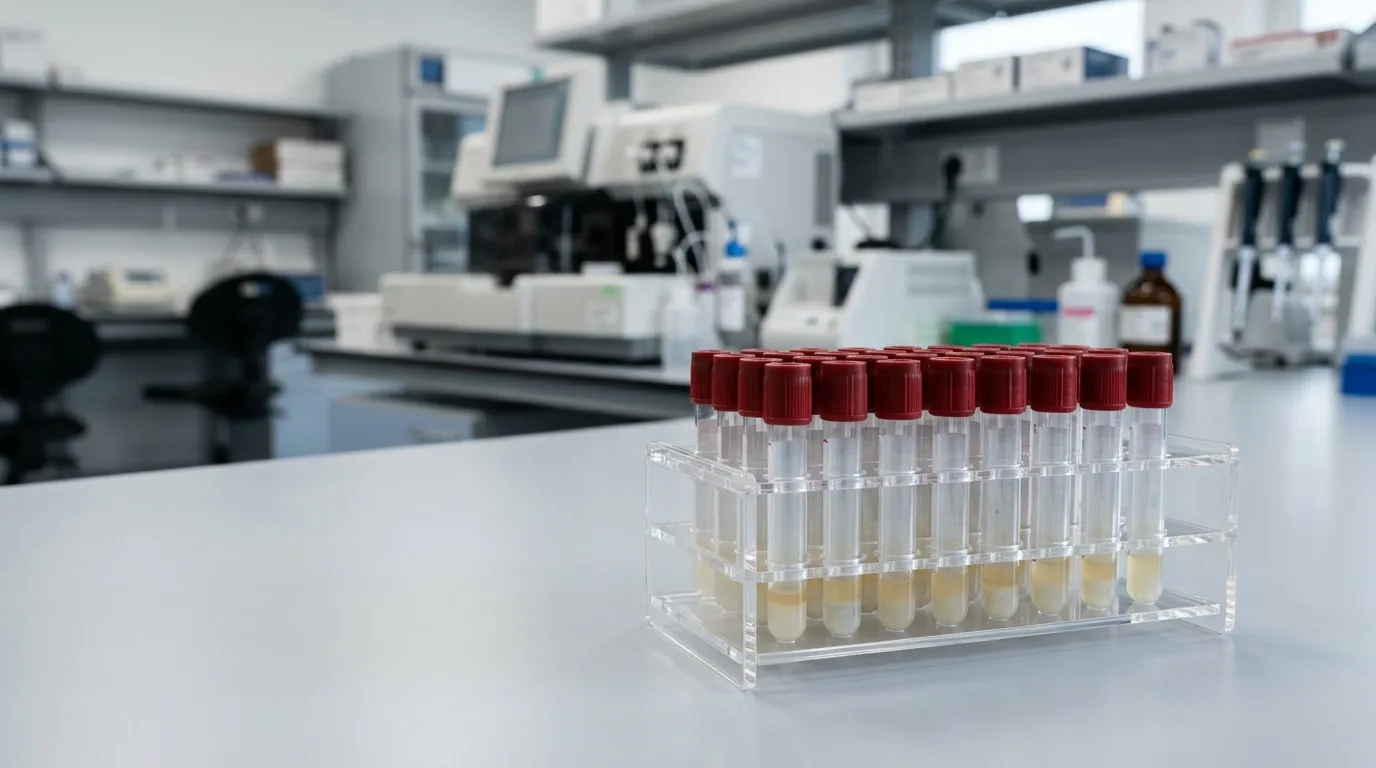




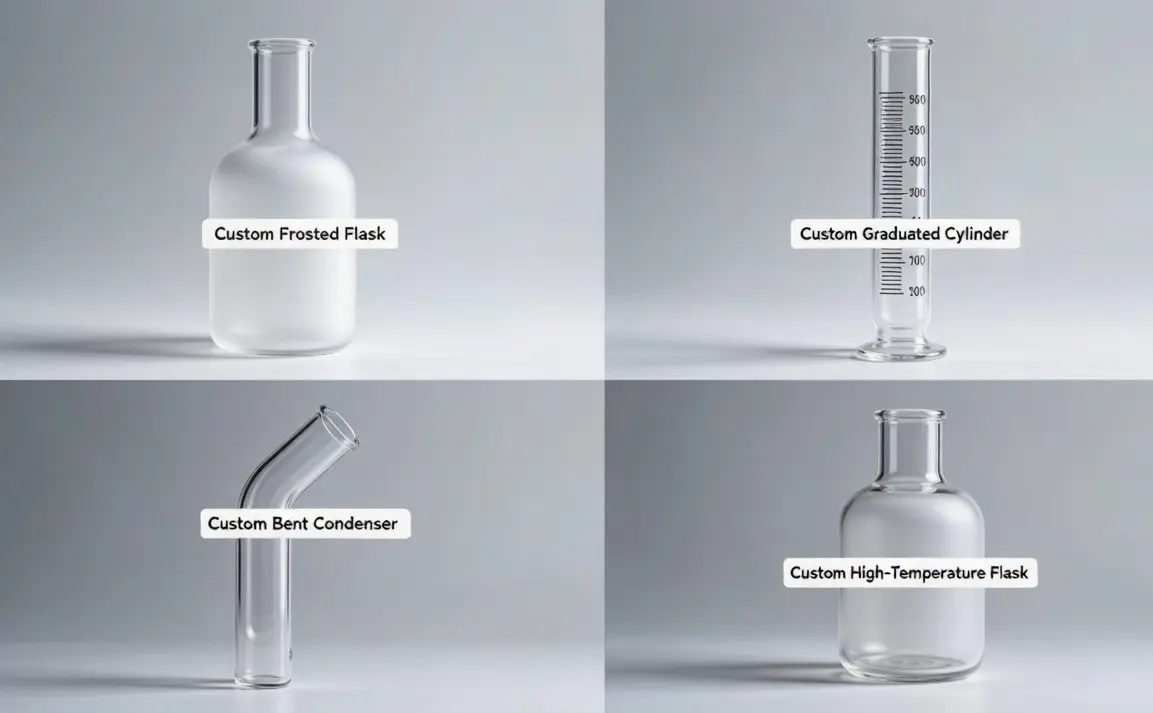
custom laboratory glassware
Certain lab equipment is simply not up to the task in today's sophisticated research facilities, and specialized experiments or industrial processes may require different equipment. This is where custom laboratory glassware comes in handy. Whether for pharmaceutical manufacturing or chemical engineering and biotechnology research, custom glass apparatus offers the precision, strength, and versatility necessary to ensure accurate science.
Companies like Cambridge Glassblowing have been working for decades to create excellent scientific glassware that meets the precise needs of research laboratories, universities and industrial facilities all over the world.
What Is Custom Laboratory Glassware?
Custom laboratory glassware are special types of laboratory glass apparatus for special and unique laboratory uses. Bespoke laboratory apparatus are manufactured to a specific size, specification and operational requirements, unlike the mass-produced glassware.
When it comes to research, custom solutions are needed when:
- Standard laboratory equipment cannot support a specific experiment
- Specialized chemical reactions demand unique vessel configurations
- High-temperature or vacuum applications need reinforced designs
- Industrial-scale testing requires larger or modified systems
- Existing equipment must integrate with new research setups
Reaction vessels, condensers, distillation systems, vacuum manifolds, bubblers, adapters and multi-neck flasks are just a few of the types of custom scientific glassware that can be found. The components are designed to enhance laboratory efficiency, accuracy and safety.
Why Laboratories Choose Bespoke Glassware
Modern laboratories are very specialized scientific settings. Standard equipment might not be sufficiently customizable for cutting-edge research and/or production processes. There are a number of significant benefits to bespoke lab glassware.
Precision and Accuracy
Glassware is designed specifically for the experiments, making it precisely compatible. All dimensions, neck sizes, wall thickness and fittings can be customized to enable precise scientific measurements and repeatable results.
Improved Workflow Efficiency
Experiments are streamlined with experimental apparatus designed for work flow. Custom solutions eliminate the need to make temporary changes, which decreases mistake rates and saves precious lab time.
Enhanced Safety
Armed with the necessary safety requirements, scientific glassware is essential for use in pressure, vacuum or high-temperature applications. Professional glassblowers can create machine which is able to resist the severe laboratory environment, and decrease the damage of the machine.
Long-Term Cost Savings
While custom glassware is more expensive upfront, it can save money in the long term, as it's more likely to last longer, require less downtime, or allow for less frequent equipment changes or replacements.
The Importance of Borosilicate Glass
The borosilicate glass is used for the production of most of the professional glassware in the laboratories due to its superior chemical and physical characteristics. Due to its wide range of resistance to thermal shock and chemical corrosion, borosilicate is still the material of choice in the scientific field, according to industry experts.
Key Benefits of Borosilicate Glass
Excellent Heat Resistance
Borosilicate glass has a very low coefficient of thermal expansion making it highly resistant to thermal shock and cracking. This allows it to be used for heating, cooling and reaction processes.
Superior Chemical Resistance
Ordinary glass will be harmed over time by laboratory chemicals. Resists corrosion from most acids, solvents and reagents for reliable long term performance, borosilicate glass.
Optical Clarity
It is essential to have good visibility during experiments and during analytical procedures. Borosilicate glass is highly transparent, allowing scientists to better observe reactions and processes.
High Durability
Borosilicate has the desirable properties of strength and structural integrity, making it suitable for research laboratories as well as industrial manufacturing settings.
Quartz Glass for Specialized Applications
Borosilicate glass is the most commonly used glass for scientific laboratories, while quartz glass is recommended for very special applications. Quartz is highly pure and has a greater resistance to temperature than regular laboratory glass.
Quartz glass is commonly used for:
- High-temperature chemical processes
- Semiconductor manufacturing
- Ultraviolet light applications
- Optical and electronic research
- Ultra-pure laboratory environments
Whether borosilicate or quartz is the best material for the job can be determined, at times, by the professional glass blowing company that is available to help.
The Process of Creating Custom Scientific Glassware
Laboratory glassware design is an iterative process involving the researcher, the engineer and the scientific glassblower. There are a number of key steps that experienced manufacturers tend to take.
Initial Consultation
Typically starts with a discussion of the scientific problem or the lab need. Some clients give detailed technical drawings, others just tell about their problem to solve.
Technical Design Development
The glassware experts then create a comprehensive design that meets the client's requirements. Modifications might be suggested to enhance usability, safety, and/or production efficiency.
Prototype Manufacturing
After the design is completed, a prototype or prototype sample is manufactured to test and evaluate. At this stage, researchers can test for compatibility and performance prior to full production.
Final Production
Once successful, the glassware can be produced either as a custom item or in larger quantities as needed for the laboratory.
Today's scientific glassblowing is a blend of art and precision engineering to deliver extremely precise and repeatable results, according to industry experts.
Common Types of Custom Laboratory Glassware
Custom scientific glassware can be designed for virtually any research or industrial application. Some of the most commonly requested items include:
- Multi-neck round-bottom flasks
- Jacketed reaction vessels
- Vacuum manifolds
- Distillation columns
- Condensers
- Bubblers
- Separating funnels
- Pressure-equalizing dropping funnels
- Cold traps
- Sintered glass columns
- Glass reactor systems
Many laboratories also request modifications to existing glassware to improve compatibility with specialized equipment or processes.
Scientific Glassblowing: Where Engineering Meets Craftsmanship
Scientific glassblowing is an extremely specialized profession which takes years of training and experience. In contrast to the decorative glass art, the production of laboratory glassware is geared towards precision engineering, the reliability of structure, and the performance of science.
Today's scientific glassblowers rely on expensive and accurate machinery, technical drawings, and heat control methods to create elaborate lab equipment with precise tolerances. Good manufacturers also have in place good quality management systems to guarantee consistency and safety.
Even among scientists, there is discussion on the internet about the need for skilled scientific glassblowers in specialized or unusual lab configurations. It is often said that custom glass can solve issues that regular glass is not able to handle.
Sustainability and Laboratory Glassware Repairs
Recycling of laboratory glassware is still a problem, due to the difficulty of separating borosilicate glass from other domestic glass waste. However, repair services provide a more sustainable alternative.
Professional scientific glassblowing techniques can be used to repair and restore many damaged laboratory glass parts to full functional use. Laboratories can save costs on replacement parts and avoid waste by fixing up costly custom equipment.
Choosing the Right Custom Glassware Manufacturer
Experience with the manufacturer is a key factor in quality, reliability and safety. When looking at a scientific glassware supplier, laboratories should take into account:
- Industry experience
- Technical expertise
- Material quality
- Manufacturing capabilities
- Quality certifications
- Prototype development support
- Ability to scale production
- Repair and maintenance services
Long-seasoned manufacturers are more likely to be able to work with complex scientific projects and custom engineering requirements.
Final Thoughts
Custom laboratory glassware is a crucial part of the modern invention in science. From pharmaceutical research and chemical synthesis to biotechnology development and industrial testing, bespoke glass solutions can deliver greater precision, efficiency, and safety in the lab.
As the science continues to go farther and farther, the use of specialised laboratory glassware will continue to increase. With the guidance of skilled scientific glassblowers and manufacturing firms with engineering expertise, researchers can develop custom designs that aid in groundbreaking discoveries and sustained lab achievements.