



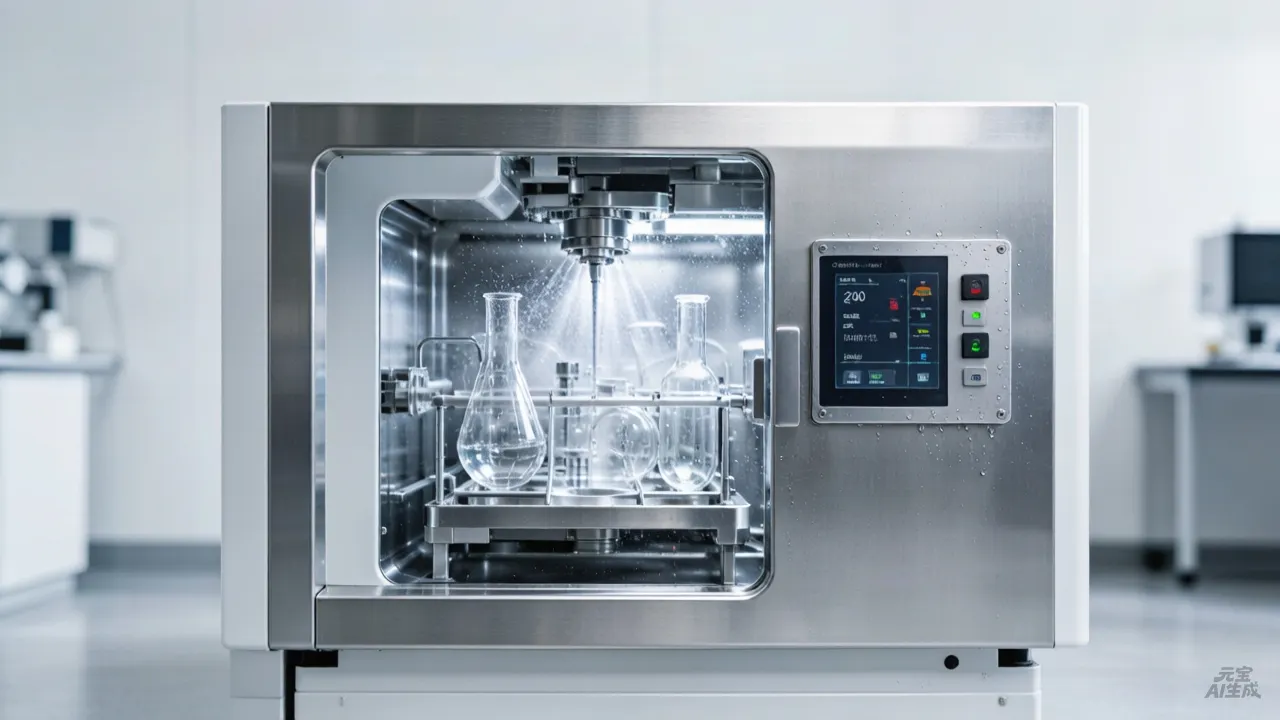
laboratory glassware washer
Precision, cleanliness, and efficiency are crucial in today's modern laboratories for obtaining reproducible scientific data. In the pharmaceutical industry, biotechnology, food analysis, environmental testing and scientific research laboratories, it is essential to keep glassware free of contamination. That is why laboratory glassware washers are no longer a luxury, but a necessity in laboratory operations.
The need for high throughput laboratories requires new and alternative methods of handwashing. Automated laboratory glassware washers ensure repeatable results, increase safety, lower labor expenses, and meet laboratory standards. With a focus on productivity and accuracy in laboratories, the adoption of advanced glassware washing systems has proven to be a long-term investment solution.
What Is a Laboratory Glassware Washer?
A Laboratory Glassware Washer is a special cleaning system which cleans, disinfects and dries laboratory glassware automatically. Laboratory washers are specifically designed to clear chemical residues, biological contaminants, particulate matter and trace impurities that can hinder experiments, which is not the case for a household dishwasher.
The following are typical places where these machines are used to clean:
- Beakers
- Flasks
- Pipettes
- Test tubes
- Petri dishes
- Burettes
- Measuring cylinders
- Sample bottles
Today's systems incorporate programmable cleaning cycles, hot water, specialty cleaning solutions, and controlled drying cycles to ensure effective and repeatable cleaning.
Why Clean Glassware Matters in Laboratories
Contamination is a problem even at the molecular level with laboratory results. Experimental results may be changed by residual chemicals or organic compounds, and/or by traces of detergents, particularly in sensitive analytical methods like chromatography, microbiology, and trace element analysis.
If glassware is not cleaned properly, it can result in:
- Cross-contamination
- False-positive or false-negative results
- Reduced experiment reproducibility
- Instrument damage
- Regulatory compliance issues
Automated glassware washers can help reduce the risks in the lab by offering standardized and validated cleaning solutions. This provides the quality and security of data, and enhances confidence in scientific results.
Key Benefits of Laboratory Glassware Washers
1. Improved Cleaning Consistency
The results of manual cleaning may vary based on the skill and experience of the laboratory personnel. Automated washers ensure consistent cleaning results each time through consistent spray pressure, water temperature, detergent dosing, and cycle timing.
This is particularly crucial in regulated labs where it is essential to follow the same procedure to ensure quality assurance standards are met.
2. Increased Laboratory Efficiency
It is time consuming and labor intensive to hand wash a large number of laboratory glassware. Automated systems can also clean multiple items and save precious laboratory labor hours, enabling scientists to concentrate on more worthwhile research work.
Many of the modern glassware washers have programmable cycles that will automatically wash, rinse, disinfect and dry the glassware in one cycle. This helps to increase lab efficiency and productivity.
3. Enhanced Laboratory Safety
Hazardous chemicals, biological agents and toxic residues are common hazards to which laboratory personnel are exposed when cleaning manually. Automated glassware washers reduce the amount of direct contact with contaminated substances, which helps to lower the risk of workplace accidents and enhance laboratory safety.
Aerosol contamination and accidental spills are also prevented by high temperature disinfection and enclosed washing systems.
4. Better Water and Energy Efficiency
Today's laboratory glassware washers are engineered to conserve water and detergent. Automated systems can use less water than manual washing and can typically provide a better cleaning result.
Energy efficient drying systems as well as water recycling technologies further lower operational costs and promote sustainable laboratory work.
5. Regulatory Compliance Support
There are a wide number of laboratories that have to adhere to strict industry standards such as ISO, GMP, GLP and FDA. Laboratory washers are used to ensure that there are documented and validated cleaning procedures and meet compliance requirements.
Data logging, cycle monitoring, thermal disinfection validation, and printer integration for quality control documentation are examples of features that may be found in advanced systems.
Features to Look for in a Laboratory Glassware Washer
The selection of the laboratory glassware washer depends on the glassware type, the level of contamination in the laboratory and the workflow of the laboratory. These are important attributes to look for:
Programmable Cleaning Cycles
Washing programs can be customized to fit the various materials of glassware and different applications.
High-Temperature Disinfection
High temperature rinsing provides better decontamination and hygienic cleaning standards.
HEPA Drying Systems
Effective drying systems ensure that there is no moisture residue after washing and no contamination risk.
Stainless Steel Construction
Durable stainless steel interiors improve corrosion resistance and extend equipment lifespan.
Flexible Rack Configurations
Adjustable racks allow users to clean different glassware sizes and shapes efficiently.
Smart Monitoring Systems
Modern units may include touchscreen controls, error alerts, automatic detergent dosing, and cleaning validation reports.
Applications Across Different Industries
Laboratory glassware washers are widely used in multiple industries and research environments.
Pharmaceutical Laboratories
Pharmaceutical labs require contamination-free equipment to maintain product integrity and comply with GMP standards.
Biotechnology and Life Sciences
Biological research relies heavily on sterile and residue-free glassware for cell culture, molecular biology, and microbiology applications.
Academic and Research Institutions
Universities and research facilities use automated washers to manage high volumes of laboratory glassware efficiently.
Food and Beverage Testing
Testing laboratories need reliable cleaning systems to prevent cross-contamination between samples.
Environmental Laboratories
Environmental testing often involves trace-level analysis where even minimal contamination can compromise results.
Manual Washing vs. Automated Glassware Washers
While manual washing may appear cost-effective initially, it often leads to higher long-term costs due to labor, inconsistent cleaning, and increased glassware breakage.
| Feature | Manual Washing | Laboratory Glassware Washer |
|---|---|---|
| Cleaning Consistency | Variable | Highly Consistent |
| Labor Requirement | High | Low |
| Water Consumption | Higher | Optimized |
| Safety | Lower | Improved |
| Contamination Control | Limited | Advanced |
| Productivity | Lower | Higher |
| Compliance Support | Difficult | Easier |
Automated systems offer a more scalable and reliable solution for modern laboratory operations.
Future Trends in Laboratory Glassware Washing
As laboratories adopt smarter technologies, laboratory glassware washers are becoming more advanced. Future innovations may include:
- IoT-enabled monitoring systems
- AI-driven cleaning optimization
- Automated chemical dosing
- Remote diagnostics and maintenance
- Sustainable water recycling technologies
- Integration with laboratory management systems
These advancements will continue improving efficiency, compliance, and sustainability in laboratory environments.
Conclusion
In scientific laboratories, laboratory glassware washers have emerged as indispensable tools that play a vital role in ensuring cleanliness, accuracy, and efficiency. These systems can automate the cleaning process to achieve the following benefits for laboratories: reduce contamination risk, improve laboratory reproducibility, increase staff safety and facilitate regulatory compliance.
With the ongoing development of scientific research, it is no longer an option but a must to invest in top quality laboratory glassware washers. Efficient cleaning technologies can benefit the productivity, cost-effectiveness and reliability of scientific operations in the laboratory.