


Updated 2 months ago
Laboratory Analytical Equipment: What WF10X and WF16X Eyepieces Really Offer

Admin
Laboratory Analytical Equipment
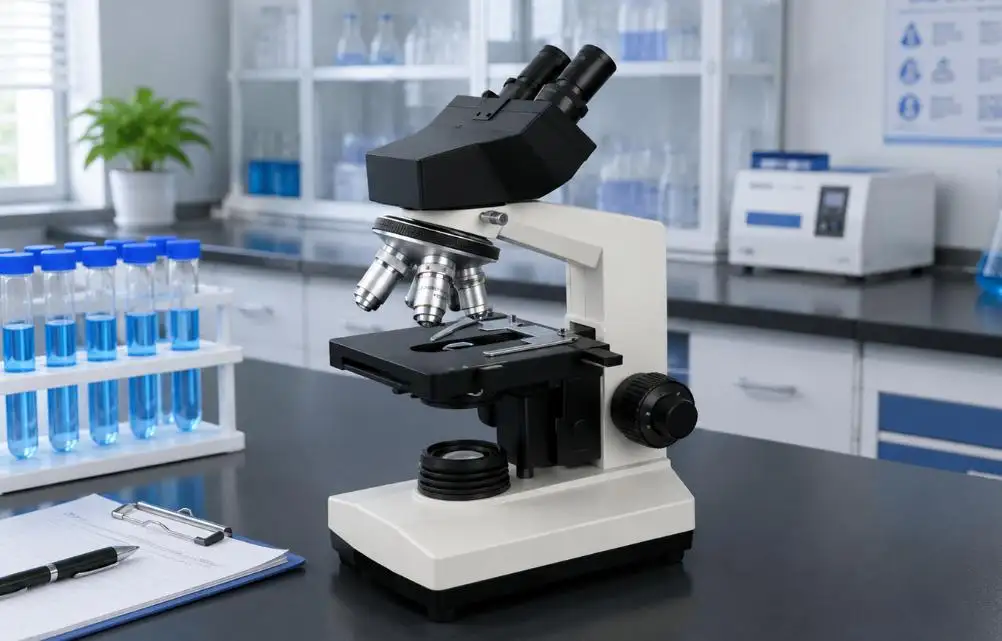
In Optical Laboratory Analytical Equipment (LAE), the quality of images is perceived to be dictated by the objective lens of the system. However, the eyepiece is also critical, as it defines the extent to which the intermediate image is magnified and presented to the observer.
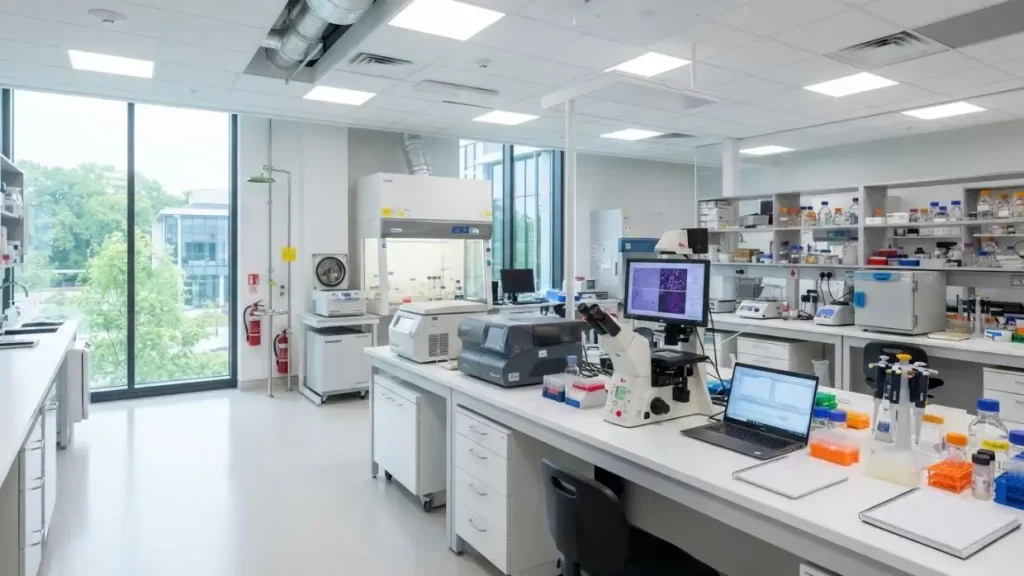
In this regard, eyepieces of type WF10X and WF16X are common in biological microscopes for teaching and in medical and laboratory research. Knowledge of the eyepieces enables the laboratories to optimize the field of view, visual magnification, observation ease, and overall performance of the optical system.
What Does "WF" Mean on a Microscope Eyepiece?
"WF" is an abbreviation for wide field. Compared to the classic ocular of a narrow field, wide-field eyepieces have a bigger visible area.
In a microscope-based optical LAE, using wide-field eyepieces can result in:
•Faster Scans of Specimens: With a larger visible area, less stage movement is needed to achieve the final position.
•Better Visual Relative Positioning: Large field eyepieces can show large elements or even the borders of the field.
•Less Operator Fatigue: A large viewing circle of comfortable size can support even the longest of all observations.
•Improved Imaging at the Field Periphery: Optical correction of the field image can enhance the clarity at field edges.
For Trustlab's wide-field eyepieces, the optical design employs a coating to improve transmission and decrease internal reflections of the eyepiece. The eyepiece, along with the objective, the binocular, the condenser, and the illumination system, is assessed as a system.
WF10X Eyepiece: The Most Versatile
A WF10X eyepiece enlarges the intermediate image from the microscope a factor of ten. Considering its usefulness as a compromise between a large field of view and eyebox and high magnification, it is the most frequently used eyepiece in Laboratory Analytical Equipment for everyday tasks.
Typical Benefits of WF10X
•Increased coverage of the field: A field number of about 20 mm gives a large area of the specimen a whole field view.
•Good eye position: Eye relief, especially the long one, offers a good view for both eyeglass and non-eyeglass users.
•Easy specimen search: The greater coverage of the field simplifies the search for the area of interest before higher power objectives are used.
•Versatile use in a laboratory: The WF10X eyepiece is for education, tissue screening, cell counting, routine microbiology, and lab inspection.
Considering the relative degree of visual information WF10X has, due to its greater field coverage, it is the standard eyepiece for all shared multi-user laboratory microscopes.
WF16X Eyepiece: Greater Enlargement for More Focused Examination
A WF16X eyepiece enlarges the intermediate image from the microscope by a factor of 16. When combined with the same objective, it produces a larger apparent image than a WF10X eyepiece.
For example:
| Objective Lens | Total Magnification with WF10X | Total Magnification with WF16X |
| 4X | 40X | 64X |
| 10X | 100X | 160X |
| 40X | 400X | 640X |
| 100X oil immersion | 1000X | 1600X |
Although WF16X provides greater visual enlargement, higher total magnification does not automatically create additional optical resolution. Resolution is primarily limited by the numerical aperture of the objective, condenser performance, illumination, and specimen preparation.
Practical Characteristics of WF16X
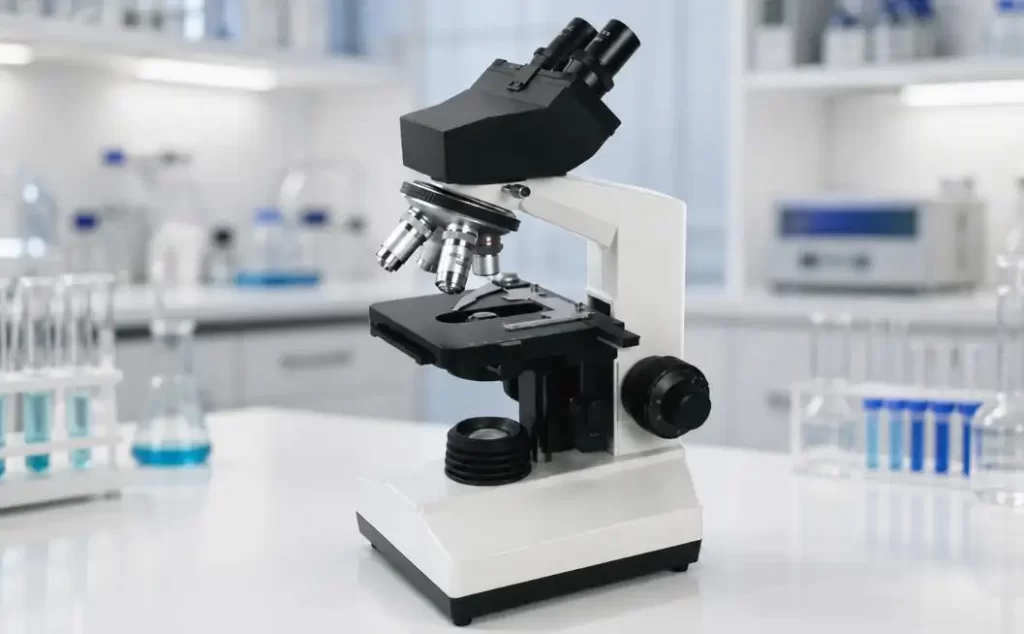
•Larger apparent detail: Small structures appear larger and may be easier to inspect visually.
•Narrower viewing area: Users see less of the specimen at one time than with WF10X.
•Greater alignment sensitivity: Condenser position, aperture adjustment, focus, and illumination become more noticeable.
•WF16X is better suited for analyzing specific designated areas than for general specimen scanning.
For Laboratory Analytical Equipment, WF16X is intended to be an accessory eyepiece for Laboratory Analytical Equipment, rather than a replacement for WF10X.
WF10X vs. WF16X: Key Differences
There are some notable differences between WF10X and WF16X.
| Comparison Factor | WF10X Eyepiece | WF16X Eyepiece |
| Eyepiece magnification | 10X | 16X |
| Typical field number | About 20 mm | About 15 mm |
| Field with 10X objective | About 2.0 mm | About 1.5 mm |
| Viewing experience | Wider and easier to navigate | Narrow and more enlarged |
| Observation comfort | Suitable for long routine use | Better for short focused use |
| Typical applications | Teaching, general observation | Detail checks and high magnification work |
| Main trade-off | Less apparent enlargement | more covered field |
Neither option is better. It depends on the workflow, whether it is better to have some context for the specimen or better to have a larger image.
Why the Complete Optical System Matters
Eyepiece performance is determined by the whole optical system of the microscope. Quality Laboratory Analytical Equipment incorporates several systems:
•Achromatic objectives: Help control chromatic and spherical aberrations for routine use.
•Abbe condenser: Concentrates and supports objective use.
•Iris diaphragm: Modifies the contrast and resolution. Changes the depth of field.
•Stable light source: Provides steady light during the full microphotographic field.
•Mechanical stage: Provides precise location of the specimen.
•Coarse and fine focus controls: Allow for adjustments of focus of low- and high-power magnification, respectively.
An NA 1.25 Abbe condenser is capable of routine high-power observation. When centered and adjusted properly, this condenser works adequately. For this condenser, a reduction in aperture may enhance contrast, but at the cost of resolution. With a widening of the aperture, contrast decreases and glare increases.
Eyepiece Design and Ergonomics
The usability of Laboratory Analytical Equipment extends beyond optical quality. Since many laboratory microscopes are used for extended periods, it is important for their design to be ergonomic.
Trustlab has included WF eyepieces with:
•Inclined Eyepiece Tube: Eyepiece tubes that are inclined at 45° help to maintain a more ergonomic design.
•Binocular Head: A 360° binocular head aids in asymmetric placement of the microscope on the bench and aids in shared observation.
•Interpupillary Distance Adjustment: The adjustment for the distance between the users's eyes.
•Diopter Adjustment: Individual differences of the dominant eye preference can be easily adjusted without the need to adjust the main focus.
•Optical Housings: The eyepieces are designed to be robust to withstand the rigors of teaching and laboratory use.
Selecting an Eyepiece
When selecting an eyepiece, laboratories should primarily consider the observation task and not only the magnification.
Choose WF10X for:
•Routine observation of samples
•Teaching and demonstration
•Overview of cells and tissues
•Long observation periods
•Navigation of slides
Choose WF16X for:
•Inspection of smaller areas of a sample
•Stained structures observation
•Duration checks of observation
•Checks of observation to view and/or complement features that are smaller than those visible with WF10X.
The availability of both eyepiece options in a single microscope enhances the flexibility of that microscope within different Laboratory Analytical Equipment workflows.
Trustlab's Practical Optical Design
Trustlab designs Laboratory Analytical Equipment to consider the integration of optical design, mechanical design, control of illumination, and user comfort within a constrained system. Trustlab has extensive experience in the manufacturing of laboratory equipment to facilitate the design and integration of widefield eyepieces, achromatic objectives, condensers, and mechanical focus and stage systems.
Trustlab emphasizes features that enable consistent daily use, as opposed to simply using headline magnifications. WF10X allows for greater field coverage for everyday tasks, while WF16X allows for greater magnification for detailed work. The choice between the two is reliant on the user's understanding of the nature of the sample, the application, and the overall optical configuration.
FAQs
Q1. What does WF mean for microscope eyepieces?
WF means widefield which means wider area of view.
Q2. Is WF10X appropriate for general lab usage?
Yes. WF10X is practical in terms of trade offs for lab usage in terms of coverage, magnification and comfort.
Q3. What is the main benefit of WF16X eyepiece?
It has the benefit of greater visual enlargement for more specific viewing of a specimen.
Q4. Is WF16X better than WF10X in terms of resolution?
Not really. Generally, resolution will depend more on the objective lens, numerical aperture, illumination and the specimen itself.
Q5. Which eyepiece has the largest field of view?
Generally, WF10X has a larger field of view than WF16X.