


Updated 1 week ago
Laboratory Centrifuge Manufacturer: How to Assess Your Next Equipment Supplier
Arafatshuvo

Laboratory Centrifuge Manufacturer
A centrifuge quotation may appear convincing due to the fact that it has a high maximum centrifugal speed and for example a number of different rotors. However, the instrument might not be appropriate for the tubes, centrifugal force, temperature or daily load of the lab.
Therefore, when it comes to choosing a Laboratory Centrifuge Manufacturer, one has to consider the suggested machine and its support. A reliable selection process is correlated with a specific, documented configuration, instead of a general description of the product, for the buyer and distributor of laboratory equipment.
Include Separation Requirement Supplier Can Evaluate
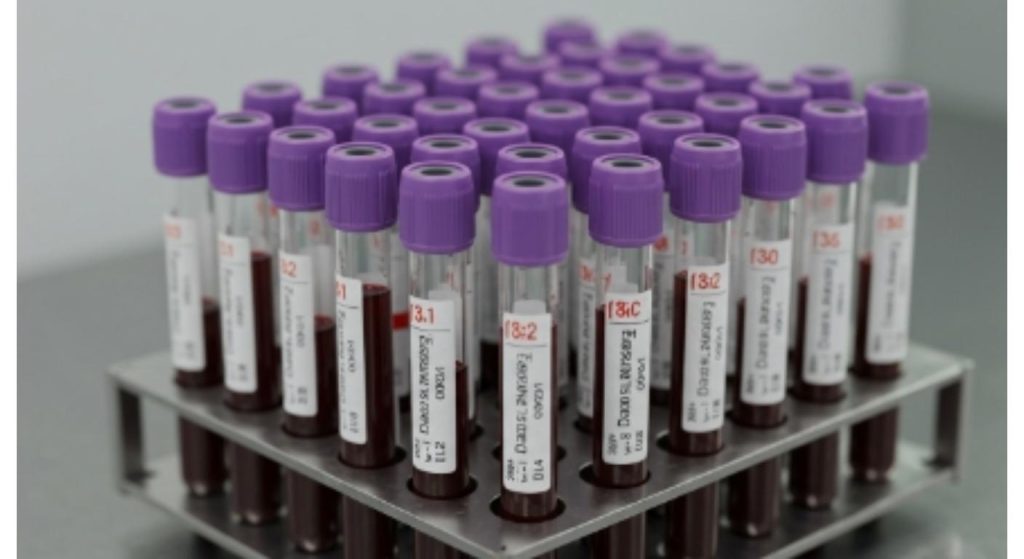
Outline the process prior to asking for a model recommendation. The supplier should be provided with the sample format, working volume, required centrifugal force (rcf), run time, temperature and number of samples.
Describe if the instrument will be subjected to spin-down every so often or whether spin-downs can be repeated through the day. These uses can result in varying considerations for selections even when the containers are alike.
Trustlab's centrifuges are available in compact or refrigerated versions. Use this range as a starting point to discuss technical with supplier and then ask supplier to pinpoint model and accessories to meet actual procedure. Only a wide portfolio will be of help if the proposed configuration is already well-defined.
CF Before Maximum Speed (RPM):
The rotational speed and relative centrifugal force measure two different quantities. The rate of turning of the rotor is measured by RPM; RCF is also affected by the radius at which the sample is placed in the rotor.
Thus, the same RPM on two centrifuges can result in different forces on the sample. When a method requires RCF, check the performance of the rotor to be used against the requirement and never select the one that has the highest speed.
Inquire about the maximum speed, force and capacity quoted whether they are for the same configuration or not. The manufacturer may provide multiple rotor options, which have varying limits. Numbers with highest values on a product page should not be automatically added together as operating conditions.
Verify the instrument's method of displaying or converting operating settings, and its convention (radii) used in documentation. It assists the laboratory to pass on an existing technique without having to make an approximate conversion.
Check Rotor for Instrument Soundness
A complete proposal specifies the rotor and adapters, as well as the containers which can be used with it. Tube capacity is not a defining fit, other factors such as outside diameter, height, bottom shape, closure and support arrangement may be important.
The mini centrifuge machine of Trustlab includes microtube and PCR tube support. This means that it's suitable for small volume workflows, though the specific rotor and adapters provided should be checked first before ordering.
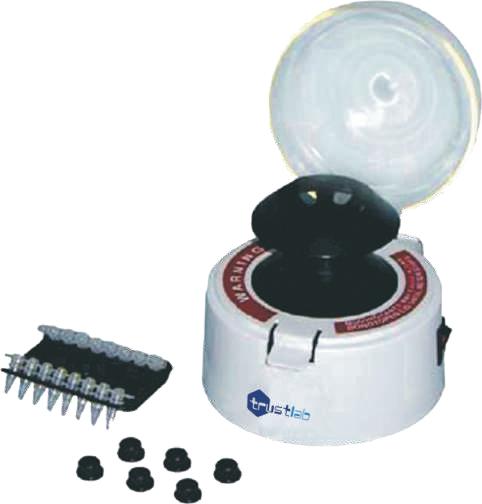
Have the manufacturer separate out the standard accessories from the optional accessories. A machine which is not shipped with the necessary adapters could be unusable until the next shipment.
If sample hazards are involved, ask for a record of the particular rotor/bucket system. Don't assume that a closed instrument lid will keep aerosols contained and that all rotors are alike with regard to their protective features.
Consider making Refrigeration a Method Requirement.
Refrigeration should be chosen for the reason that the treatment requires controlled temperature and not because a refrigerated one looks more sophisticated. Specify the temperature to be used and how it is to be maintained in the run being planned.
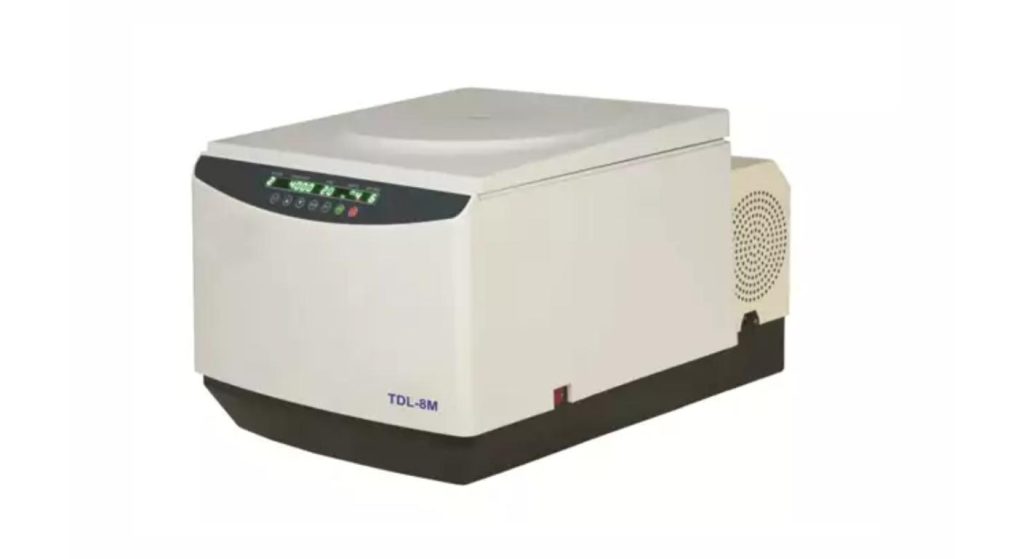
Trustlab's table top refrigerated centrifuges have a variety of published speeds, forces and capacities. Another format for smaller containers and higher speed applications is its tabletop Micro-refrigerated centrifuges.
| Published Specification | TLTDL-8M | TLTDL-5M |
| Maximum speed | 8,000 rpm | 5,000 rpm |
| Maximum RCF | 9,100 × g | 4,390 × g |
| Maximum capacity | 4 × 250 mL | 72 × 7 mL |
| Temperature setting range | −5 to +35°C | −5 to +35°C |
Inquire about the temperature performance at the desired rotor in conjunction with the operating speed, load and laboratory conditions. The specified temperature range does not necessarily guarantee that all setpoints are achievable for all operating conditions.
Establish any pre-cooling process and the temperature measurement/indication method. When a sensitive method is used, set up suitable verification under representative conditions, instead of taking the temperature indicated by the display as the temperature of the sample in each sample tube.
Request “Evidence of Safety and Manufacturing Control”
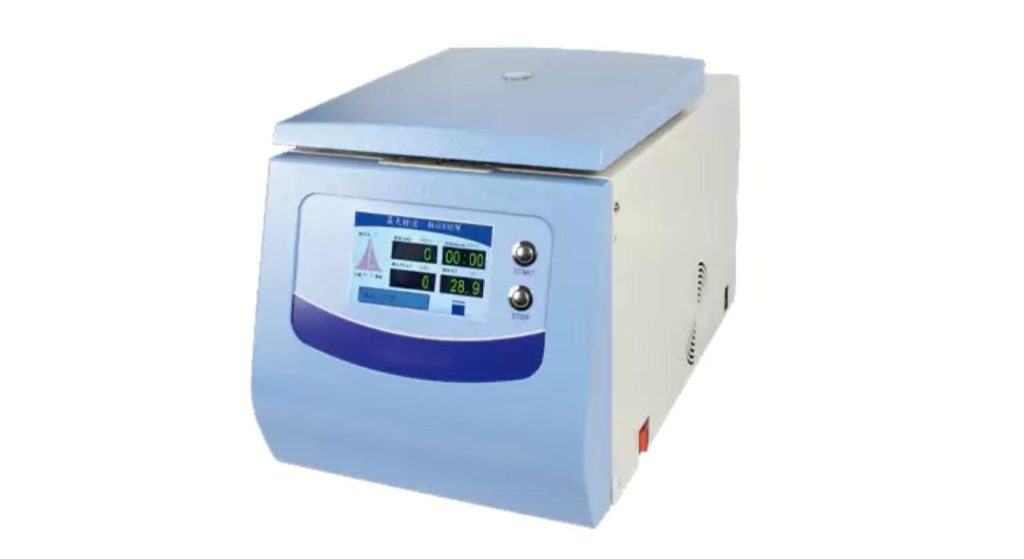
It is the responsibility of a Laboratory Centrifuge Manufacturer to inform the customers about the safety functions offered on the model they have quoted. Trustlab includes on its refrigerated product pages: lid interlock, imbalance detection, which buyers should verify for the proposed configuration.
Ask for the operating manual and documentation of the product prior to approval. Check installation requirements, loading instructions, permitted accessories, rotor checking, cleaning and the response to alarms.
Speak with the supplier about how the company identifies the instruments or replacement parts, how the company handles changes and how the company tests equipment prior to shipment. Request applicable inspection and/or test records rather than assuming manufacturing capabilities based on an outside photo.
Similarly, check the actual scope of conformity documents and their relevance for their destination. A performance statement for a general quality system does not determine the performance of each model, or its suitability for a specific clinical application.
Assess if Daily Operation works for the Laboratory
Affects the consistency of staff to follow a procedure. Take into account access, control layout, timer behaviour and if acceleration or braking settings are required for the method, etc.
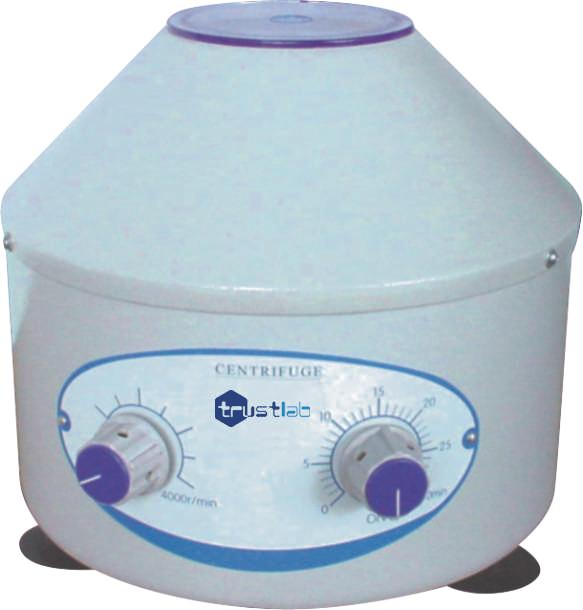
The GT211-800D laboratory centrifuge from Trustlab is introduced for regular separation applications. Don't think that one machine works for all applications—compare such a machine to more specialised machines with the workload.
Evaluate bench size, installation space requirements, power source and equipment operating weight. These also have an impact on installation advice and delivery scheduling for distributors.
If possible, test a demonstration or have an acceptance plan documented. Acceptance should be for the ordered configuration and agreed requirements, and not just to the power-on of the instrument.
Make sure you compare the support before making any price comparison.
Explain the warranty conditions, ways of solving problems, availability of spare parts, and who will provide services in the target country. Check to make sure they know the outcome if a rotor, lid part or refrigeration system needs to be inspected.
Compare quotes with similar accessories, documentation and packaging and delivery. When price of the instrument is reduced, so too can become the attractiveness of the instrument, if the vital parts and services are not included.
Keep the last specification/agreed configuration with the Purchase Order. Ensure proposed changes in substitution or design are communicated prior to delivery in order to ensure consistency of repeat orders.
Conclusion
Choosing a Laboratory Centrifuge Manufacturer involves evaluating the entire package – separation performance, rotor compatibility, temperature control, safety documentation, and support. Different formats of centrifuges are available with Trustlab and can be used for that comparison, depending on the method, the final choice is made.
Provide the supplier with a well-defined application brief and ask for a certain configuration. This makes it easier to compare quotations and have a more meaningful acceptance of delivery.
FAQs
Q1. Does the maximum RPM represent the best choice of criterion?
No. You need to have the same RCF, rotor, sample format and operating conditions. Suitability cannot be determined by maximum RPM.
Q2. Is the rotor included in a quotation for a centrifuge?
Inclusions vary. Make sure to get this detail in writing before checking out and ordering.
Q3. What are the times when a refrigerated centrifuge is required?
Use refrigeration for separation where a controlled temperature is needed. Verify the performance under the proposed rotor, speed, load and environment.
Q4. Does lid interlock imply centrifuge will contain aerosol?
No. These are various functions. If necessary, demand containment papers for a particular rotor or bucket system.
Q5. What should distributors ensure with respect to after-sales support?
Establish warranty, trouble shooting, parts availability and local responsibility for service. Make these arrangements a part of the commercial agreement.