



Updated 3 weeks ago
Laboratory Equipment for Chemistry: A Guide to Trustlab Equipment Series and Applications

Trustlab
The author is a specialist at Ningbo Trustlab Instruments Co., Ltd., a leading provider of laboratory and medical consumables since 2015. With extensive experience in global healthcare and laboratory markets, they focus on delivering high-quality, innovative solutions and professional support to laboratories, hospitals, and distributors worldwide. Trustlab’s products are trusted in over 100 countries, reflecting the company’s commitment to reliability, excellence, and customer satisfaction.

Laboratory Equipment for Chemistry
Choosing Laboratory Equipment for Chemistry is easier when instruments are grouped by the function they perform in the laboratory. A chemistry workflow may require accurate weighing, controlled mixing, heating, temperature incubation, centrifugal separation and supporting sample inspection. Each stage places different demands on speed, temperature stability, capacity and operating format.
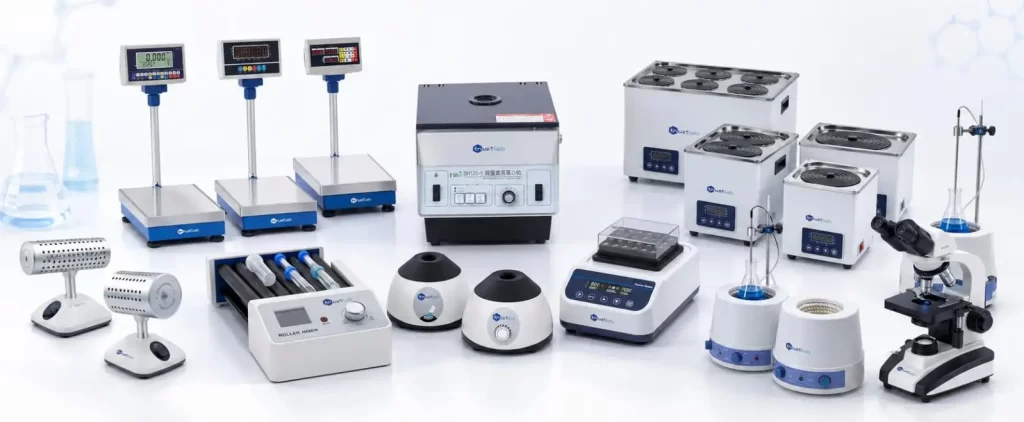
Trustlab organizes the laboratory equipment portfolio into centrifuges, microscopes, shaker & mixer systems, stirrers, dry baths, water baths, heating mantles, infrared sterilizers and electronic scales. For laboratories building or upgrading a chemistry workflow, the following guide explains where each Laboratory Equipment for Chemistry series fits.
Trustlab Laboratory Equipment for Chemistry at a Glance
| Trustlab Series | Main Function | Key Selection Factors | Recommended Use |
| Electronic Scale | Weighing | Readability, capacity, repeatability | Reagent and sample preparation |
| Stirrer | Liquid mixing | RPM, volume, viscosity | Solution preparation |
| Shaker & Mixer | Agitation and blending | Motion type, speed, load | Multi-sample mixing |
| Centrifuge | Separation | RCF, rotor, capacity, temperature | Suspensions and precipitates |
| Dry Bath | Block heating | Temperature range, block format | Tube heating and incubation |
| Water Bath | Uniform heating | Temperature control, bath volume | Temperature-sensitive samples |
| Heating Mantle | Flask heating | Flask size, temperature control | Reactions and distillation |
| Microscope | Sample observation | Magnification, optical configuration | Particles, crystals and materials |
| Infrared Sterilizer | Tool sterilization | Heating zone, operating temperature | Supporting laboratory hygiene |
The correct series depends first on the process rather than the highest available specification.
Electronic Scale Series for Reagent and Sample Preparation
Accurate weighing is often the first stage of Laboratory Equipment for Chemistry workflows. Trustlab includes electronic scales within its laboratory equipment range and positions the series for accurate laboratory weight measurement.
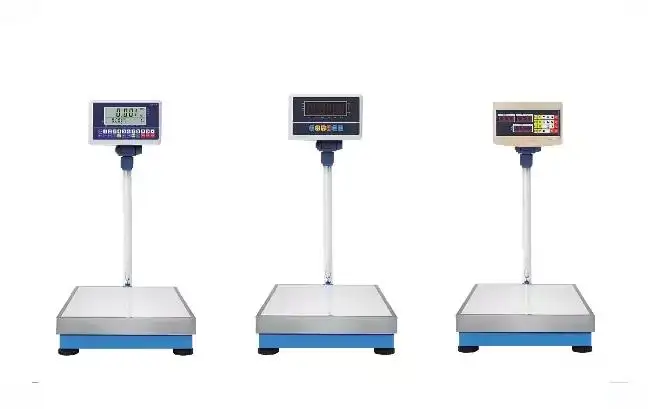
For chemistry applications, buyers should evaluate more than display digits:
•Readability — Smallest displayed mass increment
•Capacity — Maximum permitted load
•Repeatability — Consistency of repeated measurements
•Calibration — Method used to verify measurement performance
•Working environment — Drafts, vibration and bench stability
Recommended for: reagent preparation, powder weighing, formulation work and routine QC where the required mass range is known.
A smaller readability value is useful only when laboratory conditions and measurement uncertainty support it.
Stirrer Series for Solution Preparation
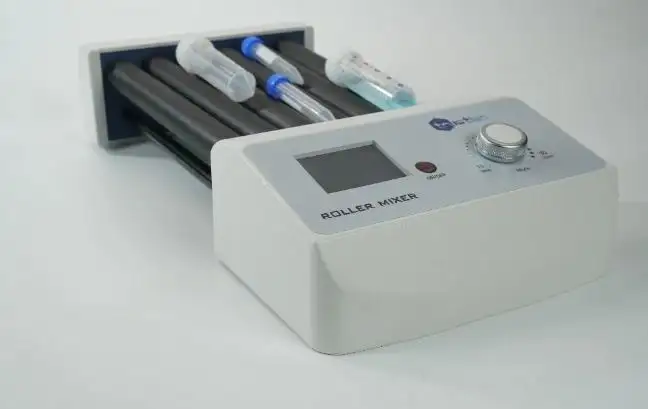
Trustlab's stirrer portfolio includes magnetic and multi-position configurations, including the TLMS-1L and 10-position magnetic stirrer series shown on its current product page.
Magnetic stirring is particularly appropriate for:
•Dissolving reagents
•Buffer and standard preparation
•Low-to-moderate viscosity liquids
•Routine chemical solution mixing
•Parallel mixing where multi-position systems are used
The selection chain should be:
Sample viscosity → vessel volume → stir bar → required mixing intensity → RPM
For high-viscosity materials or high mechanical loads, buyers should not assume that maximum RPM alone determines mixing performance.
Shaker & Mixer Series for Multi-Sample Processing
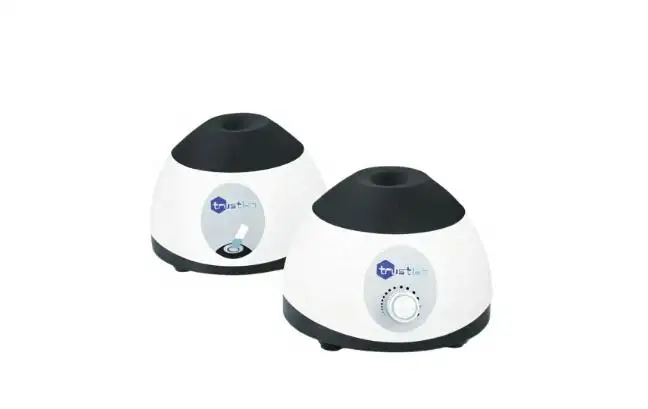
Where the objective is not continuous magnetic stirring but controlled agitation of multiple tubes, bottles or sample vessels, Trustlab's Shaker & Mixer series provides another category within its Laboratory Equipment portfolio.
This series is better considered when laboratories require:
•Parallel sample agitation
•Repetitive mixing protocols
•Tube or container-based processing
•More standardized movement between batches
When comparing shaker and mixer models, consider motion pattern, platform capacity, allowable load, speed range and vessel compatibility.
Centrifuge Series for Chemistry Sample Separation
Trustlab offers a broader centrifuge range including tabletop refrigerated centrifuges, tabletop micro-refrigerated centrifuges, mini centrifuges and laboratory centrifuge configurations.
This makes the centrifuge series particularly relevant for Laboratory Equipment for Chemistry used in:
•Precipitate separation
•Clarification
•Phase preparation
•Small-volume sample processing
•Temperature-sensitive separation
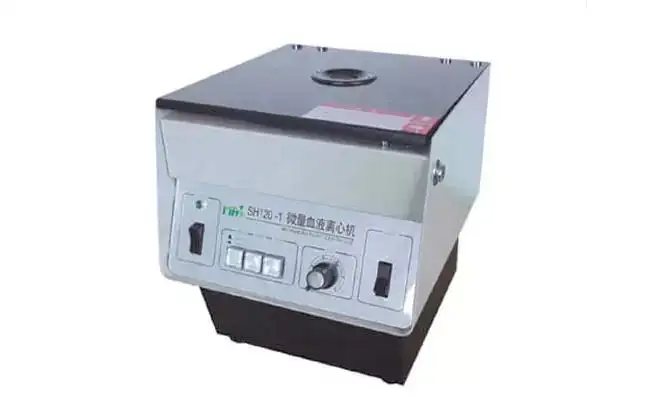
Do Not Select by RPM Alone
The more useful parameter is often RCF, because centrifugal force depends on both rotor radius and rotational speed.
When selecting a Trustlab centrifuge, define:
•Required RCF
•Sample volume
•Tube format
•Rotor configuration
•Number of samples per batch
•Refrigeration requirement
Mini centrifuges suit small-volume routine processing, while refrigerated tabletop configurations are more appropriate when sample temperature must be controlled during separation.
Dry Bath Series for Tube-Based Temperature Control
Trustlab's dry bath range includes mini, dual-block, shaking-incubator and other dry bath configurations.
Dry baths use heated blocks rather than water, making them attractive where laboratories want:
•Compact installation
•Tube-based incubation
•Reduced water handling
•Defined block geometry
•Repetitive heating protocols
The series are providing controlled, uniform heating for incubation, chemical reactions and sample preparation.
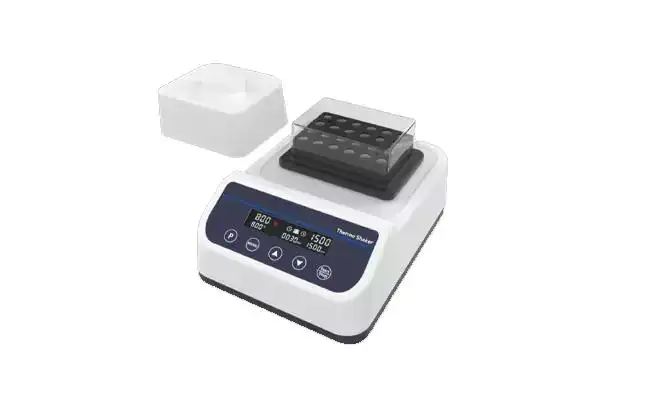
Recommended for: small-volume tubes and workflows where dry, localized temperature control is preferable to a larger liquid bath.
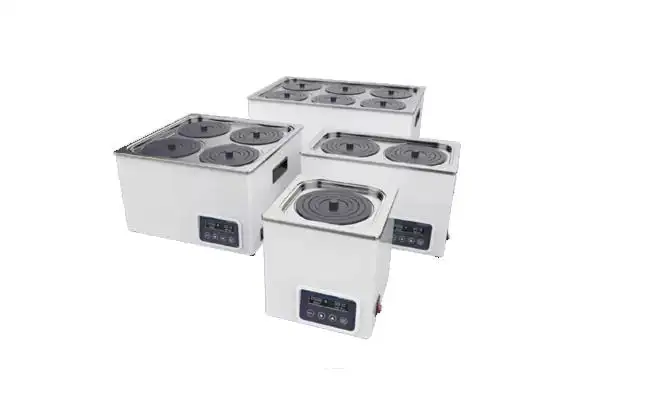
Water Bath Series for Uniform Sample Heating
A water bath should be considered when heat transfer and temperature uniformity across immersed vessels are more important than very high operating temperature.
Typical chemistry applications include:
•Sample warming
•Temperature-controlled reactions
•Solution conditioning
•Incubation
•Pre-analysis temperature stabilization
When selecting this Chemistry Lab Equipment, consider:
Temperature range + stability + how much water the bath can hold + how far down the vessel is immersed, rather than just the highest temperature.
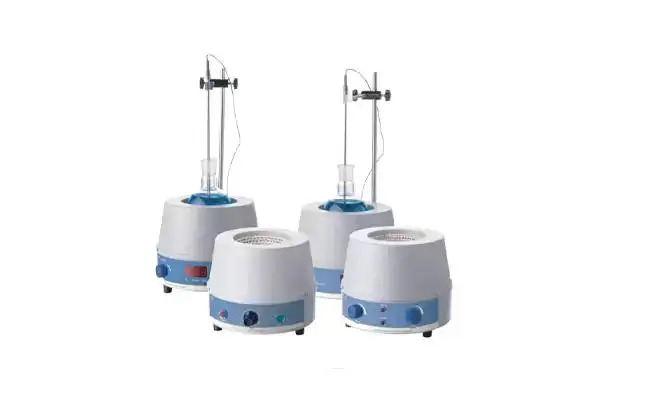
Heating Mantle Series for Chemical Reactions in Flasks
The line of heating mantles from TrustLab is designed for safe heating of lab glassware and has adjustable temperature control for even heating around the vessel.
It is particularly relevant for:
•Round-bottom flask heating
•Chemical synthesis
•Reflux
•Solvent-related heating processes
Compared with a conventional hotplate, a heating mantle provides closer contact around the flask surface. The selected mantle should therefore match flask geometry and volume, not simply wattage.
Supporting Series: Microscopes and Infrared Sterilizers
Not every Laboratory Equipment for Chemistry series is part of the main reaction process.
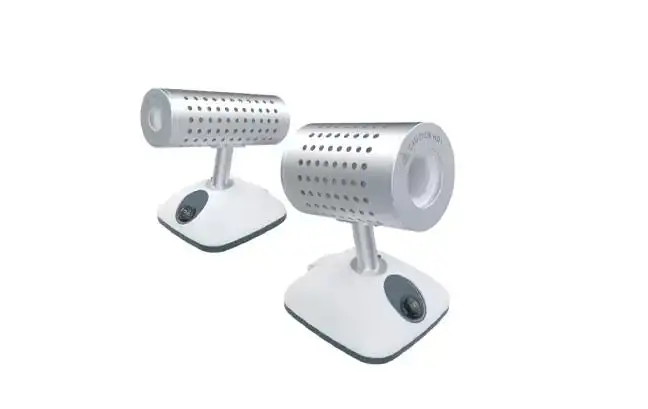
Trustlab also lists microscopes and infrared sterilizers within its laboratory equipment portfolio. Microscopes can support particle, crystal, material or sample observation where visual examination is part of the method, while sterilization equipment is more relevant where tools or laboratory hygiene procedures require thermal treatment.
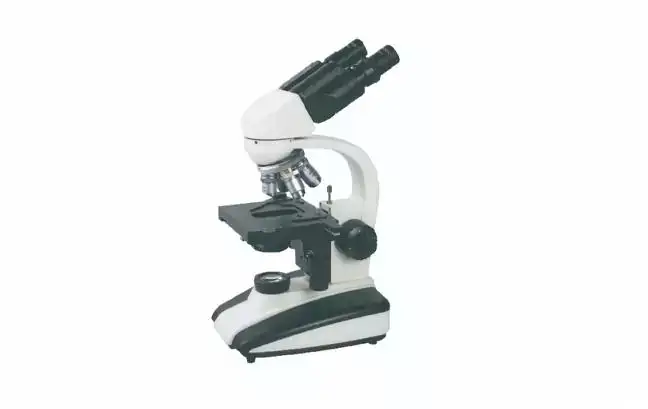
These should be specified according to the actual analytical or contamination-control requirement rather than automatically included in every chemistry laboratory.
How to Combine Trustlab Series for a Complete Chemistry Workflow
A practical equipment combination might be:
Electronic Scale → Stirrer/Mixer → Water Bath or Heating Mantle → Centrifuge → Dry Bath/Inspection
Before requesting a quotation, define:
•Sample type
•Batch volume
•Viscosity
•Required temperature
•Separation force
•Number of samples per day
•Vessel and tube format
•Local voltage
•Required documentation
Trustlab's portfolio covers the major weighing, mixing, temperature-control and separation functions needed in many routine laboratory workflows. Rather than choosing each instrument independently, laboratories can provide their sample type, volume and process conditions first, then compare the Trustlab Laboratory Equipment for Chemistry series that best fit each stage of the workflow.
FAQs
Q1. What Laboratory Equipment for Chemistry does Trustlab supply?
Trustlab's products cover multiple aspects of laboratory equipment including weighing, mixing, shaking, centrifugation, controlling temperature and heat, and sample observation. Trustlab's offered products include scales, stirrers, shakers, mixers, centrifuges, dry baths, water baths, heating mantles, microscopes, and other accessories.
Q2. How should I choose Trustlab Laboratory Equipment for Chemistry?
First, consider the application and then consider the model. Based on the sample type, batch size and volume, sample viscosity, temperature range, and separation force, consider whether a tube or vessel will be used. Consider the daily throughput and then check specifications of the equipment.
Q3. Which Trustlab equipment is suitable for chemical solution preparation?
Electronic scales allow reagents to be weighed. For mixing or sample preparation, magnetic stirrers can also be used. The choice will depend on the volume and viscosity of the sample.
Q4. Does Trustlab offer centrifuges for different laboratory applications?
The centrifuge models offered by Trustlab cater to small-volume, routine, and even temperature-controlled separations for different laboratory applications. Different centrifuges also vary in RCF, rotor type, sample size and volume, tube format, and even if they have any built-in refrigeration.
Q5. When should a heating mantle be selected?
A heating mantle is particularly useful for round-bottom flasks used in chemical synthesis, reflux and related heating processes. Flask volume and geometry should be matched to the mantle instead of selecting only by heating power.
Written by
Trustlab
The author is a specialist at Ningbo Trustlab Instruments Co., Ltd., a leading provider of laboratory and medical consumables since 2015. With extensive experience in global healthcare and laboratory markets, they focus on delivering high-quality, innovative solutions and professional support to laboratories, hospitals, and distributors worldwide. Trustlab’s products are trusted in over 100 countries, reflecting the company’s commitment to reliability, excellence, and customer satisfaction.


