


Updated 1 month ago
Microscope Manufacturer in China: Lab Microscope Technology
Arafatshuvo
Microscope Manufacturer in China
When laboratories compare microscopes, magnification is often the first specification they notice. From our perspective as a Microscope Manufacturer in China, however, magnification alone says little about how much useful detail an optical system can reveal.
High-resolution microscopy depends on the interaction of the objective, numerical aperture (NA), condenser, illumination, focusing mechanism, mechanical stage and optical alignment. For digital systems, the camera must also be properly matched to the optical image.
At Trustlab, we therefore view a laboratory microscope as a complete imaging system rather than a collection of independent specifications.
Resolution Is Not the Same as Magnification
Magnification enlarges an image. Resolution determines whether two closely spaced structures can still be distinguished as separate details.
For conventional light microscopy, lateral resolution can be approximated by:
d ≈ 0.61λ / NA
where:
•d = minimum resolvable distance
•λ = illumination wavelength
•NA = numerical aperture of the objective
A smaller d means finer detail can be resolved.
This is why increasing magnification without increasing resolving power produces empty magnification: the image becomes larger, but no additional structural information appears.
For anyone evaluating a Microscope Manufacturer in China, objective specifications and NA should therefore be considered alongside total magnification.
1. Objective Design: Where Image Formation Begins
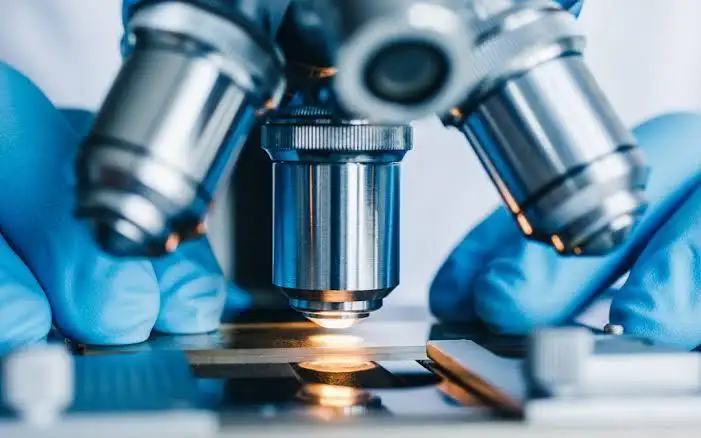
The objective is the most critical image-forming component in a compound microscope. Its optical correction affects:
•Image sharpness;
•Chromatic aberration;
•Field uniformity;
•Contrast;
•Usable resolution.
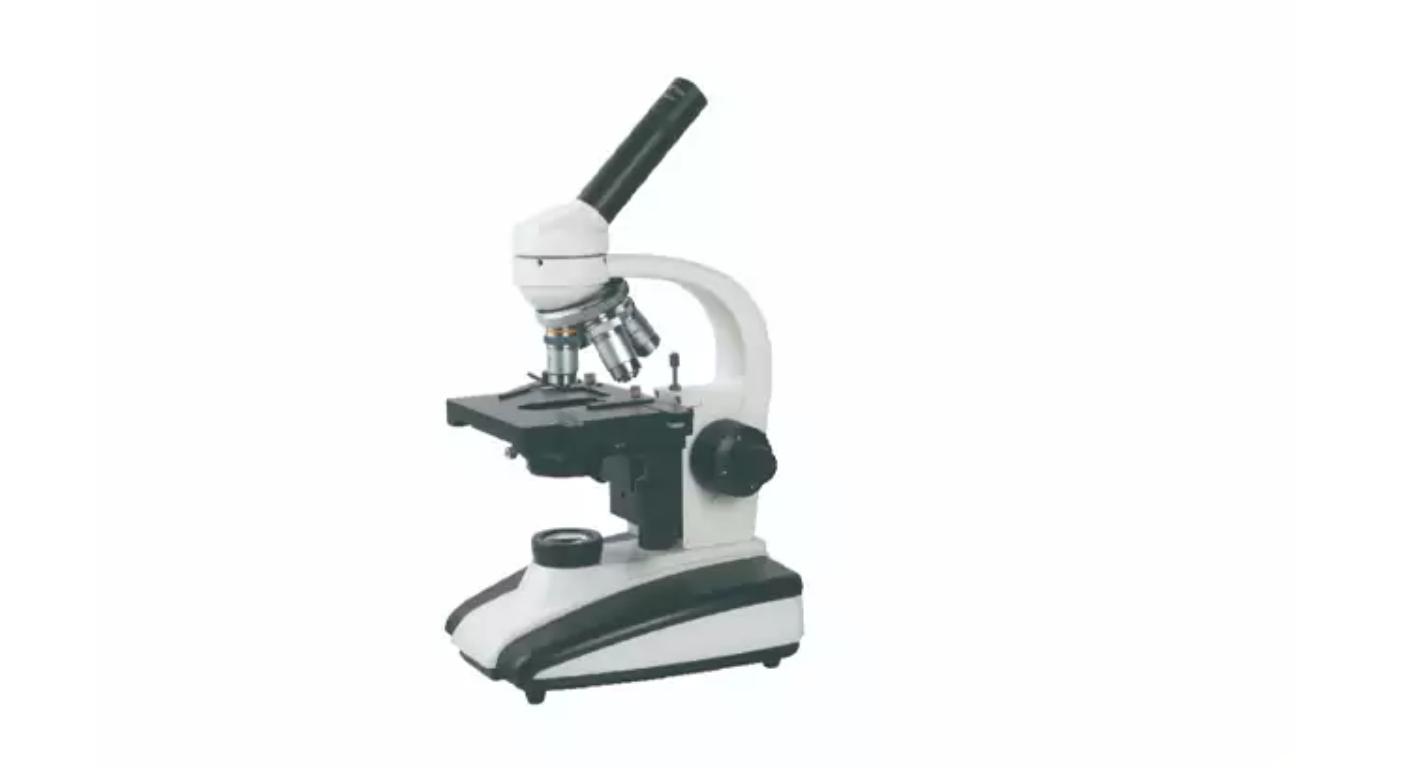
For example, Trustlab's GT-XSP-136D Trinocular Microscope combines WF10X eyepieces with 4X, 10X, 40Xs and 100Xs oil achromatic objectives, providing a total magnification range of 40X–1000X.
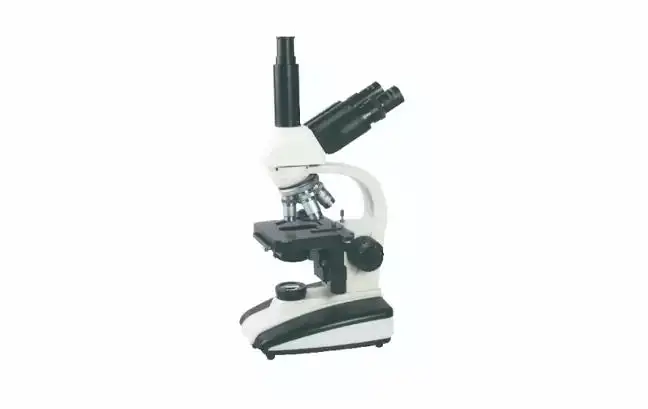
The 100X oil-immersion objective is important because immersion oil reduces the refractive-index transition between the cover glass and objective, enabling more light to enter the objective and supporting higher numerical aperture.
Why Objective Quality Matters Beyond "1000X"
Two microscopes rated at 1000X can perform differently. Meaningful comparison should include:
•Objective type and correction;
•Numerical aperture;
•Condenser specification;
•Illumination control;
•Mechanical focusing precision.
This is a more useful engineering comparison than magnification alone.
2. Numerical Aperture and Condenser Performance
The condenser controls how illumination reaches the specimen. Its aperture should be coordinated with the objective rather than simply opened or closed to maximum.
The GT-XSP-136D uses an NA 1.25 Abbe condenser with iris diaphragm and filter.
In practice, diaphragm adjustment represents a trade-off:
| Adjustment | Typical Effect |
| Wider aperture | Higher resolving potential, lower depth of field |
| Narrower aperture | Higher contrast and depth of field |
| Excessively narrow aperture | Diffraction increases and fine detail can be lost |
This illustrates an important principle: maximum brightness or contrast does not automatically mean maximum resolution.
3. Illumination Must Match the Observation Method
At our China-based microscope manufacturing company, we take a more systemic approach to microscope illumination than to simply providing a microscope with a light source.
GT-XSP-136D, manufactured by Trustlab, uses a 6V/20W halogen lamp, while the GT-GXSP-45LCD Digital Biological Microscope uses top and bottom LEDs for illumination.
•Transmitted illumination is typically used for cells, and other specimens that are thin and/or transparent.
•In contrast, incident (top) illumination is used to study features that are present on the surface of specimens.
•The balance of brightness, contrast, and resolution can be adjusted using the condenser and stopping down the aperture.
•Stable, uniform illumination is especially important when images must be compared between samples.
4. Focus and Mechanical Stability Are Optical Performance Factors
Even good optics cannot deliver consistent images if the mechanical system introduces focus drift, backlash or unstable specimen movement.
The Trustlab GT-XSP-136D provides:
•Coarse and fine focusing;
•20 mm focusing range;
•115 × 125 mm double-layer mechanical stage;
•45° inclined trinocular head;
•360° head rotation.
At 400X or 1000X, the depth of field becomes relatively shallow. Fine-focus control and predictable stage movement therefore become increasingly important.
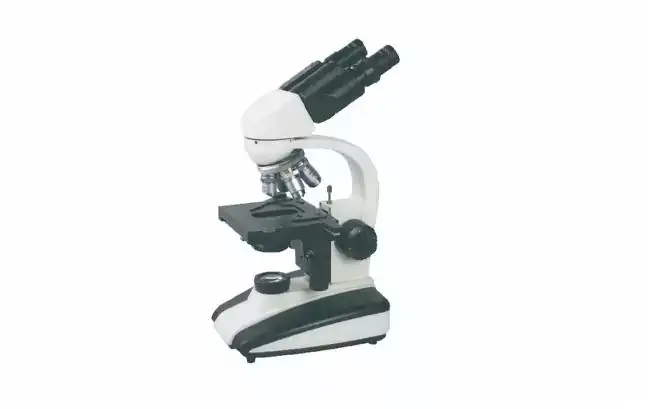
Our GT-XSP-136C Binocular Microscope uses the same 40X–1000X magnification range, 20 mm coarse/fine focusing range, NA 1.25 Abbe condenser and 115 × 125 mm mechanical stage, while adopting a hinge binocular head for routine visual observation.
5. Digital Resolution Must Be Separated from Optical Resolution
One common microscope purchasing mistake is assuming that more camera pixels automatically produce more microscopic detail.
A camera can only record information that the optical system has already resolved.
Trustlab's GT-GXSP-45LCD combines:
•2.0 MP CMOS sensor;
•1600 × 1200 image capture;
•3.6-inch TFT LCD;
•960 × 240 LCD resolution;
•40X–400X optical magnification;
•8X digital zoom;
•SD-card storage;
•USB 2.0 interface.
Digital zoom enlarges recorded pixels; it does not increase the resolving power of the objective. This distinction is important when comparing digital microscope specifications.
6. What Should Laboratories Evaluate?
When selecting a Microscope Manufacturer in China, we recommend evaluating the system across several dimensions rather than selecting by maximum magnification.
| Technical Area | Key Question |
| Objectives | Which magnifications and optical corrections are supplied? |
| Numerical aperture | Is the NA appropriate for the required resolution? |
| Condenser | Can illumination aperture be precisely controlled? |
| Focus | Are coarse and fine adjustments available? |
| Stage | Can specimens be positioned accurately and repeatedly? |
| Illumination | Is the lighting configuration appropriate for the samples? |
| Camera | Is digital capture matched to the optical system? |
| Ergonomics | Is the viewing head suitable for extended operation? |
| Quality control | Can performance remain consistent between instruments? |
About Trustlab
Founded in 2015, Ningbo Trustlab Instruments Co., Ltd. serves laboratories, healthcare institutions, and distributors worldwide. With products exported to over 100 countries, Trustlab focuses on reliable laboratory and medical solutions, consistent quality, practical innovation, and long-term global partnerships.
At Trustlab, our microscope range is designed around practical laboratory requirements including multiple magnification options, controllable focusing and illumination, ergonomic viewing and durable mechanical construction. Our laboratory equipment is stated to be manufactured in compliance with CE and ISO requirements and subjected to quality testing.
This system-level approach is relevant to education, routine biological observation, research, healthcare laboratories and digital documentation workflows.
Conclusion: Evaluate the Entire Imaging Chain
High-resolution microscopy is the result of an imaging chain—not one impressive specification.
Objective quality → NA → Condenser → Illumination → Focus → Mechanical stability → Optical alignment → Digital capture
All of these elements influence what the operator ultimately sees or records.
To serve the requirements of laboratories and distributors evaluating a microscope manufacturer in China, Trustlab provides binocular and trinocular microscopes as well as biological and digital microscopes.
When considering microscopes, an understanding of the trade-offs for the various components of an optical system is critical. Select the Trustlab microscope that best aligns with the specimen and the resolution required and with consideration to the workflow in the lab, as opposed to selecting a microscope based on the maximum magnification required.
FAQs
Q1. What types of laboratory microscopes does Trustlab offer?
Trustlab provides biological, binocular, trinocular, laboratory, and digital microscope configurations for education, biological observation, research, healthcare laboratories, and image documentation. Its product range is designed to support different optical and workflow requirements rather than relying on one standard configuration.
Q2. What magnification range is available on Trustlab laboratory microscopes?
Selected Trustlab compound microscopes use WF10X eyepieces with 4X, 10X, 40X, and 100X objectives, providing a total magnification range of 40X to 1000X. This range supports routine low-power viewing as well as higher-magnification biological observation.
Q3. What condenser is used in Trustlab biological microscopes?
Selected Trustlab laboratory microscopes use an NA 1.25 Abbe condenser with an adjustable iris diaphragm. The condenser helps control the illumination cone reaching the specimen, allowing operators to balance resolution, contrast, and depth of field.
Q4. Does Trustlab offer both binocular and trinocular microscopes?
Yes. Trustlab supplies both binocular and trinocular configurations. Binocular microscopes are suitable for routine visual observation, while trinocular systems provide an additional optical path that can support camera-based imaging, documentation, teaching, or research workflows.
Q5. Does Trustlab manufacture digital microscopes with integrated cameras?
Yes. Trustlab offers digital microscope configurations combining optical microscopy with CMOS imaging, LCD viewing, image capture, storage, and USB connectivity. Its digital microscope platform provides 40X–400X optical magnification and up to 8X digital zoom.