



Updated 7 days ago
PRP Centrifuge Machine for Medical Use: Single-Spin vs. Double-Spin PRP Preparation

Trustlab
The author is a specialist at Ningbo Trustlab Instruments Co., Ltd., a leading provider of laboratory and medical consumables since 2015. With extensive experience in global healthcare and laboratory markets, they focus on delivering high-quality, innovative solutions and professional support to laboratories, hospitals, and distributors worldwide. Trustlab’s products are trusted in over 100 countries, reflecting the company’s commitment to reliability, excellence, and customer satisfaction.

PRP Centrifuge Machine for Medical Use
A PRP Centrifuge Machine for Medical Use should not be selected simply by comparing maximum RPM. Platelet-rich plasma preparation is a controlled separation process in which centrifugal force, spin time, rotor geometry, tube volume, braking behavior, and fraction collection all influence the final PRP composition.
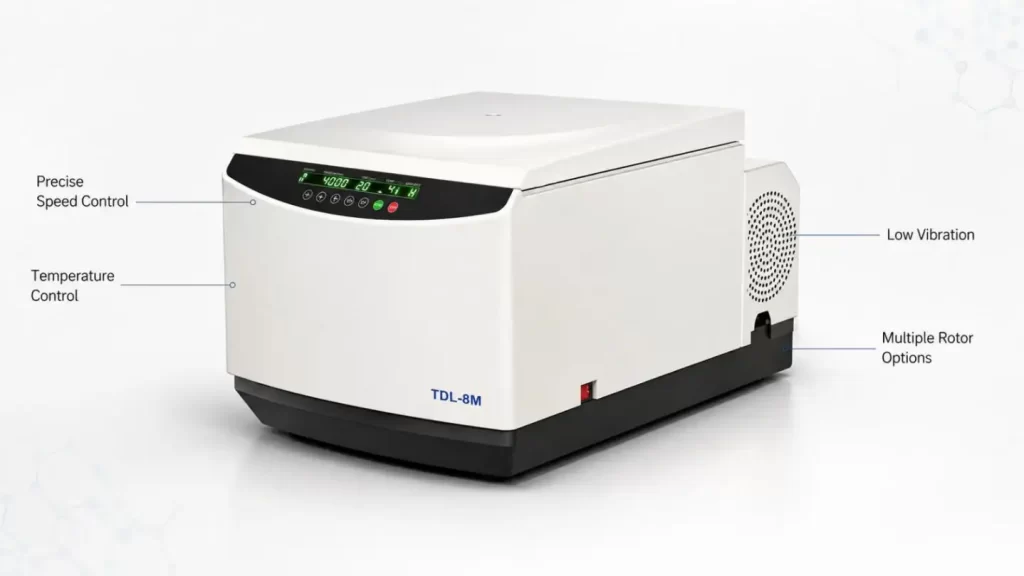
One of the primary decisions regarding PRP is which of the two centrifugation methods to use: single-spin or double-spin. Single-spin is less complex of the two methods, while double-spin is more complex and involves an additional concentration step. There's no clear winner of the two methods. Which method is appropriate is determined by the required target concentration of platelets, the leukocyte content, the volume of PRP and the validated clinical protocol.
Centrifugation Controls Separation of PRP
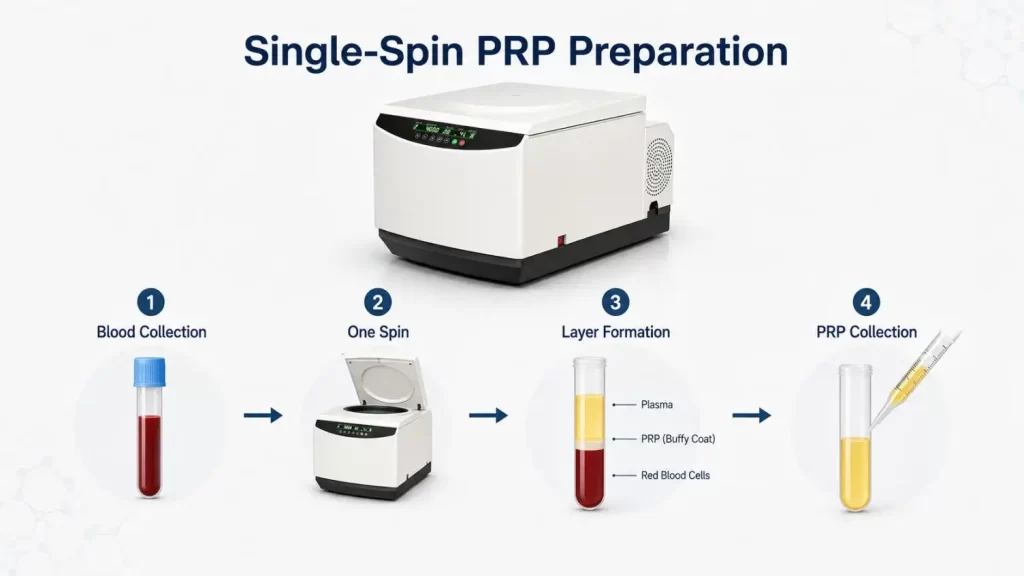
Components of blood containing differing densities and sedimentation characteristics separate during centrifugation into different fractions.
Typical separation would involve:
•Plasma, top, clear layer
•PRP collected from plasma
•Buffy coat, leukocytes and platelets, cellular interface
•Red blood cells, bottom, denser fraction
A medical grade PRP centrifuge's goal is not just to sediment cells, but create a stable separation interface while capturing a platelet layer according to the chosen method of preparation.
Critical process variables include:
•Relative centrifugal force (RCF)
•Centrifugation time
•Rotor radius and geometry
•Tube dimensions and fill volume
•Acceleration and deceleration
•Sample balance
•Fraction collection position
Single-Spin PRP Preparation
A single-spin workflow uses one centrifugation stage:
Blood Collection → Anticoagulation → Centrifugation → Layer Separation → PRP Collection
Its main advantage is a shorter and less complex preparation process. Fewer transfer steps can also reduce operator handling.
However, "single-spin" does not define a specific PRP concentration. The result depends on how the centrifugation parameters and collected fraction are controlled.
Key Single-Spin Variables
•RCF must provide adequate separation without unnecessarily driving platelets out of the target fraction.
•Spin time must be reproducible between patients or sample batches.
•The collection level determines how much platelet, leukocyte, or RBC content enters the final PRP.
•Braking should avoid unnecessary disturbance of the separated interface.
Single-spin is therefore most useful when the target PRP composition can be achieved reproducibly in one validated separation step.
Double-Spin PRP Preparation
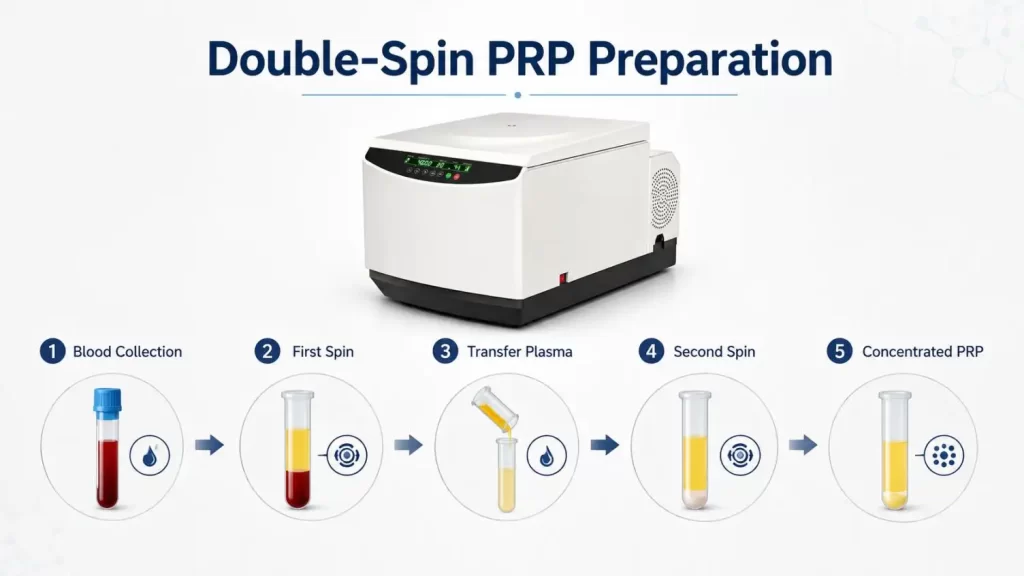
Double-spin processing separates the workflow into two functional stages.
First Spin: Blood Component Separation
The first centrifugation separates much of the red-cell fraction from platelet-containing plasma.
The operator then transfers the required plasma fraction according to the protocol.
Second Spin: Platelet Concentration
The transferred fraction undergoes another centrifugation step. Platelets are further sedimented, allowing part of the platelet-poor plasma to be removed and the remaining platelet fraction to be resuspended in a smaller volume.
Because two different centrifugation stages may be required, a PRP Centrifuge Machine for Medical Use needs repeatable control rather than only high maximum speed.
Single-Spin vs. Double-Spin: Technical Comparison
| Decision Factor | Single-Spin | Double-Spin |
| Centrifugation stages | One | Two |
| Processing time | Shorter | Longer |
| Sample transfer | Limited | Additional transfer |
| Protocol complexity | Lower | Higher |
| Platelet concentration | Protocol-dependent | Additional concentration possible |
| Final volume control | More dependent on collection | Greater adjustment possible |
| RBC/WBC control | Collection-layer dependent | Influenced by both separation stages |
| Operator sensitivity | Fraction collection | Transfer + second-spin handling |
| Main requirement | Consistent separation | Consistent separation and concentration |
The correct decision is not simply one spin versus two spins. It is which protocol consistently produces the required PRP composition for the intended application.
RCF Is More Important Than RPM Alone
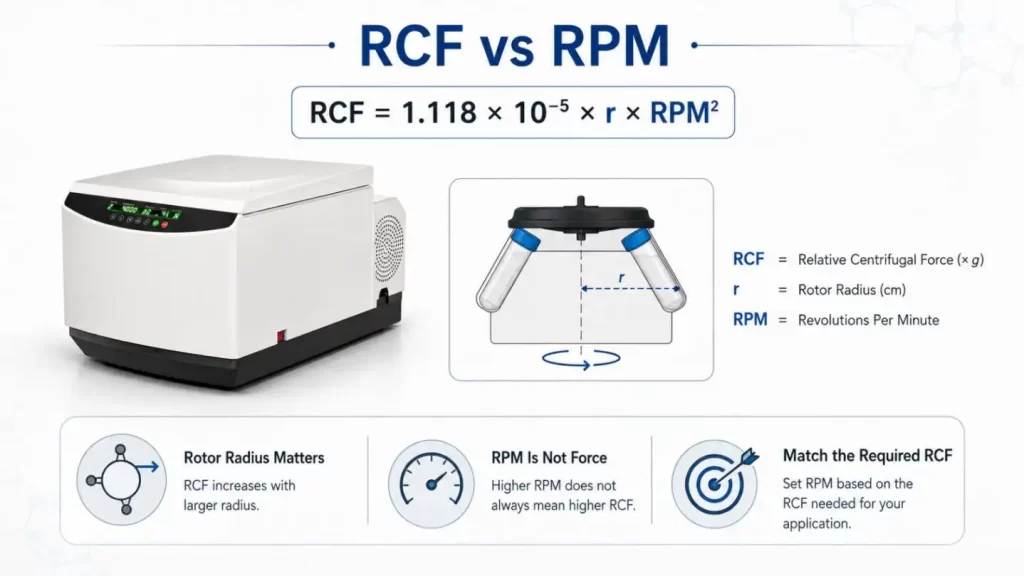
RPM indicates rotational speed, but it does not directly describe the centrifugal force acting on the sample.
The relationship is:
RCF = 1.118 × 10⁻⁵ × r × RPM²
where r is the rotor radius in centimeters.
This distinction is important when transferring a PRP protocol between different centrifuges. Two machines operating at 3,000 RPM, for example, may produce different RCF values if their rotor radii are different.
For this reason, specification of a PRP Centrifuge Machine for Medical Use should include:
•Required RCF
•Rotor radius
•Target RPM
•Spin duration
•Tube location within the rotor
•First- and second-spin conditions
Maximum RPM is a poor metric for selecting PRP equipment. The quality of the PRP is affected by many factors.
How Process Parameters Affect PRP Quality
| Parameter | Process Impact | Control Requirement |
| RCF | Determines how intense sedimentation is | Must match protocol |
| Spin Time | Determines the degree of separation | Must be stable |
| Rotor Radius | Influences RCF at a given RPM | Inspection of geometry is needed |
| Tube Volume | Impacts the distance of sedimentation | Must be consistent filling |
| Acceleration | Impacts the transition to separation | Must be repeatable ramp |
| Deceleration | Can impact the interfaces | Must be consistent braking |
| Temperature | Affects the sample | Must be per protocol |
Trustlab has developed the refrigerated centrifuge platform with a focus on microprocessor control for speed, time, and temperature rather than focusing on maximum rotational speed.
Trustlab specifies ±30 r/min speed accuracy and a 1-99 minute time range, to enable consistent execution when labs define their own PRP centrifugation protocol
Temperature Control Should Follow the Protocol
PRP centrifugation does not have one universal temperature requirement.
A refrigerated PRP Centrifuge Machine for Medical Use becomes relevant when a laboratory protocol requires a controlled sample environment or when ambient-temperature variation needs to be reduced.
Trustlab provides:
•Temperature setting: -5°C to +35°C
•Temperature accuracy: ±1°C
•Refrigerated operation for controlled sample processing
The practical advantage is not that lower temperature automatically produces better PRP. It is that temperature becomes a controlled process variable rather than an uncontrolled environmental condition.
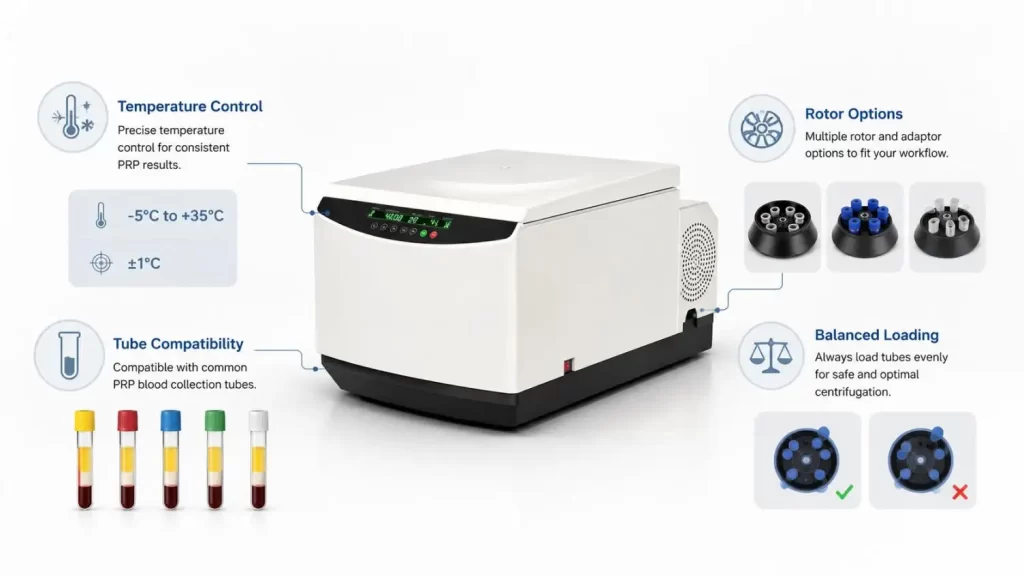
Rotor, Tube and Capacity Compatibility
A PRP protocol cannot be separated from its tube and rotor configuration.
Before selecting a PRP Centrifuge Machine for Medical Use, confirm:
•Blood collection tube diameter and length
•Working sample volume
•Rotor type and radius
•Adapter dimensions
•Maximum allowable tube RCF
•Samples processed per cycle
•Required balancing arrangement
Trustlab supports multiple rotor configurations, allowing the centrifuge setup to be matched more closely to different tube formats, capacities, and laboratory workflows.
Reproducibility and Operational Safety
Consistent PRP preparation also requires stable mechanical operation.
An improperly balanced rotor can increase vibration and compromise safe operation. Trustlab therefore incorporates practical protection and monitoring functions including:
•Lid interlock
•Imbalance detection
•Low-vibration operation
•LCD parameter display
•Microprocessor-based control
For repeated clinical or laboratory use, these functions support a more controlled operating environment around the centrifugation protocol.
Selecting a PRP Centrifuge Machine for Medical Use
A practical selection sequence is:
Target PRP Composition → Single or Double Spin → Required RCF → Spin Time → Rotor Radius → Tube Compatibility → Sample Capacity → Temperature → Acceleration/Deceleration → Reproducibility
This approach is more technically meaningful than selecting equipment according to maximum RPM alone.
For laboratories, clinics, and distributors evaluating a PRP Centrifuge Machine for Medical Use, Trustlab can support centrifuge configuration around required RCF, tube format, rotor arrangement, capacity, temperature control, and defined processing workflow.
Contact Trustlab to discuss a centrifuge configuration that matches your PRP preparation protocol and practical laboratory requirements.
FAQs
Q1. Does Trustlab provide different rotor configurations for PRP tubes?
Trustlab is able to offer multiple rotor configurations. Prior to finalizing the configuration, features such as diameter and length of the tubes, working volume, adapter dimensions, rotor radius and RCF, etc. must be finalized.
Q2. Does Trustlab centrifuges support both single-spin and double-spin PRP protocols?
Yes, Trustlab centrifuges are able to support both single-spin and multiple step protocols through adjustable speed and timing controls.
Q3. Why should RCF be considered versus RPM being considered in isolation?
RCF, which is the important measure of centrifugal force for a sample, is a function of RPM and radius of the rotor. Thus, Trustlab advises customers to set the centrifuges to RCF and not the highest RPM.
Q4. What is the speed accuracy provided by Trustlab for their PRP centrifugation?
A Trustlab centrifuge controls speed to +/-30 r/min and provides a repeatable operation for customers wishing to perform a consistent PRP centrifugation.
Q5. Does Trustlab offer centrifugation that is controlled by temperature for PRP protocols?
Yes, Trustlab's refrigerated centrifugation platform provides a temperature range of minus 5 degrees Celsius to plus 35 degrees Celsius, with a precision of plus/minus one degree Celsius, which allows the centrifugation to be performed under temperature control which may be required by the protocol.
Written by
Trustlab
The author is a specialist at Ningbo Trustlab Instruments Co., Ltd., a leading provider of laboratory and medical consumables since 2015. With extensive experience in global healthcare and laboratory markets, they focus on delivering high-quality, innovative solutions and professional support to laboratories, hospitals, and distributors worldwide. Trustlab’s products are trusted in over 100 countries, reflecting the company’s commitment to reliability, excellence, and customer satisfaction.


