


Updated 1 week ago
Red Top Blood Collection Tube Manufacturer for Serum Collection
trustlabofficial

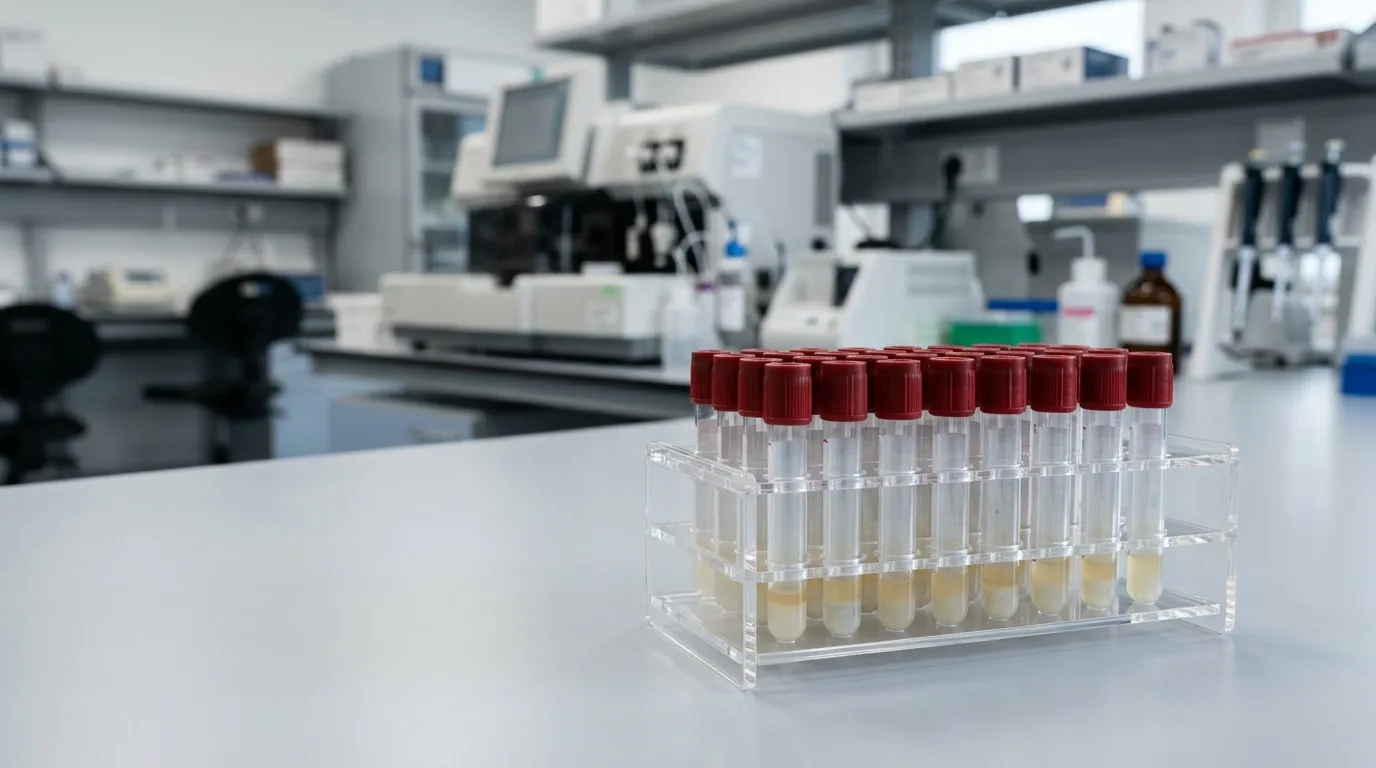
Unlabeled red top blood collection tube upright in a laboratory rack for serum collection.
Red top blood collection tubes are a standard in clinical and laboratory settings, used specifically for collecting serum samples. As a manufacturer and supplier of blood collection systems, we at Trustlab understand that selecting the right supplier for these essential consumables requires careful evaluation of product quality, certification, and customization capabilities. This page provides procurement teams and laboratory managers with the information needed to verify a red top tube manufacturer and source products that meet laboratory requirements.
What Is a Red Top Blood Collection Tube?
A red top blood collection tube is a vacuum-sealed tube used to collect venous blood for serum analysis. The tube has no anticoagulant or additive in its standard form, allowing blood to clot naturally before centrifugation. The resulting serum is used for various diagnostic tests including chemistry panels and serology (UW Medicine).
The red top tube works through a straightforward mechanism: blood collected into the plain tube activates the coagulation cascade on contact with the glass or plastic wall. According to clinical references, blood should be allowed to clot for 10–15 minutes before centrifugation, though some protocols extend this up to 60 minutes (StatPearls). Once centrifuged, the serum can be separated from the cellular components for testing.
It is important to distinguish red top tubes from other common collection tubes. Gold top (serum separator) tubes contain a gel barrier that aids serum separation. Lavender top tubes contain EDTA for hematology testing. Green top tubes contain heparin for plasma chemistry. Light blue top tubes contain sodium citrate for coagulation studies. These differences matter when specifying the correct tube for laboratory workflows.
For a more detailed explanation of serum collection and tube selection, refer to our guide on different types of vacuum blood collection tubes.
Plain Red Top vs. Clot-Activator Red Top

Red top tubes are available in two primary configurations:
- Plain red top tube: Contains no additive, relying on the natural coagulation process. The blood must clot completely before centrifugation, which typically takes 15–30 minutes depending on the sample.
- Clot-activator red top tube: Contains a silicone or silica coating on the tube interior that accelerates the clotting process, reducing the time to serum separation.
The plain variant is the classic "no additive" tube preferred when the laboratory wants minimal interference with the sample. The clot-activator variant is chosen to shorten processing time, particularly in high-throughput settings. Both produce serum, but the processing workflow and timing differ.
When ordering from a manufacturer, confirm which variant is required and whether the tube design includes any additive or coating.
Red Top Tube Options and Specifications from a Manufacturer
Manufacturers supply red top tubes in various configurations to meet laboratory and distributor requirements. Typical options include:
- Tube material: Glass or plastic (PET)
- Tube dimensions: Common industry sizes include 13 × 75 mm and 16 × 100 mm (Bound Tree catalog)
- Nominal volume: Typical fill volumes range from 4 mL to 10 mL (Bound Tree catalog)
- Closure type: Conventional rubber stopper or safety closure designs
- Sterility: Most clinical red top tubes are supplied sterile and individually packaged
- Labeling: Standard or custom printed labels for OEM/private-label programs
These specifications determine collection compatibility with the facility's existing equipment and patient population. For example, pediatric collections may require smaller tube dimensions, while high-volume chemistry testing may favor larger tubes with faster clot-activator coatings.
Trustlab offers vacuum blood collection tubes as part of the broader blood collection system product line. For detailed specifications on available red top tube configurations, please contact our team directly to confirm current options, sizes, and packaging.
How to Verify a Red Top Tube Manufacturer's Quality and Compliance
Supplier verification is a critical step before committing to a red top tube manufacturer. The following checklist helps procurement teams evaluate whether a manufacturer meets the documentation and quality standards required for clinical use.
Documentation to Request
When evaluating a manufacturer, request and review the following documentation for the specific product you intend to purchase:
Quality management system certificates: ISO 13485 and ISO 9001 certificates confirm that the manufacturer operates under a certified quality management system. These are company-level certifications that address manufacturing processes, not automatic product-level approvals.
Product-specific documentation: Depending on the target market and intended use, you may need:
- Instructions for Use (IFU) or technical datasheet
- Product certificate or declaration of conformity
- Sterility test report specific to the product lot
- Additive or coating material documentation (if applicable)
- Batch traceability records
Regulatory documentation: CE marking, FDA registration, or other regulatory approvals apply to specific products and specific markets. Confirm the exact product and regulatory scope, as a manufacturer's QMS certificate alone does not prove product-level regulatory approval.
Quality Control Parameters
Ask the manufacturer about quality control measures that affect red top tube performance:
- Vacuum accuracy: The accuracy of the pre-set vacuum determines whether the tube draws the correct blood volume
- Additive or coating consistency: For clot-activator tubes, uniform coating application affects clotting performance
- Sterility assurance: Confirmed sterility requires validated sterilization processes and lot testing
- Packaging integrity: Sealed packaging maintains sterility until the point of use
Understanding these parameters helps you assess whether the manufacturer can consistently supply tubes that meet your specifications.
For a more detailed framework on supplier evaluation, see our guide on how to evaluate blood collection system supplier quality.
OEM/ODM Customization and Ordering Red Top Tubes
Many laboratories and distributors require customized red top tubes for their specific market needs. Manufacturing partners can typically provide:
- Private labeling: Custom tube and packaging labels with the buyer's brand
- Custom packaging: Different package quantities or configurations
- Custom tube configurations: Specific materials, volumes, or closure types when production volume justifies the tooling
- Custom printing: Tube or label printing for identification and traceability
OEM/ODM arrangements allow buyers to establish their own product identity while relying on the manufacturer's production capabilities and quality systems.
Minimum order quantities, lead times, and sample availability vary by product configuration and production capacity. Contact Trustlab directly to discuss your specific requirements, confirm current capabilities, and request a quotation.
Red Top Tube Procurement Checklist
Use this checklist to guide your evaluation of any red top tube manufacturer:
- Confirm the exact tube variant needed: Plain red top (no additive) or clot-activator red top (silica/silicone coated)
- Specify material, size, and volume: Glass or plastic; tube dimensions; nominal fill volume
- Request sterility documentation: Product-specific sterility test reports and sterilization method
- Request product documentation: IFU or technical datasheet where applicable
- Review QMS certificates: ISO 13485 and/or ISO 9001 — and confirm their scope
- Ask about batch traceability: How is each batch identified and tracked?
- Confirm QC parameters: How is vacuum accuracy and coating consistency verified?
- Discuss ordering terms: MOQ, lead time, and sample availability
- Confirm customization options: OEM/ODM labeling, packaging, and tube configurations
- Request a written quotation: Compare total cost including product, packaging, and logistics
This checklist ensures you have the product, quality, and commercial information needed to make an informed decision.
Red Top Blood Collection Tube Manufacturer — Frequently Asked Questions
What is a red top tube used for? A red top tube is used to collect blood for serum analysis. The tube contains no anticoagulant in its plain form, allowing blood to clot and the serum to be separated by centrifugation.
Does a red top tube have additives? The standard plain red top tube has no additives. However, some red top tube variants include a silicone or silica clot activator to speed up clotting.
How long does a red top tube need to clot before centrifugation? Typically 10–15 minutes, though some protocols allow up to 60 minutes (StatPearls). The specific time depends on the tube design and laboratory protocol.
What sizes do red top tubes come in? Common industry sizes include 13 × 75 mm and 16 × 100 mm with fill volumes from 4 mL to 10 mL (Bound Tree catalog). Exact available sizes should be confirmed with the manufacturer.
What certifications should a red top tube manufacturer have? A manufacturer should hold ISO 13485 and/or ISO 9001 quality management system certification. Product-specific regulatory documentation, such as CE marking or FDA status, applies to specific products and markets — confirm the scope for the exact product you need.
What is the difference between a plain red top and a serum separator tube? A plain red top tube has no additive. A serum separator tube (SST, gold top) contains a gel barrier that separates serum from the clot during centrifugation.
Contact Trustlab for Red Top Blood Collection Tubes
Trustlab is a manufacturer and wholesale supplier of vacuum blood collection tubes and related blood collection systems. We support laboratory and distributor partners with product inquiries, sample requests, and OEM/ODM discussions.
If you are evaluating red top blood collection tube supply options, contact our team to discuss your requirements. We will work with you to confirm product specifications, documentation, and ordering terms that meet your laboratory or distribution needs.