


Updated 1 month ago
Wholesale Centrifuge Machine: RCF, Rotor & Capacity G
Arafatshuvo
Wholesale Centrifuge Machine
Selecting a Wholesale Centrifuge Machine is not simply a matter of choosing the highest RPM or the largest rotor. In laboratory practice, centrifuge selection starts with the separation protocol: required RCF, sample volume, tube format, temperature sensitivity, rotor geometry, and daily throughput.
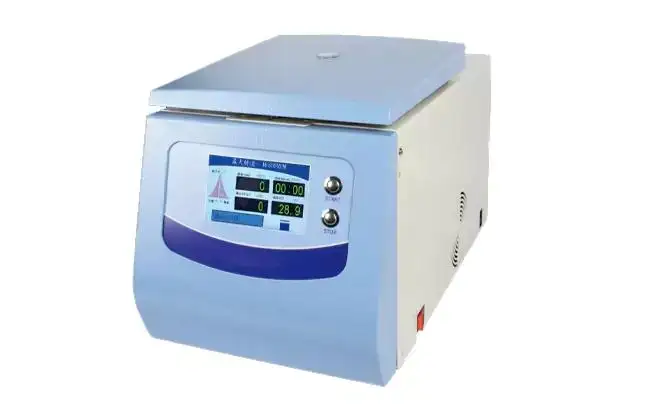
From Trustlab's perspective, these parameters should be evaluated as one system. A centrifuge that reaches the required speed but cannot accommodate the correct tube, rotor, or operating temperature may still be unsuitable for the application.
Start with RCF, Not Maximum RPM
Many laboratory protocols specify centrifugal force in ×g (RCF) rather than RPM. This distinction is important because RPM describes rotor speed, while RCF describes the actual centrifugal force acting on the sample.
RCF = 1.118 × 10⁻⁵ × r × RPM²
where:
• RCF = relative centrifugal force in ×g
• r = rotational radius in cm
• RPM = revolutions per minute
Because rotor radius is part of the equation, two centrifuges running at 5,000 RPM can generate different RCF values.
When comparing a Wholesale Centrifuge Machine, buyers should therefore request:
• Maximum RPM;
• Maximum RCF;
• Rotor radius;
• Rotor-specific maximum speed;
• Capacity at the specified rotor speed.
A common procurement mistake is to assume that every available rotor can operate at the instrument's maximum RPM. Rotor mass, geometry, material, and rated mechanical load may impose lower operating limits.
Rotor Geometry Changes the Separation Result
Rotor selection is not only a capacity decision. It affects the sedimentation path of particles and the final position of the pellet or separated layer.
| Rotor / System | Technical Characteristic | Typical Use |
| Fixed-angle | Tubes remain at a fixed angle | Rapid pelleting, routine sample preparation |
| Swing-out | Tubes move toward horizontal during rotation | Layer separation, capillary or larger-volume workflows |
| Refrigerated system | Controls chamber temperature during centrifugation | Proteins, nucleic acids, cells and temperature-sensitive samples |
| Mini centrifuge | Compact rotor and moderate centrifugal force | PCR tube spin-down and micro-volume collection |
For example, Trustlab's GT-CH90-1/1A Mini Centrifuge operates at up to 5,000 RPM and 3,130 × g. It is designed for routine small-volume processing where compact size and rapid spin-down are more important than extreme centrifugal force.
By comparison, the Trustlab GT211-SH120-1 reaches 12,000 r/min and 15,300 × g with a 24-capillary swing-out rotor. Its specified starting time is under one minute and braking time under two minutes, making it more appropriate for rapid capillary blood separation.
These examples demonstrate that choosing a Wholesale Centrifuge Machine by application, rather than RPM, is crucial.
Consider if Refrigeration is Required
For samples that are temperature sensitive, motor and aerodynamic heating from high speed rotation can be detrimental. High speed rotation should always be avoided to prevent possible damage to the samples.
A refrigerated centrifuge should be considered when the workflow involves:
• Proteins or enzymes;
• Nucleic acids;
• Cell preparations;
• Biological samples requiring controlled temperature;
• Long-duration or repeated high-speed runs.
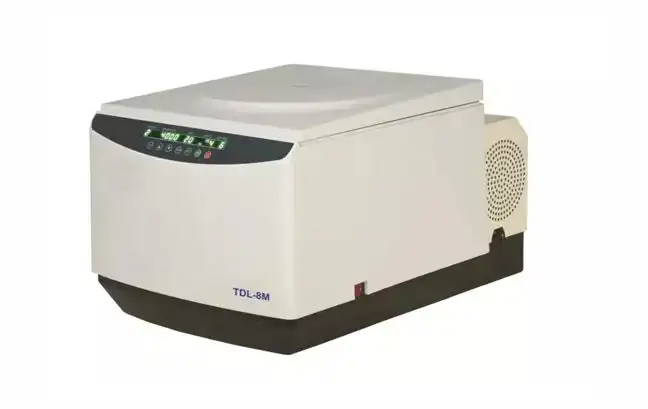
Trustlab's TLTDL-8M Tabletop Refrigerated Centrifuge, for example, provides up to 8,000 r/min, 9,100 × g, and 4 × 250 mL capacity. Its temperature setting range is -5°C to +35°C, with ±1°C temperature accuracy and ±30 r/min speed accuracy. The unit also includes lid interlock and imbalance detection.
For a Wholesale Centrifuge Machine project, refrigeration should therefore be treated as a process-control requirement—not simply an optional premium feature.
Match Capacity to Real Laboratory Throughput
"Maximum capacity" does not automatically equal productive capacity.
A useful calculation is:
Daily samples ÷ Samples per run = Minimum number of centrifuge cycles
Then add:
• Acceleration time;
• Programmed centrifugation time;
• Braking time;
• Loading and unloading time.
For high-volume laboratories, a lower-speed centrifuge with higher batch capacity may deliver better daily throughput than a high-speed small rotor.
Buyers should also verify tube diameter, tube length, nominal volume and adapter compatibility. A rotor described as "24-place" does not guarantee compatibility with every 24-tube workflow.
Compare the Entire Centrifuge System
Before placing a Wholesale Centrifuge Machine order, the centrifuge should be matched with the actual laboratory environment.
Sample and rotor matching
Confirm:
• Required RCF and centrifugation time;
• Fixed-angle or swing-out rotor;
• Tube and capillary dimensions;
• Maximum rotor load;
• Adapter requirements;
• Temperature requirements.
• Installation matching
Check:
• Voltage and frequency;
• Bench dimensions;
• Instrument weight;
• Lid-opening clearance;
• Ventilation requirements;
• Acceptable laboratory noise level.
For international projects, electrical configuration deserves particular attention. Trustlab's TLTDL-8M/TLTDL-5M refrigerated models specify AC110V/AC220V, 50–60 Hz, while the GT211-SH120-1 specification lists AC220V ±10%, 50 Hz.
Rotor Maintenance Is a Safety Requirement
Centrifuge performance depends on more than the motor.
Routine operation should include:
• Balanced sample loading;
• Inspection of rotor cavities and adapters;
• Cleaning of spills and corrosive residues;
• Checking for deformation, cracks or corrosion;
• Following manufacturer-defined rotor inspection and retirement criteria.
An unbalanced rotor increases vibration and bearing load. Damaged rotors should never be evaluated only by whether they can still rotate.
When sourcing a Wholesale Centrifuge Machine, buyers should also ask which rotors, buckets, adapters and wear parts are field-replaceable and which require manufacturer service.
Verify Standards and Compliance by Exact Model
Laboratory centrifuges are safety-critical rotating equipment. IEC 61010-2-020:2026 specifies particular safety requirements for electrically powered laboratory centrifuges and is intended to be used with IEC 61010-1. The 2026 edition replaces the previous 2016 edition.
For CE-marked equipment entering the European market, buyers should not rely on a logo alone. The European Commission identifies conformity assessment, technical documentation and an EU Declaration of Conformity as part of the manufacturer's responsibilities.
For every proposed model, request applicable documentation and verify that model names and certification scope match the equipment being purchased.
Use a Technical Checklist Before Comparing Wholesale Prices
A professional Wholesale Centrifuge Machine quotation should make these items clear:
| Procurement Item | What to Verify |
| Performance | RPM, RCF, speed accuracy |
| Rotor | Type, radius, capacity, rated maximum speed |
| Samples | Tube dimensions and adapters |
| Temperature | Range and accuracy if refrigerated |
| Safety | Lid interlock, imbalance protection |
| Installation | Voltage, frequency, dimensions, weight |
| Supply scope | Rotor, buckets, adapters and accessories |
| Compliance | Applicable declarations and supporting documents |
| Support | Spare parts, warranty and service terms |
This approach prevents buyers from comparing a complete centrifuge package with a lower-priced quotation that excludes essential rotors or accessories.
Choose the Centrifuge Around the Protocol
The right Wholesale Centrifuge Machine is the model that reproduces the laboratory protocol reliably: correct RCF, correct rotor, correct sample capacity, controlled temperature where required, and safe integration into the laboratory.
Trustlab develops centrifuge options across compact, high-speed and refrigerated configurations, allowing laboratories and distributors to compare equipment by actual separation requirements rather than headline speed alone. For a new project or bulk purchase, reviewing the required RCF, rotor, tube format and throughput before quotation is the most effective starting point.
Explore the Trustlab centrifuge range to compare available configurations and identify a Wholesale Centrifuge Machine that matches your laboratory workflow.
FAQs
Q1. What types of centrifuges does Trustlab offer?
Trustlab provides centrifuge configurations for different laboratory workflows, including mini centrifuges, high-speed centrifuges, tabletop refrigerated centrifuges and other laboratory centrifuge options. Buyers should select a model according to required RCF, sample volume, tube format, rotor type and temperature requirements rather than RPM alone.
Q2. How should I choose a Trustlab Wholesale Centrifuge Machine?
Start with the laboratory protocol. Define the required RCF (×g), centrifugation time, tube size, samples per batch, rotor configuration and temperature range. After these parameters are established, compare them with the specifications of the Trustlab centrifuge model and rotor combination.
Q3. Which Trustlab centrifuge is suitable for routine small-volume sample processing?
The Trustlab GT-CH90-1/1A Mini Centrifuge has a published maximum speed of 5,000 RPM and maximum RCF of 3,130 × g, using a 45° fixed-angle rotor. It is designed for applications such as PCR tube spin-down, microtube liquid collection and routine small-volume sample preparation.
Q4. Does Trustlab offer a high-speed centrifuge for capillary samples?
Yes. Trustlab offers the GT211-SH120-1 High Speed Centrifuge for rapid capillary blood separation. When evaluating this model, buyers should compare its maximum RPM and RCF with the required protocol and confirm that the capillary format and rotor configuration match the intended workflow.
Q5. Does Trustlab provide refrigerated centrifuges for temperature-sensitive samples?
Yes. Trustlab's TLTDL-8M Tabletop Refrigerated Centrifuge reaches up to 8,000 r/min and 9,100 × g, with a maximum capacity of 4 × 250 mL. Its published temperature setting range is -5°C to +35°C, with ±1°C temperature accuracy.