


Updated 4 weeks ago
384-Well PCR Plate Manufacturer: Products, Selection & Sourcing Guide
trustlabofficial
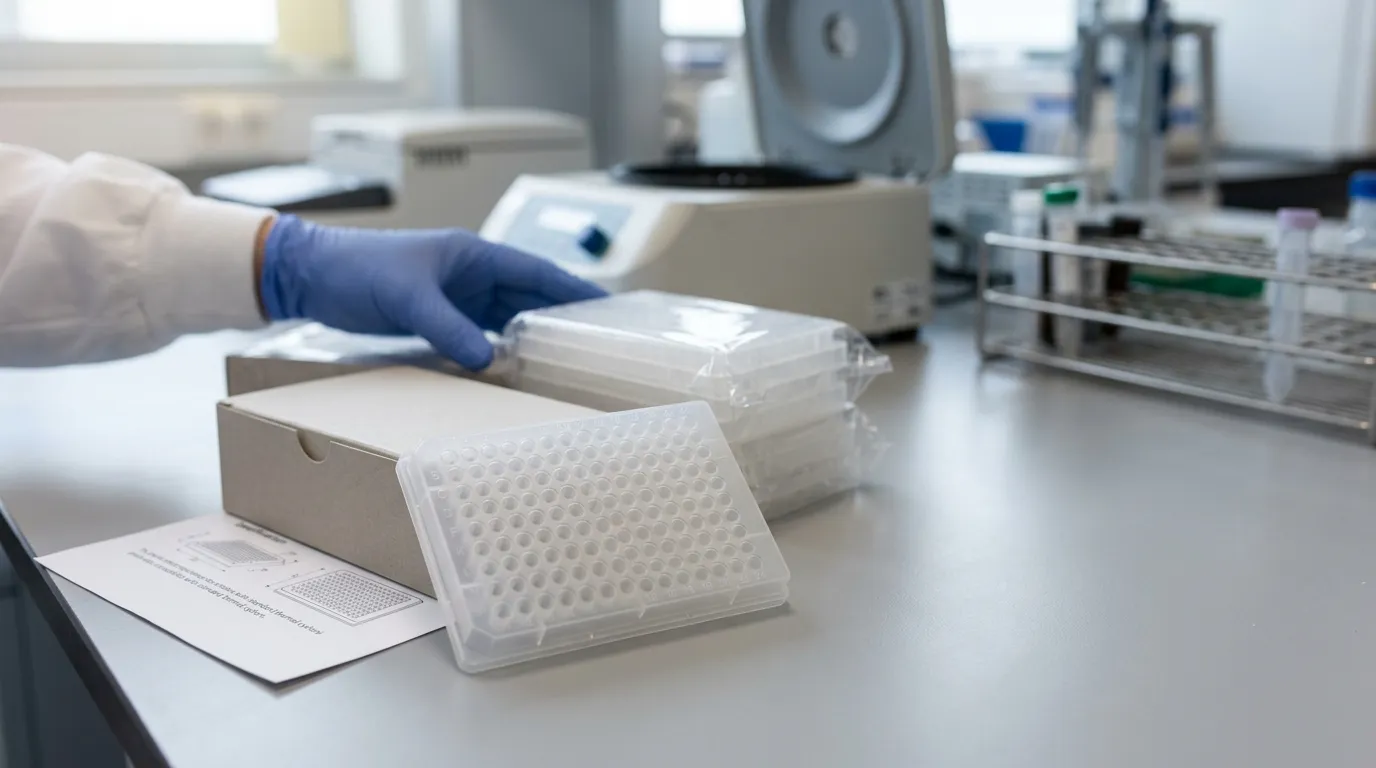
384-well PCR plates prepared for high-throughput laboratory workflow evaluation
A 384-well PCR plate is a high-density microplate designed for polymerase chain reaction (PCR) and quantitative PCR (qPCR) workflows that need higher throughput than a 96-well plate can deliver. It contains 384 small wells arranged in a 16-by-24 grid, which allows laboratories to run more reactions per plate while reducing reagent use. For a full comparison of all PCR plate formats, start with our pcr plates manufacturer overview.
When you source 384-well plates, the most important checks are working volume, skirt style, notch or cut-corner position, material, and the manufacturer’s quality documentation. This guide explains what those specifications mean, why they matter, and how to evaluate a 384-well PCR plate supplier before placing an order.
Trustlab (Ningbo Trustlab Instruments Co., Ltd.) is a laboratory and medical supplies manufacturer and wholesaler serving research, clinical, and diagnostic customers. Use this guide to confirm the requirements for your workflow, then contact the Trustlab team for current plate options, documentation, and quotation support.
What Is a 384-Well PCR Plate?
A 384-well PCR plate is a rigid or semi-rigid consumable with 384 wells manufactured in a standard microplate footprint. The high well density makes it useful for qPCR screening, genotyping, drug discovery, diagnostic development, and other applications where running many reactions at once reduces cost and hands-on time.
| Attribute | Typical 384-Well PCR Plate |
|---|---|
| Well format | 16 × 24 (384 wells) |
| Well spacing | 4.5 mm |
| Footprint standard | ANSI SLAS / SBS |
| Maximum well volume | Approx. 20–60 µL, depending on plate design |
| Recommended working volume | Approx. 5–30 µL, depending on reaction and plate |
| Common materials | Virgin polypropylene |
| Common colors | Clear, white, black |
The exact maximum and working volumes vary by manufacturer and by plate geometry. A plate intended for low-volume qPCR may have a smaller maximum volume than a plate designed for standard PCR. Check the manufacturer’s specification sheet rather than assuming every 384-well plate has the same capacity.
Key 384-Well Plate Specifications to Check Before Ordering
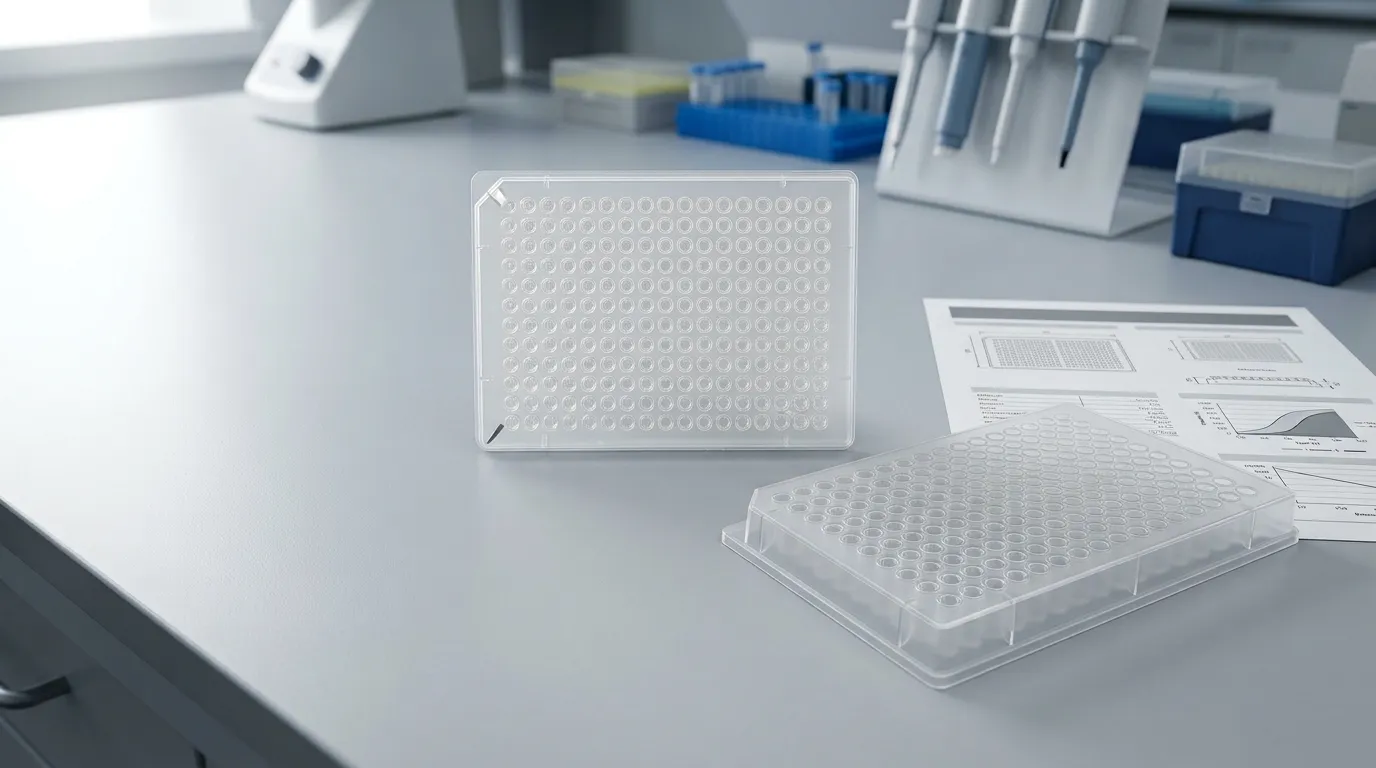
Not all 384-well PCR plates perform the same way in every instrument. The following specifications affect thermal performance, automation compatibility, reaction reliability, and optical signal quality.
Well Volume vs. Working Volume — What Do They Mean?
The maximum well volume is the total liquid capacity of a single well. The working volume is the amount of liquid the manufacturer recommends for reliable PCR or qPCR.
Working volume is usually lower than maximum volume. Leaving headspace helps prevent evaporation, cross-contamination, and liquid contact with the sealing film. If you plan to run 5 µL qPCR reactions, confirm that the plate is rated for that volume rather than choosing a plate designed only for larger 20–30 µL reactions.
Skirt Types: Full, Semi-Skirted, or Skirtless?
The skirt is the plastic wall that extends below the wells. It affects rigidity, handling, heat transfer, and compatibility with thermal cyclers and automated instruments.
| Skirt Type | Description | Best Suited For |
|---|---|---|
| Full skirt | Rigid wall extends around the entire plate base | Automated liquid handling, plate stacking, qPCR instruments with 384-well blocks |
| Semi-skirt | Partial wall support | Manual PCR workflows and cyclers that accept semi-skirted plates |
| Skirtless | No projecting wall; wells form the bottom | Specific thermal cycler blocks designed for low-profile plates |
Full-skirt plates are usually the most reliable choice for high-throughput or automated workflows because they resist flexing during robot handling. For manual workflows, semi-skirted and skirtless plates may be acceptable, but verify compatibility with your thermal cycler model.
Notch and Cut-Corner Configuration (A24, P24, Single vs. Double)
Most PCR plates include a physical notch or cut corner that ensures correct orientation in the instrument. On 384-well plates, these reference points are often named by their position, such as A24 or P24.
The notch or cut corner tells the user—and the instrument or robotic handler—which side of the plate is which. This matters for:
- Correct well mapping in qPCR software;
- Consistent plate orientation across multiple runs;
- Reliable positioning inside automated instruments.
Check your thermal cycler or qPCR instrument manual for the required notch or cut-corner position. Using a plate with the wrong reference point can prevent the instrument from recognizing the plate or can affect automated workflows.
Material, Color, and Wall Thickness
Material. Virgin polypropylene is the standard material for PCR plates. It offers good chemical resistance, low protein binding, and the thermal stability needed for PCR cycling. Avoid plates made from recycled or reprocessed polymers unless the manufacturer provides clear evidence of PCR-grade quality.
Wall thickness and heat transfer. Thin-wall construction improves thermal transfer between the thermal cycler block and the reaction. Faster heat transfer can shorten run times and improve well-to-well temperature uniformity. However, very thin walls can also make a plate more flexible, so the best designs balance thin walls with sufficient structural rigidity.
Color. Clear plates are used for standard PCR and many qPCR instruments. White plates are often recommended for qPCR because they reflect emitted light and reduce background interference, which can improve signal detection. Black plates are less common and may be used where low autofluorescence or reduced optical crosstalk is required.
Quality and QC — How to Verify a 384-Well Plate Supplier
Quality claims matter more than brand names. A reliable 384-well PCR plate manufacturer should be able to explain—and document—how its plates are produced, tested, and released.
Important quality terms to understand:
- RNase/DNase-free means the plate is tested for the absence of ribonucleases and deoxyribonucleases that could degrade nucleic acids in the sample.
- PCR inhibitor-free means the plate should not contain substances that inhibit polymerase activity.
- DNA-free means the plate should not introduce contaminating DNA that could cause false-positive results.
- Non-autofluorescent means the plate material should not emit fluorescence that interferes with qPCR detection.
One of the most common sourcing mistakes is confusing “cleanroom-manufactured” with “sterile.” Cleanroom production and RNase/DNase-free processing are important for PCR consumables, but they are not the same as sterility. If sterility is required for your protocol, request the product’s sterility specification and certificate.
A manufacturer with a mature quality system may hold ISO 9001 or ISO 13485 certification for its management processes. Keep in mind that ISO 9001 and ISO 13485 are quality-management-system certificates. They describe the manufacturer’s quality processes; they are not product-level approval, CE marking, or FDA clearance. Do not accept a QMS certificate as proof that a specific plate has been evaluated for a diagnostic or clinical intended use.
What Documentation Should a Manufacturer Provide?
When evaluating a supplier, request the following documents before committing to a bulk order:
| Document | What It Should Confirm |
|---|---|
| Product specification sheet | Well volume, working volume, skirt type, notch position, dimensions, material |
| Certificate of Analysis (COA) | Batch-specific test results for biological contamination and physical integrity |
| ISO 9001 / ISO 13485 certificate | Quality-management-system scope, not product certification |
| Functional test reports | PCR/qPCR test data, evaporation testing, plate flatness/integrity checks |
| Handling and storage guide | Recommended packaging, storage temperature, and shelf life |
Good manufacturers expect buyers to ask for this information. A supplier that cannot or will not provide documentation is a higher sourcing risk.
How to Match a 384-Well Plate to Your Workflow
Choose a plate based on how you plan to use it, not just on the well count.
| Workflow | Recommended Plate Features | Primary Considerations |
|---|---|---|
| Standard PCR | Clear polypropylene; semi- or full-skirt | Working volume, thermal cycler compatibility |
| qPCR | White or clear; full-skirt | Low background fluorescence, optical clarity |
| High-throughput screening | Full-skirt; barcode option; uniform SBS footprint | Automation compatibility, stackability, tracking |
| Small-volume reactions | Low working volume; thin-wall | Accuracy of low-volume dispensing, evaporation control |
| Automated liquid handling | Full-skirt; rigid construction; A24/P24 notch orientation | Robot gripping, plate stability, barcode readability |
The plate’s physical footprint must meet the ANSI SLAS / SBS standard, but that does not mean every plate works in every instrument. Thermal cycler blocks, heated lids, and plate stackers vary. Before ordering, confirm that your specific thermal cycler, qPCR instrument, or automation platform is compatible with the plate’s skirt height and notch position.
384-Well Plates in High-Throughput and Automated Workflows
High-throughput laboratories use 384-well plates to reduce reagent consumption and process more samples per run. Automated workflows place additional demands on plate quality.
A suitable automation-ready 384-well plate should have:
- A full skirt for structural rigidity during robotic transport;
- A flat, warp-resistant base for reliable stacking and sealing;
- Clear, legible barcodes printed on the plate for sample tracking;
- A notch or cut-corner position that matches the plate handler’s orientation requirements;
- Consistent physical dimensions across batches so robotic grippers do not need constant adjustments.
If your laboratory uses automated liquid handling, consider the total system—plate, sealing method, centrifuge, and thermal cycler—as one workflow. For more information on integrating 384-well consumables with automated systems, explore Trustlab’s automated liquid handling systems.
How to Evaluate a 384-Well PCR Plate Manufacturer

Because 384-well plates are used in high-throughput workflows, a single poor batch can affect thousands of reactions. Use this checklist to evaluate suppliers systematically.
- Check the specification sheet. Confirm the well volume, working volume, skirt type, notch position, material, dimensions, and packaging quantities.
- Ask for quality documentation. Request a Certificate of Analysis, batch test report, and a copy of the manufacturer’s quality-management certificate.
- Confirm cleanroom and biological-testing claims. Ask which biological contamination tests are performed and how often.
- Verify thermal cycler and automation compatibility. Do not assume a plate works with your instrument just because it has a 384-well format.
- Request samples. Run your own PCR or qPCR protocol before committing to a large order.
- Clarify customization and minimum order quantities. If you need custom colors, barcodes, or packaging, confirm these options in writing.
This approach lets you evaluate the supplier on evidence rather than marketing language.
Trustlab as a 384-Well PCR Plate Supplier
Trustlab (Ningbo Trustlab Instruments Co., Ltd.) supplies laboratory and medical products to customers worldwide. The company’s catalog includes laboratory consumables and equipment for molecular biology workflows, including PCR, qPCR, and automated liquid handling. Trustlab identifies itself as a manufacturer and wholesaler of laboratory and medical supplies.
If you are sourcing 384-well PCR plates for routine PCR, qPCR, high-throughput screening, or OEM supply projects, the Trustlab team can provide current product specifications, quality documentation, and quotation support. As with any supplier relationship, ask for the relevant datasheet and quality documentation before you place a large order.
Make Your Sourcing Decision Based on Evidence
A 384-well PCR plate manufacturer should be more than a supplier—it should be a partner that helps you verify specifications, quality, and suitability before you scale up. Choose plates that fit your instrument, working volume, and automation requirements. Request batch-level quality documentation. Run samples before you commit to volume purchases. And work with suppliers that are transparent about what they can and cannot confirm.
For laboratories evaluating high-throughput PCR consumables, Trustlab invites you to discuss your 384-well plate requirements. Contact the Trustlab team for current product information, samples, and quotations.