


Updated 2 weeks ago
Glucose Blood Collection Tube Supplier for Diagnostic Labs
trustlabofficial
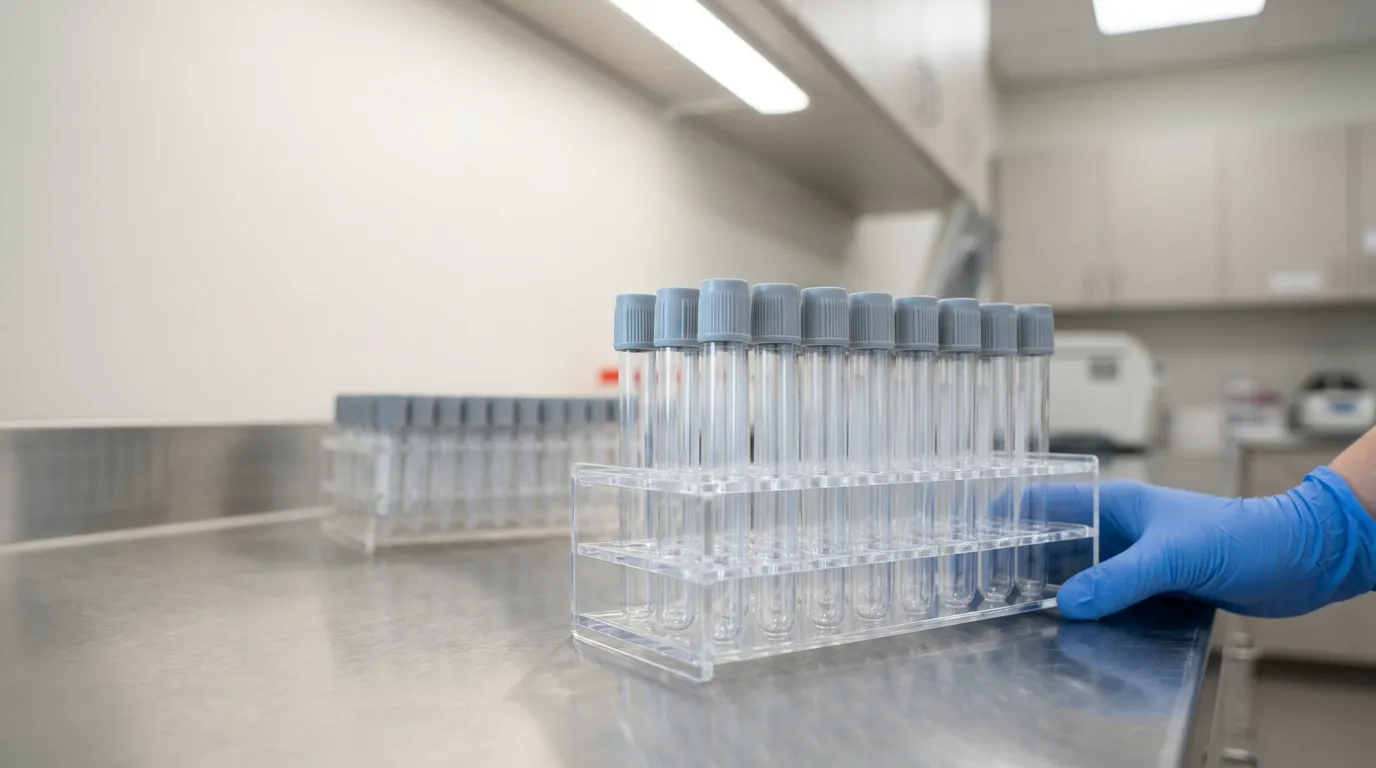
Gray-top glucose blood collection tubes in a laboratory rack with soft-focus clinical background.
Glucose blood collection tubes are gray-top evacuated tubes containing sodium fluoride and potassium oxalate. They are used for blood glucose testing because sodium fluoride slows glycolysis and potassium oxalate prevents clotting. For diagnostic laboratories and distributors sourcing these tubes, product consistency, clear specifications, and verifiable documentation matter as much as the tube itself.
This guide explains what to specify when buying glucose tubes, what to check in a supplier’s documentation, and how Trustlab fits into that process. Trustlab supplies glucose-related configurations as part of its broader range of vacuum blood collection tubes.
What Is a Glucose Blood Collection Tube?
A glucose blood collection tube is a pre-evacuated tube designed to collect a venous blood sample for glucose measurement. It is most often identified by its gray cap, and the additive inside is formulated to keep the glucose concentration close to its value at the time of collection.
The tube is filled by the vacuum already present in the tube, so the blood-to-additive ratio is controlled by the draw volume. This is why laboratories use specially manufactured tubes rather than putting blood into a plain container.
What Are the Additives in a Glucose Tube?
Two additives are typical in a glucose blood collection tube:
- Sodium fluoride — slows glycolysis, the process by which blood cells consume glucose after collection.
- Potassium oxalate — an anticoagulant that binds calcium and prevents the sample from clotting.
After centrifugation, the tube provides plasma for glucose analysis. The fluoride additive is not primarily an anticoagulant. Its job is to preserve the glucose level in the sample, while potassium oxalate handles clotting.
How Is a Glucose Tube Identified?
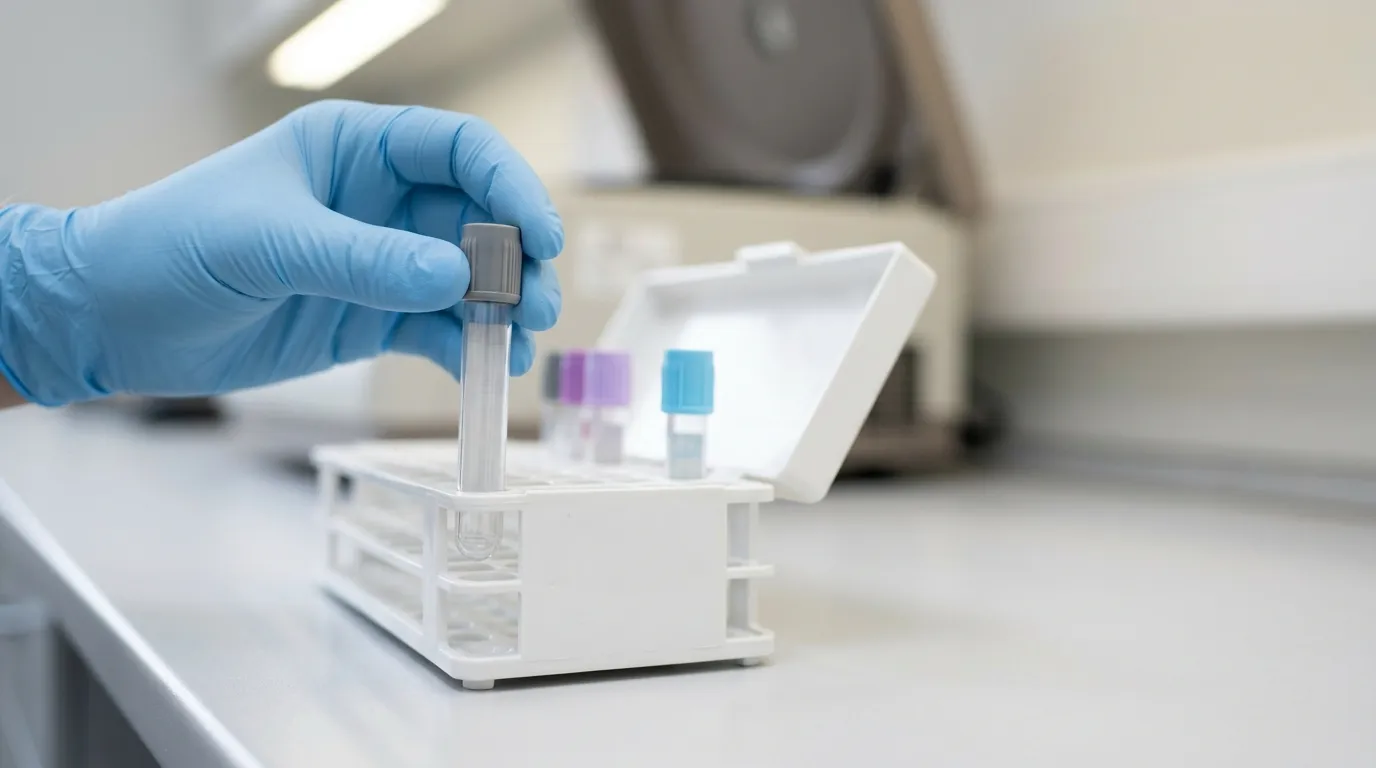
Color coding is the fastest identification method in most laboratories:
- Gray top — glucose tube with sodium fluoride and potassium oxalate
- Lavender top — EDTA tube, used for hematology
- Light blue top — citrate tube, used for coagulation testing
An EDTA tube is not appropriate for routine glucose testing because it does not inhibit glycolysis the way a fluoride tube does. Glucose requests should normally use the gray-top fluoride tube unless the laboratory has validated a different tube for its own testing system.
For a broader overview of tube color coding and additive roles, see different types of vacuum blood collection tubes.
Glucose Blood Collection Tube Specifications to Review When Sourcing
Before comparing supplier quotes, define the exact configuration the laboratory or distribution customer needs. A glucose tube is not one generic product; it comes in different sizes, volumes, materials, and additive variants.
Use the following parameters when you ask a supplier for a quotation:
| Parameter | What to confirm | Why it matters |
|---|---|---|
| Additive combination | Sodium fluoride + potassium oxalate, or another validated variant | The additive must match the laboratory’s testing protocol |
| Tube material | PET or glass | PET is lighter and less likely to break; glass may be required by certain centrifuges or handling protocols |
| Tube size | For example, 13 × 75 mm or 13 × 100 mm | Size must fit the laboratory’s tube racks and centrifuge carriers |
| Nominal draw volume | For example, 2 mL to 5.5 mL, depending on configuration | Blood-to-additive ratio depends on the draw volume |
| Cap color | Gray | Needed for visual identification at the collection site |
| Cap type | Push-cap or screw-cap | Affects opening and closure in automated and manual workflows |
| Label and packaging | Single-unit or bulk packaging, label requirements | Important for distributors and private-label programs |
| Sterility status | Sterile or non-sterile as stated by the manufacturer | Sterility must be confirmed by documentation, not assumed |
A useful distinction when speaking with suppliers: nominal draw volume is not the same as total tube capacity. The tube is filled by vacuum to a specific draw volume, and that volume controls the sample-to-additive ratio.
How to Evaluate a Glucose Blood Collection Tube Supplier

Supplier selection should go beyond reading a webpage that says “CE approved” or “ISO certified.” Those phrases are not enough to confirm that a specific glucose tube configuration meets a laboratory’s requirements.
Evaluate the supplier against concrete documentation and quality-system criteria. A fuller framework is available in how to evaluate blood collection system supplier quality. The points below are the most important for glucose tubes in particular.
Certification and Compliance Documents to Verify
Ask for documents rather than accepting summary claims:
- ISO 13485 certificate — confirms the supplier’s quality management system. It is not a product certificate.
- ISO 6710 compliance statement or test report — ISO 6710 is the product standard for single-use evacuated containers for venous blood specimen collection.
- CE Declaration of Conformity — CE marking is product- and jurisdiction-specific, and it is not interchangeable with FDA clearance.
- FDA status, when relevant — in the United States, the correct term depends on the product pathway: registration, clearance, or approval are different. Confirm the exact status for the product being purchased.
- Batch or lot certificate of analysis — useful for confirming that a specific production lot meets the agreed specification.
A supplier should be able to state which certificate applies to which product and provide documents for the exact configuration offered.
Sterility, Shelf Life, and Labeling — What to Ask
For a clinical product such as a glucose blood collection tube, sterility and shelf-life information should be explicit:
- Ask whether the tube is supplied sterile.
- If it is sterile, ask which sterilization method is used and request supporting documentation.
- Ask for the stated shelf life as shown on the label or in the instructions for use.
- Confirm the required storage temperature range.
- Check that each unit and package carries a lot number for traceability.
“Clean” or “safe” language is not the same as a sterility claim. If sterility matters for the intended use, it must be confirmed in the product documentation.
Production Capacity, OEM, and Supply Reliability
Distributors and large diagnostic laboratories often need more than a one-time sample. Before committing to a supplier, ask:
- Can the supplier support the order volume consistently?
- Are packaging and labeling available for private-label or OEM programs?
- What are the current lead times for standard and customized orders?
- Does the supplier provide batch-level quality documentation with each shipment?
These questions are especially important when the buyer is an importer or distributor rather than a single laboratory.
Glucose Tube Additive Options: What Buyers Should Know
Most glucose blood collection tubes follow the same gray-top convention, but the exact additive combination can differ by manufacturer.
| Additive combination | Primary function | Typical context |
|---|---|---|
| Sodium fluoride + potassium oxalate | Glycolysis inhibitor + anticoagulant | Classic gray-top glucose tube configuration |
| Sodium fluoride + K2EDTA | Glycolysis inhibitor + anticoagulant | Alternative configuration offered by some manufacturers |
| Sodium fluoride + sodium heparin | Glycolysis inhibitor + anticoagulant | Another option seen in some markets |
The practical takeaway for a buyer is to specify the additive combination rather than ordering simply by tube color. If the laboratory uses a particular analyzer, the acceptable tube types are usually defined by the analyzer manufacturer or the laboratory’s own validation data.
Why Glucose Blood Collection Tube Quality Matters
The blood collection tube is not a neutral container. Its additives, material, and manufacturing tolerances can influence laboratory results.
Peer-reviewed work on blood collection device components describes the tube itself as a potential source of preanalytical variability. One review in the Journal of Laboratory and Precision Medicine examines how tube components can interfere with assays or alter sample quality through mechanisms such as additive dilution or incomplete mixing. The same body of literature recommends that laboratories evaluate new blood collection products before introducing them into routine use.
For glucose testing, the central quality concern is glycolysis. If the fluoride additive is present at the wrong concentration, or if the tube draws an incorrect blood volume, the sample may not be preserved correctly. That can affect the glucose result even when the analytical instrument is performing well.
This is why procurement decisions matter. A slightly lower-priced tube is not a good value if it is not validated for the laboratory’s testing conditions.
Why Trustlab for Glucose Blood Collection Tubes?
Trustlab is a B2B supplier of medical and laboratory products based in Ningbo, China. Within its blood collection product family, Trustlab supplies vacuum blood collection tubes in configurations relevant to glucose testing.
Key verified points for procurement teams:
- Trustlab includes glucose-related configurations in its vacuum blood collection tubes range.
- Trustlab’s published blood collection guides describe gray-top fluoride oxalate tubes as the appropriate option for glucose testing.
- Trustlab positions its tube range as part of a broader blood collection systems portfolio for diagnostic and laboratory customers.
Trustlab does not publish a single glucose-tube specification sheet that applies to every order, so the correct procurement step is to request the current specification for the exact configuration you need. A responsible supplier should be able to provide product documentation, confirm the additive combination, and state which certificates apply to the product being quoted.
How to Get Glucose Blood Collection Tube Quotes and Samples
To move from supplier evaluation to a purchase decision, follow a simple process:
- Define the tube configuration. State the additive combination, draw volume, tube size, material, cap type, and packaging.
- Send an inquiry to Trustlab. Use the Trustlab website contact channel and reference glucose blood collection tubes in your request.
- Request documentation. Ask for the current data sheet or specification, the certificate that applies to the product, and the instructions for use.
- Ask about samples. Your sales contact can confirm whether samples are available for the configuration you need.
- Confirm logistics. Check packaging, labeling, lead time, minimum order quantity, and any documentation needed for import into your market.
A precise inquiry produces a more useful quotation. If you need a private-label or OEM program, say so at the beginning of the conversation so the supplier can confirm current capabilities before you invest time in samples and validation.