


Updated 2 weeks ago
Heparin Blood Collection Tube Supplier for Plasma Testing
trustlabofficial

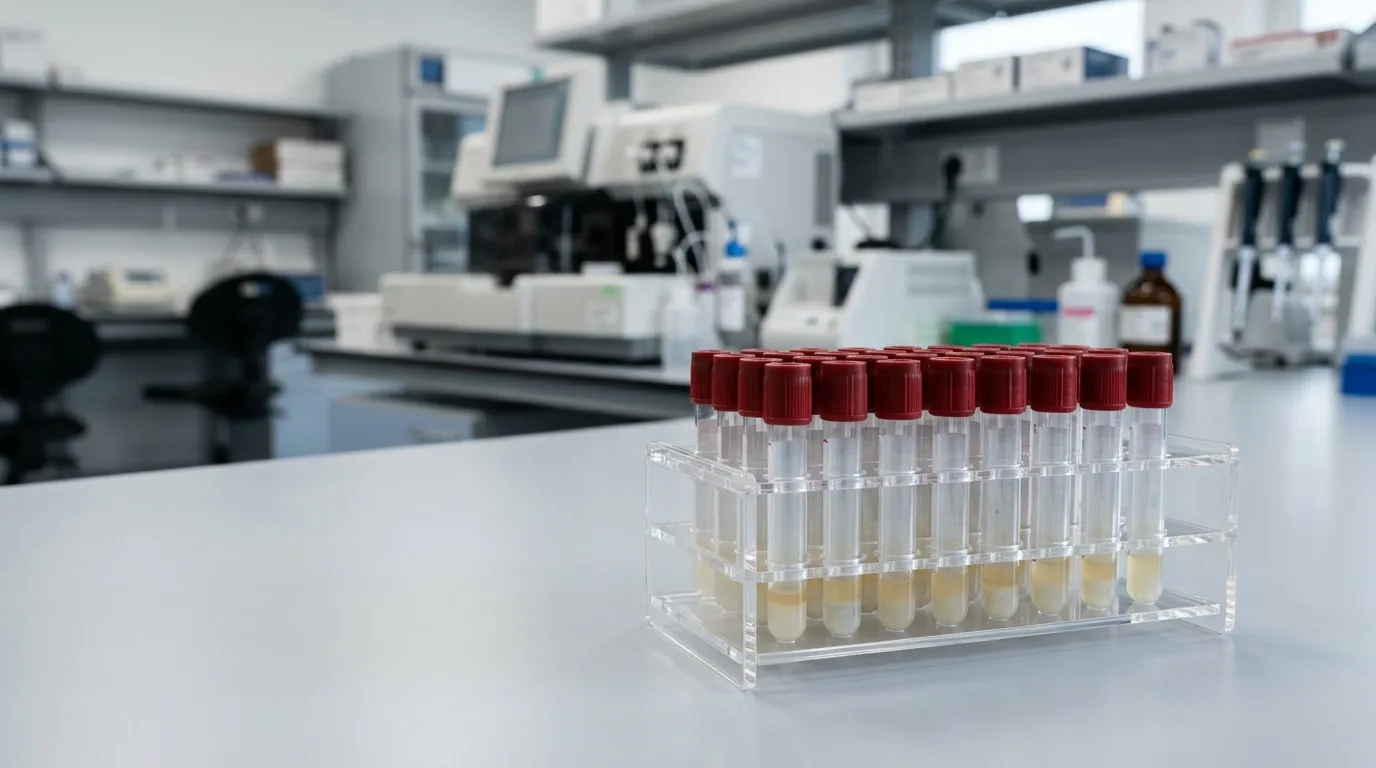
Green-top heparin blood collection tubes in a laboratory rack for plasma testing
A heparin blood collection tube supplier provides the green-top tubes that laboratories use when they need plasma for chemistry testing. These tubes contain lithium or sodium heparin, an anticoagulant that prevents blood from clotting so the cellular components can be separated from the plasma by centrifugation. Choosing the right supplier matters because the tube's additive, manufacturing consistency, and supporting documentation all affect how confidently a laboratory can report its test results.
This page explains how heparin blood collection tubes are used, what separates one heparin tube supplier from another, and what procurement teams should verify before placing an order. Trustlab is evaluated against those expectations as a supplier of heparin blood collection tubes for plasma testing.
What Is a Heparin Blood Collection Tube?
A heparin blood collection tube is an evacuated tube used to collect venous blood for plasma determinations in clinical chemistry. It is one of the standard vacuum blood collection tubes used in routine laboratory medicine. The tube is usually identified by its green closure or green cap, and it contains heparin as the anticoagulant.
Heparin works by inhibiting thrombin and factor Xa, two proteins that play a central role in the clotting cascade. By preventing the blood from clotting, the tube allows the laboratory to separate plasma from the cellular portion of blood through centrifugation. The plasma is then used for tests such as routine chemistry panels and, in many cases, STAT chemistry procedures where faster turnaround is needed.
Heparin tubes are one of several different types of vacuum blood collection tubes. The right tube choice depends on the test that will be performed and whether the laboratory requires serum or plasma.
What Does "Plasma Testing" Mean Here?
Plasma is the liquid portion of whole blood that remains after the cells are removed but before clotting occurs. Because heparin prevents clotting, the sample stays in a plasma state rather than converting to serum. Many chemistry analyzers accept plasma, and plasma can sometimes be processed faster than serum because it does not need to wait for a clot to form.
Lithium Heparin vs Sodium Heparin: Which Does Your Lab Need?

Heparin blood collection tubes are commonly available with either lithium heparin or sodium heparin as the additive. The two forms are related, but they are chosen for different laboratory contexts.
| Consideration | Lithium Heparin | Sodium Heparin |
|---|---|---|
| Typical use | Routine and STAT clinical chemistry tests on plasma | Blood gas analysis, some electrolyte tests, and applications where sodium is acceptable |
| Additive interference | Lithium does not interfere with most common chemistry assays | Sodium content may be relevant for tests measuring sodium |
| Common tube type | Green-top plasma tubes for chemistry panels | Green-top tubes and some specialty collection tubes |
| Availability from Trustlab | Yes | Yes |
Which One Should a Buyer Specify?
The decision is driven by the test menu and the analyzer in use. Most clinical chemistry applications are served by lithium heparin because the lithium ion is less likely to interfere with common assays. Sodium heparin may be preferred in settings where the laboratory already uses it for other procedures.
Trustlab offers heparin blood tubes in both sodium and lithium heparin versions, so a procurement team can select the additive format that aligns with the laboratory's testing protocols.
What to Look for in a Heparin Blood Collection Tube Supplier

A reliable supplier of heparin blood collection tubes should be evaluated on more than price or lead time. The following factors help procurement teams determine whether a supplier can support consistent laboratory results and regulatory expectations.
Quality Management System
Ask whether the supplier operates under a formal quality management system, such as ISO 13485 or ISO 9001. A quality management certificate shows that the company has documented procedures for production, quality control, and corrective action.
There is an important distinction here. A company-level QMS certificate is not the same as product-level regulatory approval. The certificate confirms that the manufacturer's management systems are audited; it does not, on its own, prove that a specific tube is CE-marked, FDA-cleared, or registered in a particular market. Buyers should ask for both the QMS certificate and the product documentation that applies to their region.
Additive Accuracy and Tube Consistency
The performance of a heparin tube depends on the correct amount of heparin being applied consistently across production lots. Too little heparin may allow clots to form; excessive heparin may interfere with certain tests. A supplier should be able to explain how it controls additive application and how it verifies consistency between lots.
Lot Traceability
When a laboratory receives a shipment of blood collection tubes, it may need to trace the tubes back to a specific production lot. Ask the supplier whether each lot can be identified and whether records are retained for quality investigations.
Supporting Documents and Regulatory Information
A qualified supplier should provide the documents needed for laboratory validation, import, and ongoing quality assurance. The specific documents depend on the buyer's country and intended use, but the baseline list below applies to most procurement decisions.
Documents to Request from a Heparin Tube Supplier
At minimum, request the following from any heparin blood collection tube supplier:
- Certificate of Analysis (COA) — a lot-specific document confirming that the tubes met the supplier's release specifications.
- Instructions for Use (IFU) — the official document describing the tube's intended use, handling, and any warnings.
- Sterilization information — confirmation of the sterilization method and, where applicable, validation data. Do not assume a tube is sterile simply because the packaging looks medical-grade.
- Quality management certificate — such as ISO 13485 or ISO 9001, with a clear statement of the certified scope.
- Regulatory documentation — CE certificates, registration letters, or other documents relevant to the destination market.
If a supplier cannot provide these documents, that is a significant red flag. Documentation protects both the laboratory and the distributor if a question about tube performance arises later.
How to Evaluate the General Supplier Quality
For a broader framework on assessing blood collection system suppliers, see the Trustlab guide on how to evaluate blood collection system supplier quality. The guide is useful for building a general supplier qualification process, while this page focuses specifically on heparin tubes used for plasma testing.
Trustlab as a Heparin Blood Collection Tube Supplier
Trustlab offers heparin blood collection tubes designed for plasma blood collection in biochemistry testing. The company's heparin tube product line is positioned for plasma blood collection in biochemistry applications, and it is available with sodium or lithium heparin.
Trustlab also applies the standard green cap color coding associated with heparin tubes, which helps laboratory staff identify the tube type at a glance.
The company's educational content on blood collection describes heparin as an anticoagulant that inhibits thrombin and factor Xa. That explanation is consistent with how heparin tubes are used in laboratory medicine.
For buyers evaluating Trustlab, the product pages are the appropriate place to review current product details and configuration options. The specifications for a specific tube variant are best confirmed directly against the product page for that tube, because tube characteristics such as fill volume, dimensions, and packaging can differ between variants.
Questions to Ask Any Heparin Tube Supplier
Before finalizing a purchase, a procurement team can use the following questions to compare heparin tube suppliers:
- Can you provide a Certificate of Analysis for each production lot?
- Is an Instructions for Use document available in English or the language required for our market?
- Can you provide sterilization validation documentation?
- What quality management certification does your company hold, and what is the certified scope?
- Which regulatory documents can you supply for imports into our country?
- How do you control and verify the heparin additive concentration across lots?
- Can you support OEM or private-label requirements?
- Are product samples available for evaluation before a full order?
These questions are not intended to pressure a supplier. They are practical checks that help a buyer identify which supplier has the systems in place to support consistent performance.
Contact Trustlab for Heparin Tube Sourcing
If you are evaluating heparin blood collection tube suppliers for plasma testing, Trustlab's product pages are the starting point for reviewing its heparin tube options. A direct inquiry is the most reliable way to confirm current product availability, configuration options, and the documentation that can be provided for your market.