


Updated 2 weeks ago
K3 EDTA Tube Supplier for Routine Hematology Procurement
trustlabofficial

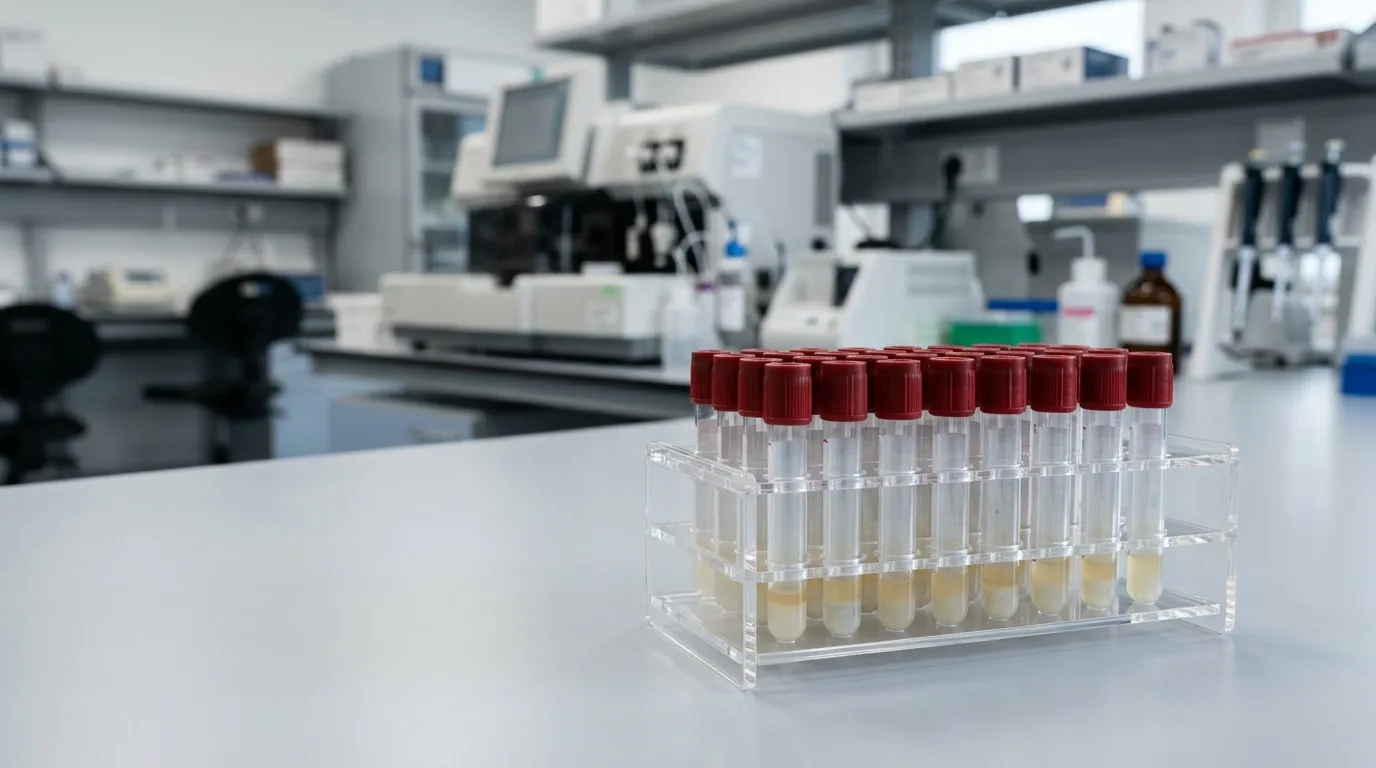
K3 EDTA blood collection tubes with lavender caps in a lab tube rack
Choosing a K3 EDTA tube supplier for routine hematology testing is ultimately a documentation and quality-control decision, not just a price decision. A reliable supplier should be able to show the scope of its quality-management certification, describe how it controls additive dosing and fill volume, and provide batch-level records you can verify. This article gives procurement teams a practical framework for evaluating K3 EDTA tube manufacturers and shows how Trustlab fits into that evaluation.
K3 EDTA tubes are part of the broader blood collection systems product family. This page focuses specifically on what to check before you commit to a K3 EDTA tube supplier for hematology testing.
What Is a K3 EDTA Tube and Why Does It Matter for Routine Hematology?

A K3 EDTA tube is a blood collection tube coated or dosed with K3 EDTA, the liquid form of the anticoagulant ethylenediaminetetraacetic acid. The tube is typically identified by its lavender or purple cap. K3 EDTA prevents blood from clotting by chelating calcium ions, which preserves the sample for blood-cell analysis.
For routine hematology, the K3 EDTA tube is most commonly used to collect whole blood for a complete blood count (CBC). Depending on the laboratory's protocol and analyzer, K3 EDTA tubes are also used in some settings for:
- Immunohematology testing.
- Blood donor screening.
These additional applications are documented by other manufacturers such as Polymedicure, which lists them as intended uses for its hematology EDTA K3 tube.
The physical tube itself is usually made from PET, which is lighter and more shatter-resistant than glass. Procurement teams should confirm the tube size, nominal fill volume, and additive concentration against their own analyzer requirements before ordering.
What to Check in K3 EDTA Tube Specifications and Applications
Before you compare suppliers, make sure you are comparing the same product specifications. The table below summarizes the main differences between K2 EDTA and K3 EDTA tubes and the typical specifications to verify.
| Feature | K2 EDTA Tube | K3 EDTA Tube |
|---|---|---|
| Additive form | Spray-dried | Liquid |
| Common cap color | Lavender/purple | Lavender/purple |
| Primary application | Routine hematology, CBC | Routine hematology, CBC; also used in some immunohematology and blood donor screening settings |
| Main consideration | Preferred by many laboratories for routine CBC | Liquid K3 can slightly dilute the sample if fill volume is incorrect; the right choice depends on lab protocol and analyzer |
For any K3 EDTA tube order, verify these specifications with the supplier:
- Nominal fill volume — the volume of blood the tube is designed to draw.
- Additive concentration — the amount of K3 EDTA per tube.
- Tube material — usually PET, sometimes glass.
- Cap color — lavender/purple for EDTA tubes.
- Sterilization method and packaging — confirm what the supplier actually provides.
- Shelf life and storage conditions — confirm with the supplier's product documentation.
The choice between K2 and K3 EDTA should be guided by your analyzer and laboratory procedure. Trustlab itself advises customers to confirm the K2EDTA or K3EDTA requirement with the analyzer and laboratory protocol before purchasing.
For a deeper comparison of tube types, see our guide to different types of vacuum blood collection tubes.
How to Evaluate a K3 EDTA Tube Supplier
The most important step in supplier evaluation is to ask for documentation and verify what it actually covers. A certificate logo on a website is not enough — you need the certificate scope, the issuing body, and the product-specific documentation that supports the supplier's claims.
Certifications and Documentation to Request First
When you evaluate a K3 EDTA tube supplier, request these documents before you commit to a purchase:
- Quality-management certificate (ISO 13485 or ISO 9001) — ask for the full certificate, not just the logo. Confirm the scope and the issuing body.
- Product-level regulatory documentation — if the supplier claims CE marking, FDA registration, or another market-specific approval, request the product-specific certificate or registration document. Do not assume a company-level QMS certificate automatically means the product is CE-marked or approved for a specific market.
- IFU or technical datasheet — the Instructions for Use should describe the intended use, specimen type, additive, and handling requirements.
- Sterilization validation — confirm the sterilization method and ask for validation evidence.
- Batch and lot records — the supplier should be able to provide batch numbers, lot traceability, and release records.
A good reference point for documentation expectations is Greiner Bio-One, which publishes IFU and safety data sheets for its K3 EDTA tube products on its product pages. Your supplier should be equally transparent.
Quality-Control and Manufacturing Questions to Ask
Beyond certificates, ask the supplier directly about its manufacturing and quality-control process:
- How is the K3 EDTA additive volume controlled during production?
- How is the vacuum or draw volume verified in each batch?
- What sterilization method is used, and how is it validated?
- What are the sampling and inspection procedures for each production lot?
- How are release records and retained samples managed?
- What is the supplier's complaint and corrective-action process?
These questions help you distinguish a supplier with genuine process control from one that relies on marketing language such as "high quality" or "reliable" without supporting evidence.
For broader guidance on evaluating suppliers across the blood collection category, see our article on how to evaluate blood collection system supplier quality.
Trustlab as a K3 EDTA Tube Supplier for Hematology Procurement
Trustlab offers EDTA blood collection tubes with K2 or K3 EDTA additive, intended for hematology testing. The company states that the choice between K2EDTA and K3EDTA should be confirmed with the analyzer and laboratory procedure, which is a practical and technically sound approach for procurement teams.
Trustlab's product range includes:
- EDTA tubes with K2 or K3 additive — available in the EDTA tube product family. Exact specifications, sizes, and additive concentrations are listed on the product page.
- EDTA blood tubes for hematology — described on the EDTA blood tube product page.
- Micro-volume EDTA tubes — available with K2 or K3 anticoagulant for smaller sample volumes. See the micro-volume EDTA tube product page for details.
This page focuses on supplier evaluation rather than duplicating product specifications. For the full specification table, packaging options, and ordering details, review the vacuum blood collection tubes category page and the individual product pages linked above.
When you contact Trustlab, request the current product documentation, certificate scope, and batch-level quality records so you can evaluate the product against the criteria in this article.
How to Run a First Procurement of K3 EDTA Tubes

Follow these steps to qualify a K3 EDTA tube supplier before scaling up your order volume:
- Collect and verify documentation — review the certificate scope, IFU, sterilization evidence, and product specifications against your analyzer requirements.
- Request samples — ask for samples from a current production lot, not from a special pre-production batch.
- Run a small trial under your own conditions — evaluate the tubes using your laboratory's routine hematology workflow, including your analyzer.
- Check lot numbers and expiry dates — confirm the sample lot matches the batch documentation the supplier provided.
- Begin with a trial batch — place a small order first, and verify that the incoming batch matches the sampled lot in fill volume, labeling, and packaging.
- Scale up only after verification — reconcile your internal QC results with the supplier's batch documentation before committing to a larger volume.
This workflow is consistent with standard laboratory practice for validating new blood collection tubes before routine use. A peer-reviewed article on K3EDTA tube validation for routine hematology testing, available through the U.S. National Institutes of Health, describes a similar validation-before-adoption approach.
Summary for Procurement Teams
A K3 EDTA tube supplier earns trust through documentation, production transparency, and batch-level traceability — not through vague quality claims. Verify the certificate scope, ask about additive dosing and vacuum control, request samples, and run a trial batch before you commit.
Trustlab's K3/K2 EDTA tube product family is positioned for routine hematology procurement, and the company directs buyers to confirm additive choice with their analyzer and laboratory procedure. The next step is to review Trustlab's product documentation and request current specifications and quotations from the company directly.