


Updated 3 weeks ago
Purple Top Blood Collection Tube Supplier for Hematology
trustlabofficial

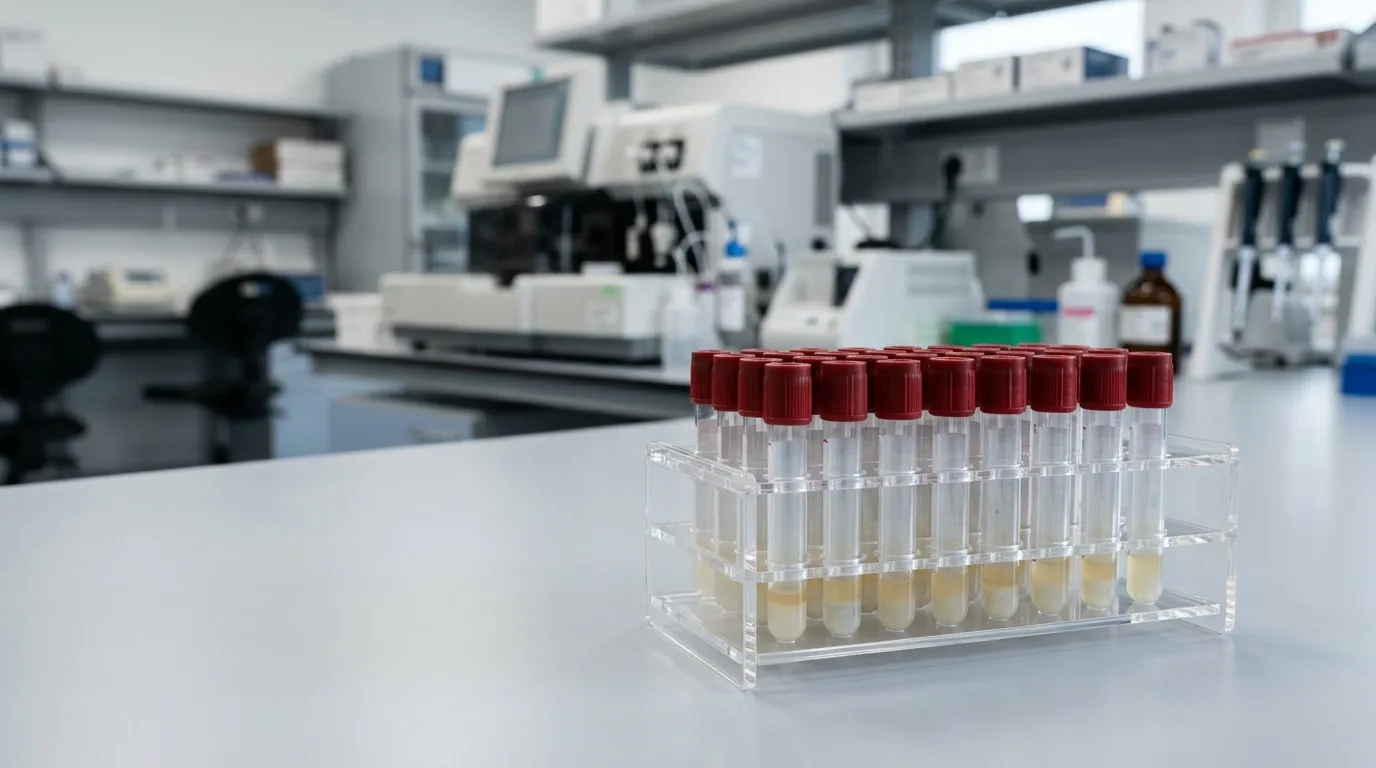
Purple top EDTA blood collection tubes in a laboratory tube rack
Purple top blood collection tubes contain EDTA, an anticoagulant that prevents blood from clotting by binding calcium. These tubes — also called lavender top tubes in some regions — are the standard choice for hematology testing, including complete blood count (CBC), blood smear preparation, and platelet analysis.
This page is written for procurement teams, laboratory managers, and distributors evaluating a vacuum blood collection tubes supplier. It explains what to specify, what to look for in a manufacturer, and the documentation you should request before placing an order.
What Is a Purple Top Tube?

A purple top tube is a blood collection tube whose interior contains EDTA — ethylenediaminetetraacetic acid — in one of two common salt forms: K2EDTA or K3EDTA. EDTA acts as an anticoagulant by chelating calcium ions. Because calcium is required for the coagulation cascade, removing it keeps the blood sample in a liquid state for laboratory analysis.
Purple top and lavender top tubes are functionally the same tube. The cap color is not a regulated standard; it is an identification convention used by tube manufacturers. One supplier may label the cap purple, while another uses lavender. In both cases, the additive and intended use are the same.
Other tube colors use different additives and serve different purposes. For example, red top tubes may contain no additive or a clot activator, green top tubes contain heparin, and blue top tubes contain sodium citrate for coagulation studies. For a complete comparison of tube types by additive and use, see our guide to different types of vacuum blood collection tubes.
Why EDTA Matters for Hematology Testing
EDTA is the preferred anticoagulant for hematology because it preserves cell morphology. Red blood cells, white blood cells, and platelets remain suitable for examination under a microscope, which is essential for blood smears and differential counts.
The mechanism matters in practice. By binding calcium, EDTA stops the clotting process without damaging the cells in the sample. That allows the laboratory to measure cell counts reliably and to prepare stained blood films that reflect the patient's true cell population. The most common salt form, K2EDTA, is typically spray-dried onto the inner wall of the tube, where it dissolves when blood is drawn in (Stanford Blood Center).
In contrast, some other anticoagulants can interfere with cell staining, cause platelet clumping, or alter blood cell volume over time. This is why the purple top tube — not a heparin or citrate tube — is the sample of choice for routine hematology testing (NCBI StatPearls).
Hematology Applications for Purple Top Tubes
Purple top EDTA tubes are used mainly for tests that require whole blood or a blood film. Common applications include:
- Complete blood count (CBC) — the most frequent use. The tube preserves red blood cells, white blood cells, and platelets for automated cell counting.
- Blood smear and morphology review — EDTA prevents clotting while preserving cell shape, making it possible to identify abnormal cells.
- Platelet analysis — counting and sizing platelets are performed on EDTA-anticoagulated blood.
- Erythrocyte sedimentation rate (ESR) — some ESR methods accept EDTA whole blood.
- Blood typing and antibody screening — EDTA tubes preserve red cells for ABO/Rh testing and related immunohematology work.
- Infectious disease screening in blood donors — K2EDTA plasma is used for several routine donor-transmitted infection tests (Stanford Blood Center).
In most cases, the same purplue top tube can support routine CBC testing and additional hematology testing from a single draw. This makes the tube a high-volume, critical product in hospital laboratories, reference laboratories, and veterinary diagnostic settings.
Purple Top Tube Specifications: What to Verify Before Ordering
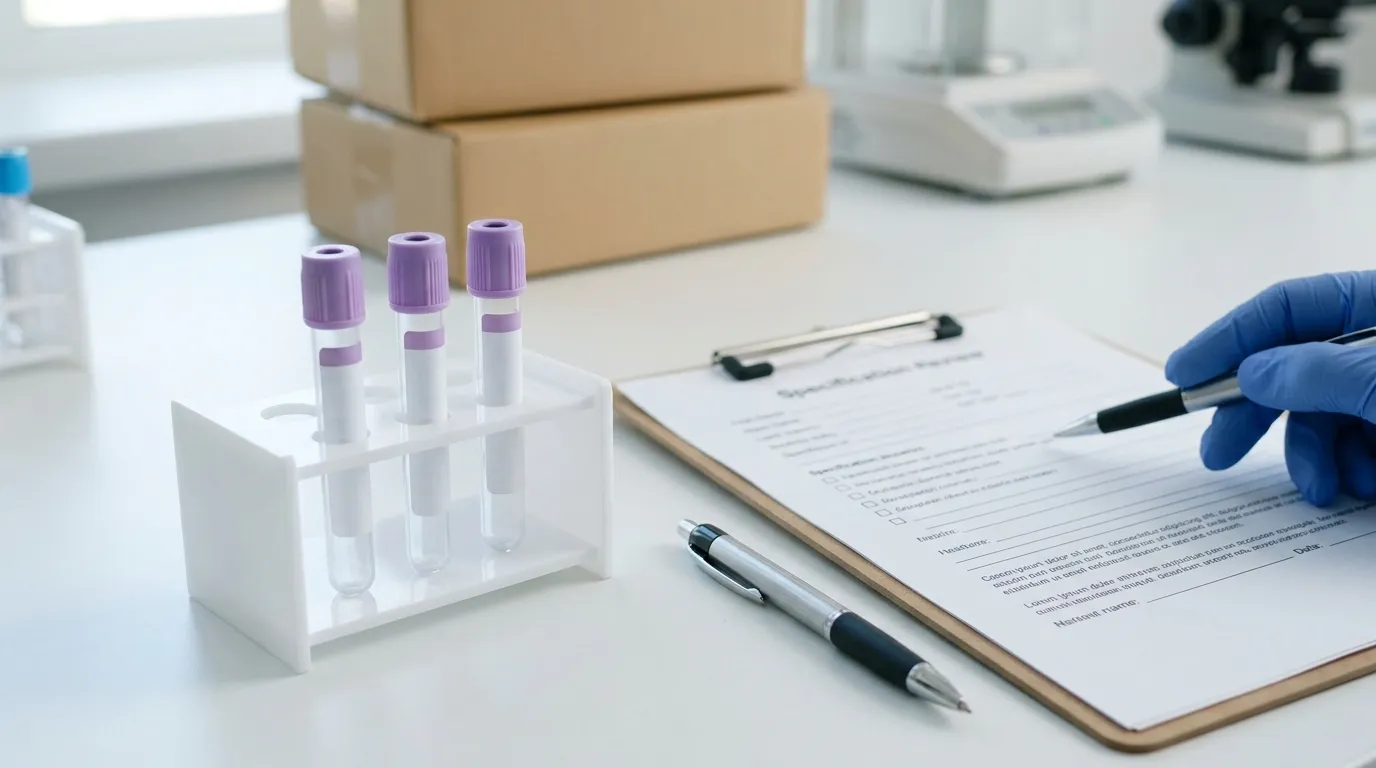
Before you send a request for quotation, define the exact purplue top tube specification your laboratory or distribution channel requires. A clear specification prevents receive-the-wrong-tube problems and makes supplier responses comparable.
| Specification | Typical Options | What to Confirm with the Supplier |
|---|---|---|
| Additive type | K2EDTA or K3EDTA | Which EDTA salt is used; concentration per tube; draw volume vs. additive volume |
| Tube material | Glass or plastic | Breakage risk, clarity, weight, disposal requirements, and centrifuge compatibility |
| Closure design | Conventional stopper or safety closure | Need for splash protection; ergonomics; whether the closure is compatible with your analyser or decapper |
| Tube volume | Nominal volume matched to the collection protocol | Full range available — for example paediatric vs. adult draws |
| Sterility | Sterile or non-sterile | Which product code is sterile; confirm by the product label or IFU, not by packaging claims |
| Packaging quantity | Box/case counts | Unit price comparisons and inventory planning |
| Storage and expiry | Shelf life and recommended conditions | Whether the tubes meet your inventory turnover needs |
The distinction between K2EDTA and K3EDTA deserves special attention. K2EDTA is commonly supplied as a spray-dried coating, while K3EDTA is often supplied as a liquid additive. Some laboratory tests are validated with one form rather than the other, so the EDTA salt should be listed on the product specification sheet.
Also confirm whether the tubes are sterile or non-sterile. Blood collection tubes intended for clinical use are manufactured to be sterile, but "sterile" is not the same as "clean" or "hygienic." Sterility must be demonstrated through product-specific labelling and validated manufacturing processes.
What to Require from a Purple Top Tube Supplier
A reliable supplier should be able to provide more than a price list. Use these checks to compare vendors:
- Quality management certification. ISO 9001 and ISO 13485 cover the manufacturer's quality management system. They show that the company follows documented processes, but they are not the same as product-level regulatory approval.
- Product-level regulatory documentation. Depending on the destination market, a purplue top tube may need CE marking, FDA clearance or registration, or another national approval. Ask which product codes are covered by that approval and in which countries it is valid.
- Technical documents. Request the instructions for use, product specification sheet, certificate of analysis, and packaging specification. The IFU should state the additive, nominal volume, material, storage conditions, and expiry period.
- Batch traceability. Ask whether each case or box can be traced to a specific manufacturing batch. This matters for complaint investigations and laboratory audits.
- Consistent supply. Confirm lead times, minimum order quantities, and how the supplier manages backorders. A shortage of purple top tubes directly affects daily hematology testing.
The full methodology for comparing vendors is covered in our separate guide on how to evaluate blood collection system supplier quality. The same criteria apply whether you are buying for one laboratory or supplying tubes to a distribution network.
Why Trustlab for Your Hematology Tube Supply
Trustlab supplies vacuum blood collection tubes and related products for laboratories and medical distribution channels. Because purplue top EDTA tubes are a core part of any haematology lab's consumables, Trustlab's blood collection tube line is designed for buyers that need consistent specification control and clear documentation.
Trustlab also publishes practical educational content on tube selection and supplier assessment. That means the team works with buyers who are used to checking specifications, confirming regulatory scope, and requesting technical documentation before ordering.
If you are sourcing for a hospital laboratory, a private testing facility, or a distributor, start with the purplue top tube specification you need.
Frequently Asked Questions
How long can blood sit in an EDTA tube?
The stability of blood in an EDTA tube depends on the test, the storage temperature, and the laboratory's own protocol. For a CBC, whole blood should be analysed as soon as possible. Most laboratories allow storage for several hours at room temperature, but cell counts — especially platelets — can change over time. Confirm the laboratory's maximum delay before testing.
What happens if blood sits too long in an EDTA tube?
Prolonged storage can cause cell swelling, changes in cell volume, and platelet clumping. These changes can make automated cell counts and blood film morphology unreliable. This is one reason why choosing a tube with the correct additive and adequate vacuum is important: the sample must be mixed correctly and processed within the validated time.
What is the order of draw for purplue top tubes?
In the standard order of draw, purplue top tubes should be collected after serum tubes and before gray fluoride tubes. Mixing the tube gently by inversion immediately after collection is also required to distribute the EDTA through the blood. National and international guidance, such as the RCPA order-of-draw chart, provides the full sequence.
For current purplue top tube specifications, available volumes, and packaging options, contact Trustlab with your target order volume. The sales team can confirm the product details and supporting documentation you need for your evaluation.